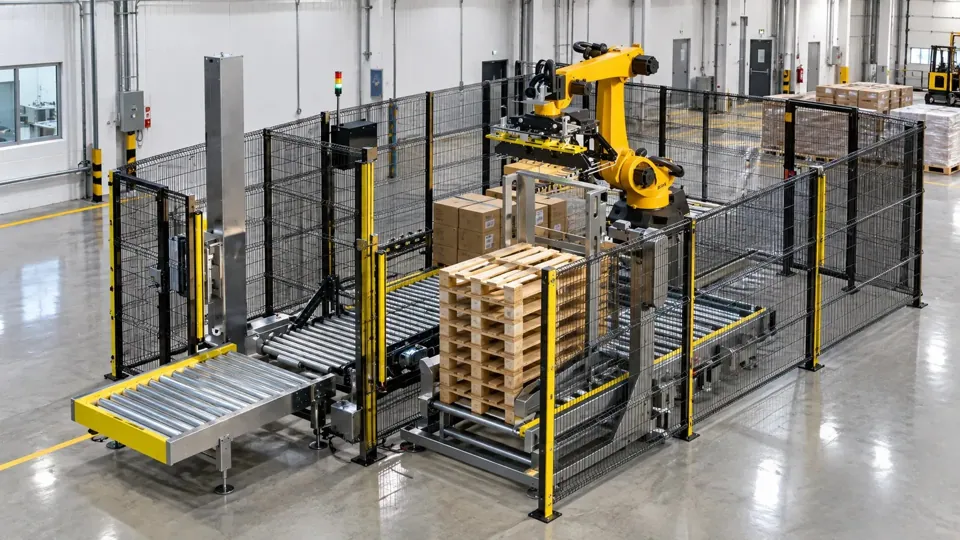
Built for the Cold
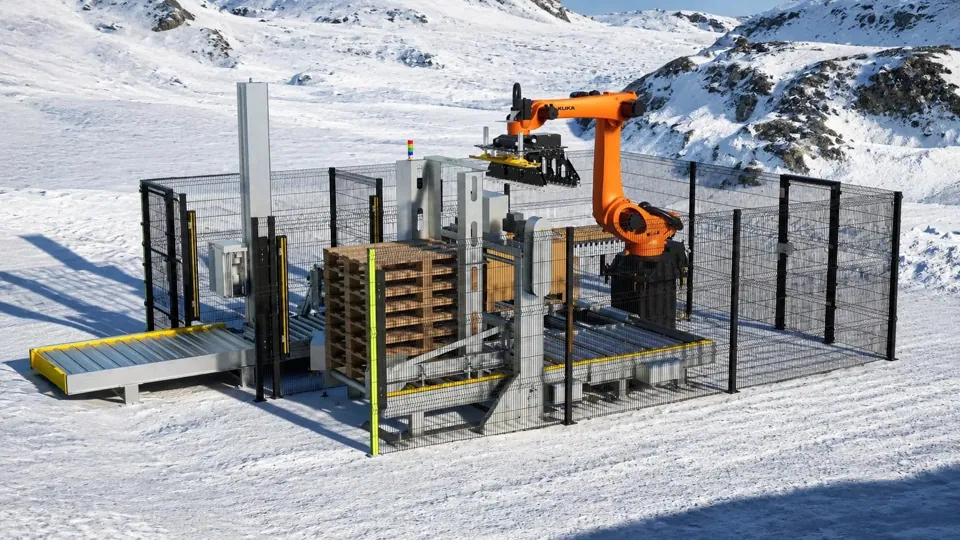
TRFSubzero is the TRF freezer palletizer for areas below 32°F, so the system is defined by the environment as much as by the rate.
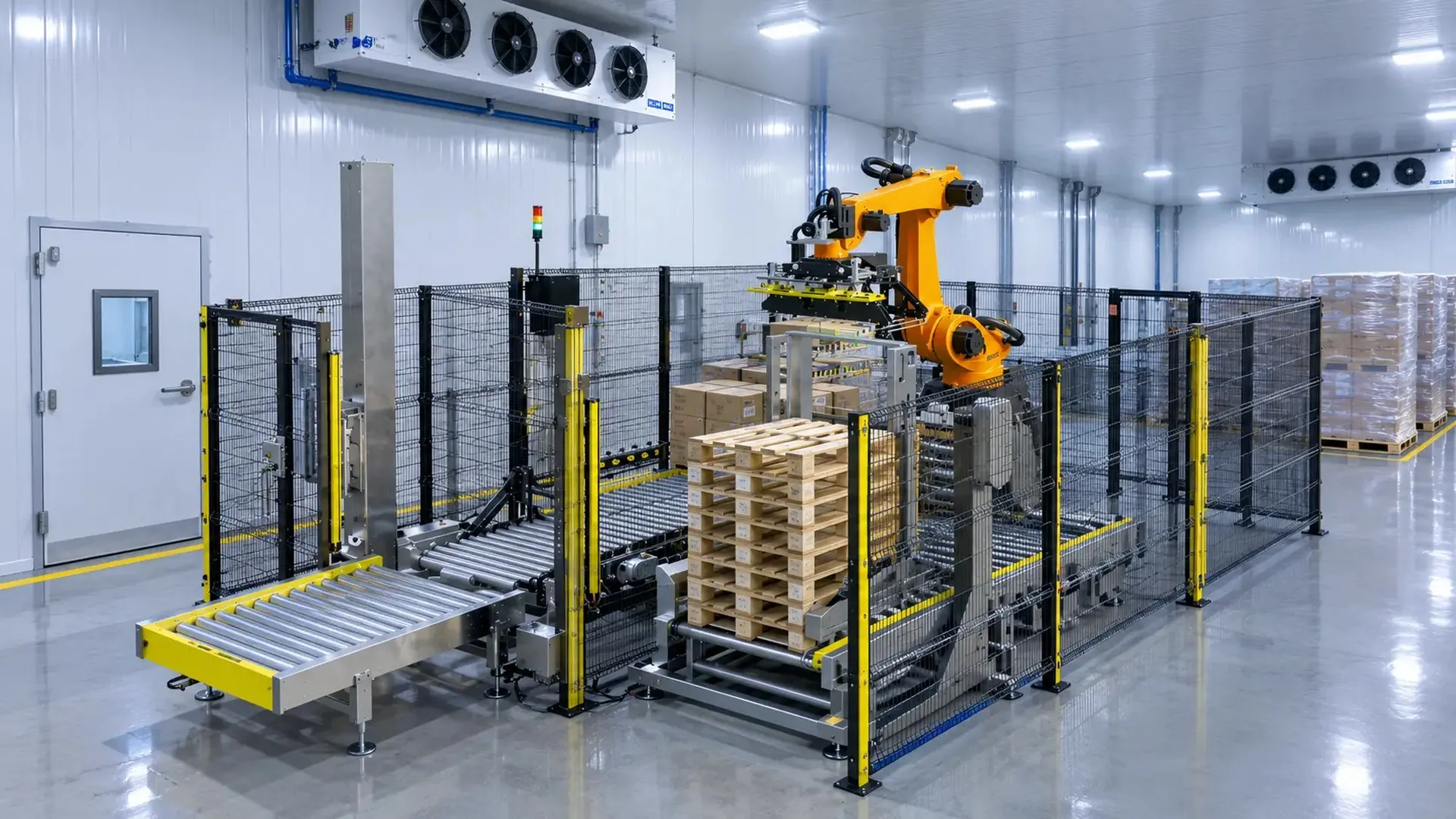
Robotic Palletizing / TRFSubzero
Robotic palletizing for below-freezing production, engineered for areas below 32°F.
Frozen food palletizing below 32°F is what TRFSubzero is built for: a freezer palletizer from TRF Industrial Automation, a robotic palletizer on the TRFSpeed architecture and engineered for areas below 32°F in frozen food, ice cream and frozen meat production. It is part of cold storage automation at the end of the line, where a palletizing robot takes pallet building out of the freezer.
High performance below freezing
Palletizing engineered for areas below 32°F.
Fewer operator hours in the freezer
Manual pallet building leaves the coldest part of the plant.
TRFSpeed architecture
Speed and case weight validated per application.
One end-of-line project
Conveyors and pallet handling engineered together with the palletizer.
| Item | TRFSubzero |
|---|---|
| Product | Robotic palletizer for areas below 32°F, built on the TRFSpeed high-speed palletizing architecture |
| Typical speed | Validated per application |
| Case weight | Validated per application, with the end-of-arm tool |
| Construction | Confirmed by TRF engineering for each application |
| Typical applications | Frozen food, ice cream, frozen prepared foods and meat processing in below-freezing areas (below 32°F) |
| Integration | Conveyors, pallet handling and the rest of the end of line, engineered as one project |
| Case study | Custom Foods, De Soto, Kansas |
Typical ranges. TRF engineering confirms final capacity and construction for each application (product, end-of-arm tool, pallet pattern, reach, process and temperature).
Frozen food, ice cream and frozen meat plants choose TRFSubzero for the palletizing area for four reasons.
TRFSubzero is the TRF freezer palletizer for areas below 32°F, so the system is defined by the environment as much as by the rate.
Manual pallet building is one of the hardest jobs in a cold-chain plant. TRFSubzero takes it out of the coldest area.
Built on the TRFSpeed architecture, TRFSubzero brings high throughput, reliable performance and modularity to frozen and cold production.
Conveyors, case packing and palletizing can be engineered together, so the interfaces that cross the temperature boundary are designed as one system.
A freezer palletizer is a robotic palletizing system specified for areas below 32°F, so a palletizing robot stacks cases inside or next to the cold area without operators building pallets by hand. Frozen food palletizing is the job, and the freezer palletizer is the equipment that does it. A standard robotic palletizer is specified for ambient conditions, and its design starts from the rate.
Below freezing, the application is defined by the environment as much as by the rate. The first questions are concrete: where the palletizer sits, what temperature the area holds during production, and how cases enter and leave the cold area.
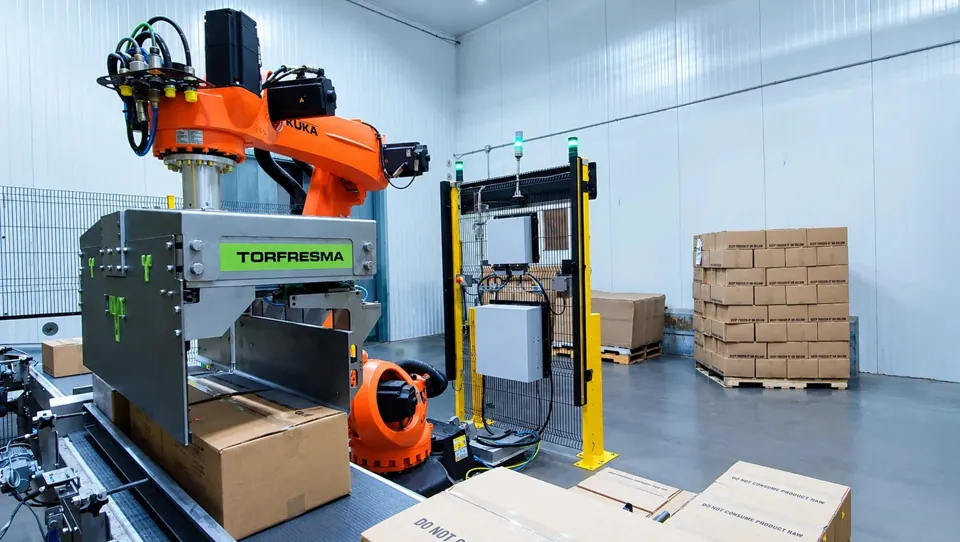
The rule of thumb is simple: if the palletizing area operates below 32°F, start with TRFSubzero. Three cold-chain applications fit it:
Custom Foods, in De Soto, Kansas, runs robotic palletizing below freezing. The Custom Foods case study shows the application and the equipment installed.
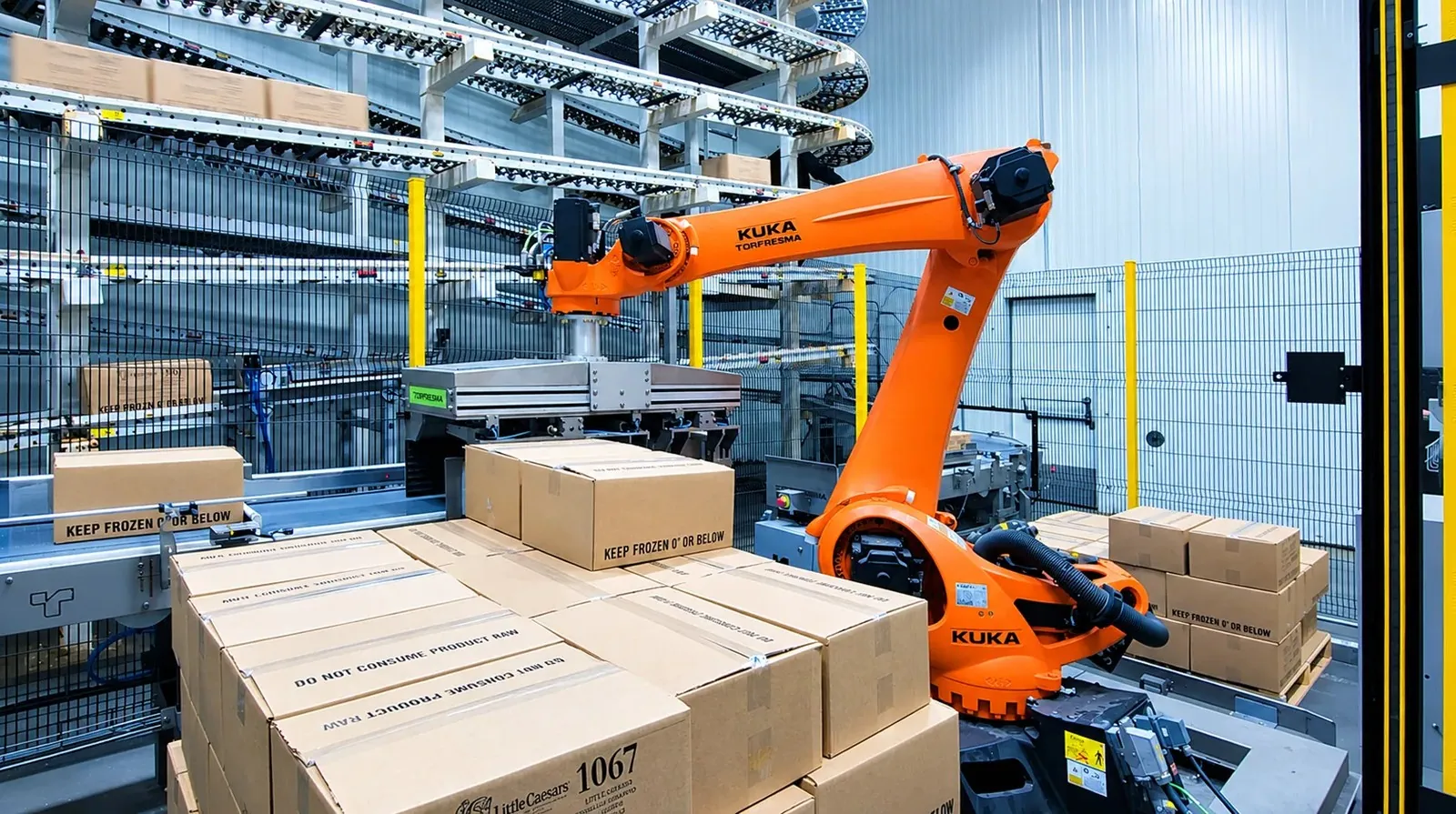
Your line is a strong candidate for TRFSubzero when most of these statements are true:
To size the application, a Sales Engineer needs the data that defines the cold:
With these facts, TRF validates the product, end-of-arm tool, pallet pattern, reach and process, and confirms the construction, the layout and the scope. A rough drawing and an honest description of the cold area are enough to start.
Start with the temperature of the palletizing area, then choose by line speed, case weight and the number of lines. The TRF palletizing platforms form one family.
| Platform | Typical speed | Case weight | Typical fit |
|---|---|---|---|
| TRFCobot | Up to 10 cases per minute | Up to 26 lb | Lower-speed, high-mix lines with limited floor space and manual palletizing today |
| TRFCompact | Up to 15 cases per minute | Up to about 65 lb | Industrial performance and more speed in a compact cell |
| TRFSpeed | 15 or more cases per minute | Up to about 80 lb | High-volume, continuous or multi-line palletizing, with TRFSubzero for areas below 32°F |
| TRFSubzero | Validated per application | Validated per application | Palletizing areas below 32°F: frozen food, ice cream and frozen meat |
If your palletizing area is not below freezing, TRFSpeed covers high-throughput and multi-line production, TRFCompact suits compact industrial cells and TRFCobot fits lower-speed, high-mix lines. Compare all platforms on the robotic palletizing page. When a cold application also goes beyond the standard ranges in load, pallet handling or layout, TRF evaluates a custom palletizer.
Catalog
Tell us where to send it and a TRF Sales Engineer will email you the TRFSubzero catalog with specifications and configurations.
Thank you.
A TRF Sales Engineer will email you the TRFSubzero catalog.
Questions
Yes, a freezer palletizer, meaning a robotic palletizer built for below-freezing areas, can operate below freezing (32°F) when it is built for that environment. TRFSubzero is the TRF palletizer for areas below 32°F, built on the TRFSpeed architecture, and it brings high throughput, reliable performance, modularity and integration to frozen and cold production. The construction and the operating conditions are confirmed for each application during the technical review, together with the layout.
Yes, palletizing equipment can operate below freezing for frozen meat: meat processing in below-freezing areas (below 32°F) is one of the target applications of TRFSubzero. The temperature of the palletizing area and the position of the cell relative to the cold zone are reviewed for each plant before the scope is confirmed, and the conveyors that feed the cell can be supplied in the same project.
A freezer palletizing system takes cases from the packaging line, builds pallets with a robot in a stored pattern and sends finished pallets out of the cold area toward wrapping or storage. The layout, the entries into the cell and the pallet routes are defined for the temperature of your area, so operators spend less time in the cold and the pallet flow stays predictable.
TRF Industrial Automation manufactures the freezer palletizer for frozen and cold-chain production: TRFSubzero, for palletizing areas below 32°F. TRF designs, builds, installs and supports these systems for manufacturers in the United States, and supplies the conveyors and case packing that feed them as part of the same end-of-line project, with one point of contact from layout to startup.
Yes, a freezer palletizer can connect to existing conveyors and wrapping when the interfaces are defined in the application study: case infeed rate and orientation, spacing, signals between machines and how full pallets leave the cold area. In a cold-chain plant, every point where cases or pallets cross the temperature boundary is planned with the layout. See end-of-line integration for the full-line approach.
Freezer labor shortens the payback of a robotic palletizer when manual pallet building in the cold takes operators on every shift, because those labor hours are what the system replaces. Payback also depends on shifts per day, local labor cost and the installed cost of the system, which is quoted per application for TRFSubzero. A TRF Sales Engineer walks through the estimate with your data.
A freezer palletizer helps with labor shortages in frozen food plants by taking one of the hardest jobs to staff, building pallets by hand in the cold, out of the freezer. The robot builds every pallet in the stored pattern, and operators move to supervision, pallet changes and quality checks outside the coldest area. The frozen food and ice cream page shows the full cold-chain end of line.
If your palletizing area runs below 32°F, whether in frozen food, ice cream or frozen meat, TRFSubzero is the freezer palletizer TRF built for that environment. Send the temperature of the area, case weights, rates, shifts and a layout of the cold zone, and a TRF Sales Engineer will confirm the construction and the scope.
See TRF systems in real production environments in the TRF case studies.