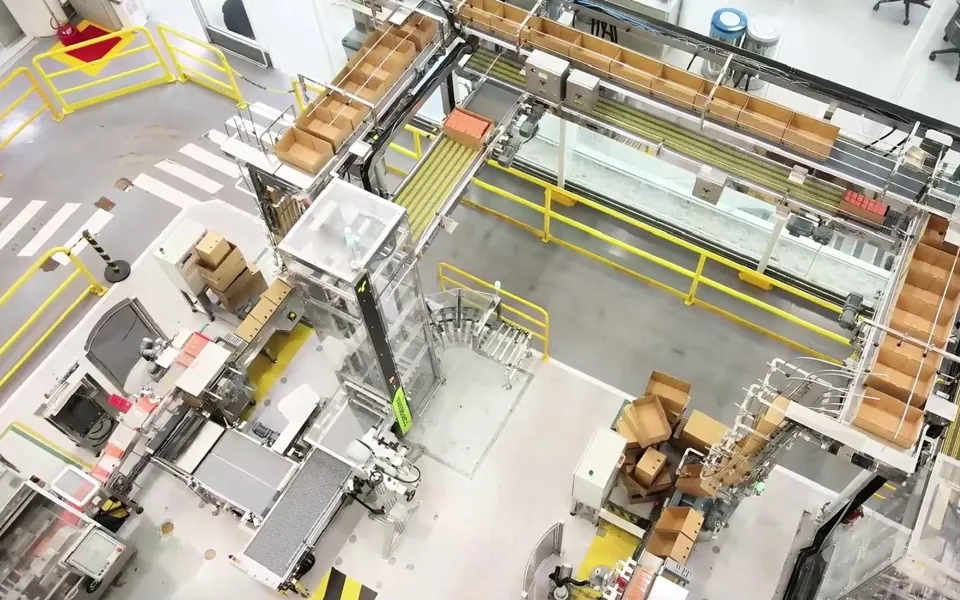
Turnkey Delivery
One partner is accountable for the agreed project scope of the intralogistics solution, from system design and engineering through installation and startup.
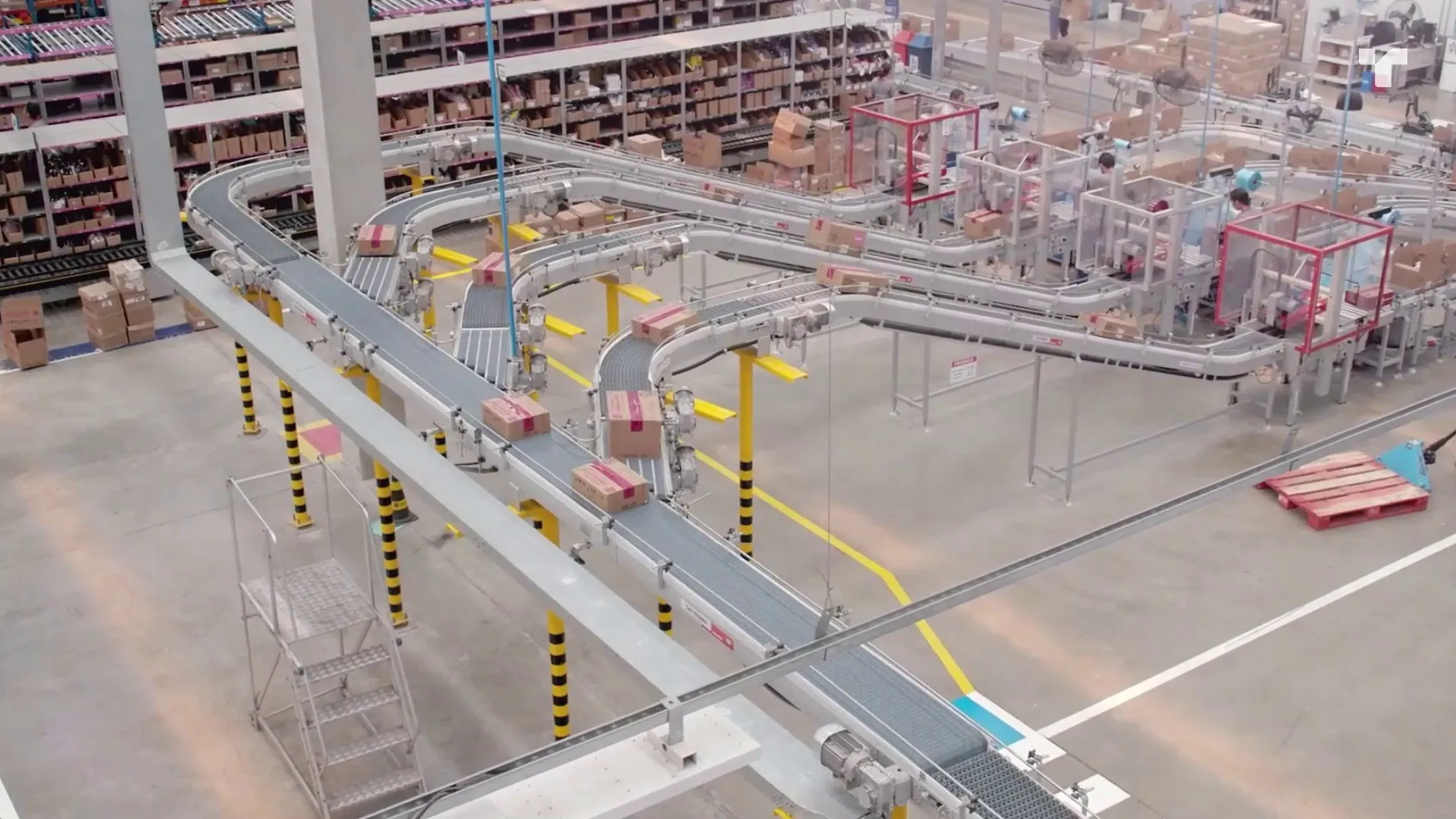
Conveyor Systems / TRFIntraflow
Custom conveying that carries product and cases from packaging to palletizing without breaking the flow.
Case conveyor systems move packed cases, cartons, trays and totes from packaging to palletizing, and TRFIntraflow is the integrated case conveyor systems platform of TRF Industrial Automation for end of line automation: standard conveying, accumulation, routing, elevation and controls modules, engineered around your layout.
Keep cases moving
Controlled paths from packaging to palletizing, designed to avoid gaps in the flow.
Engineered around your flow
Custom-engineered to your layout, your products and your line rates.
Built to last
Heavy-duty industrial design for demanding production environments.
One partner, layout to startup
Engineering, manufacturing, controls, installation and commissioning by TRF.
| Item | TRFIntraflow |
|---|---|
| What it is | Modular case intralogistics platform, engineered as one complete conveyor system for each plant |
| Items conveyed | Cases, cartons, trays, totes and other packaged units |
| Where it runs | Between secondary packaging, case packing, palletizing and warehouse interfaces |
| Straight conveying | Powered roller, belt conveyor, modular belt |
| Directional handling | 90° transfers, curves, turntables, pop-up transfers |
| Flow management | Accumulation, zero-pressure accumulation, metering, gapping |
| Routing | Merge, divert, sorting, reject station |
| Elevation | Incline and decline, elevator and lowerator, vertical transfer |
| System integration | Sensors, PLC and HMI, barcode and vision interfaces, machine communication, palletizer interfaces, WMS interfaces where applicable |
| Capacity | No catalog speed: throughput, buffer size and routing logic are defined per project |
| Scale | From one line to complete multi-line case intralogistics systems |
| Delivery model | Turnkey: engineering, manufacturing, controls, assembly, integration and commissioning by TRF |
Standard module families of the TRFIntraflow platform. TRF engineering sizes every module against your line rates, case data and layout.
Food, beverage and CPG plants choose TRFIntraflow to connect packaging, case packing and palletizing as one automated case handling flow. These are the six reasons.
One partner is accountable for the agreed project scope of the intralogistics solution, from system design and engineering through installation and startup.
Heavy-duty industrial design is built for demanding production environments and reliable performance over the long term.
Each system is designed around your actual production flow, layout and operational requirements.
Engineering, manufacturing, controls, assembly, integration and commissioning sit inside one coordinated TRF delivery model.
The platform scales from one line to complete multi-line case intralogistics systems.
Sensors, PLC, HMI, barcode and vision interfaces link the conveyors to your case packers, palletizers and warehouse systems.
Case conveyor systems, like other industrial conveyor systems, are engineered networks of conveyors, transfers, accumulation zones, routing devices and controls that move packaged goods between automated processes in one specific plant. In TRFIntraflow, custom conveyor systems means custom layout, flow logic and interfaces, not one-off hardware: it uses standard, repeatable modules, and the engineering goes into arranging and controlling them around your production flow.
This is intralogistics at the end of the line: once a product is packed, the case has to be transported, accumulated, merged, diverted, sorted, elevated and delivered to a palletizer or a warehouse interface, at the rate of the lines. A case conveyor bought section by section tends to leave gaps: cases pushed by hand at transfers, lines that stop when the palletizer pauses, and controls that do not talk to each other.
| Decision factor | Engineered system (TRFIntraflow) | Sections from several suppliers |
|---|---|---|
| Responsibility | One partner is accountable for the agreed project scope, from system design through startup | Each supplier answers for its own section |
| Flow logic | Accumulation, merges and routing designed together for the real line rates | Buffers and merges sized section by section |
| Controls | One control concept with sensors, PLC, HMI and machine communication | Several control concepts that must be made to work together |
| Machine interfaces | Defined in the same engineering as the conveyors | Defined separately by each supplier |
| Startup | One commissioning team for the conveyors and their interfaces | Several teams, coordinated by the plant |
A turnkey system does not mean giving up standard hardware. TRFIntraflow keeps repeatable engineering and consistent parts, and adds one partner accountable for the agreed project scope.
Powered roller conveyors are one of the standard TRFIntraflow modules, alongside belt and modular belt conveying, transfers, accumulation, routing and elevation. Accumulating conveyor systems, with zero-pressure accumulation, hold cases in a buffer so the packer and the palletizer do not have to run at the same instant. TRF engineers them into a complete material-flow system with controls and palletizer interfaces, from layout to startup, rather than supplying individual conveyor sections.
An industrial conveyor system does four jobs at once: transport, flow management, routing and integration with the machines at both ends. Transport carries product between machines, across levels and through work areas. Flow management accumulates product when a downstream machine pauses, meters it so a robot picks at a steady rhythm and creates the gaps a scanner or diverter needs. Routing merges lines, diverts to a second lane, sorts by SKU or destination and rejects product that fails inspection. Integration links the conveyor to the machines through sensors, PLC and HMI, and barcode and vision interfaces.
A conveyor that only transports leaves the line exposed. If a palletizer pauses for a pallet change and there is no accumulation, the case packer upstream has to stop. Those are design questions, not catalog questions, which is why TRF engineers conveyor systems as part of the line. Each function solves a different flow problem:
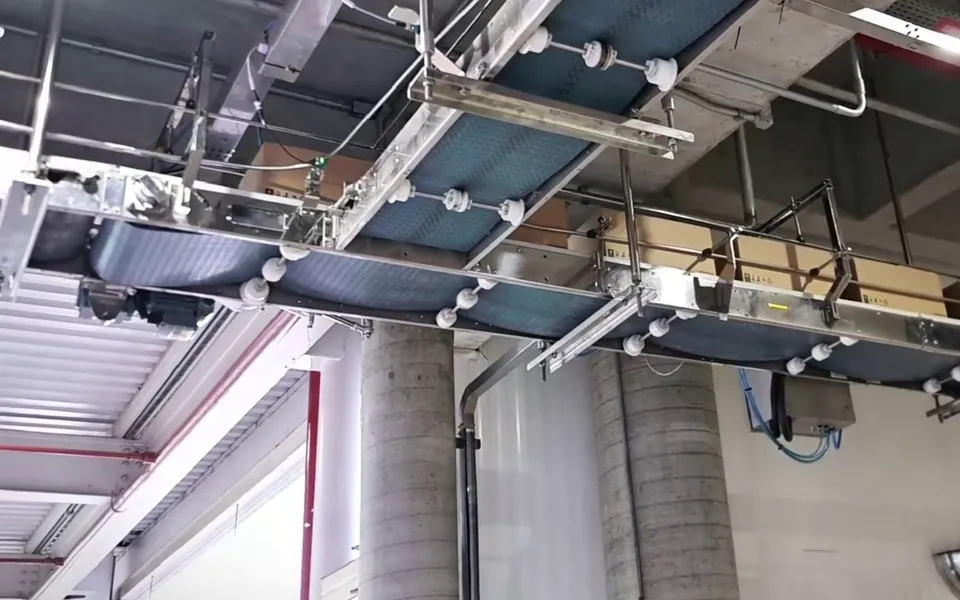
TRFIntraflow fits plants where cases are bottlenecked or still moved by hand between automated processes. Typical applications:
The platform serves mid-sized and large manufacturers in food processing, beverage, meat processing, frozen food, pet food, personal care, consumer packaged goods and industrial manufacturing, wherever several packaging or end-of-line processes need reliable case movement.
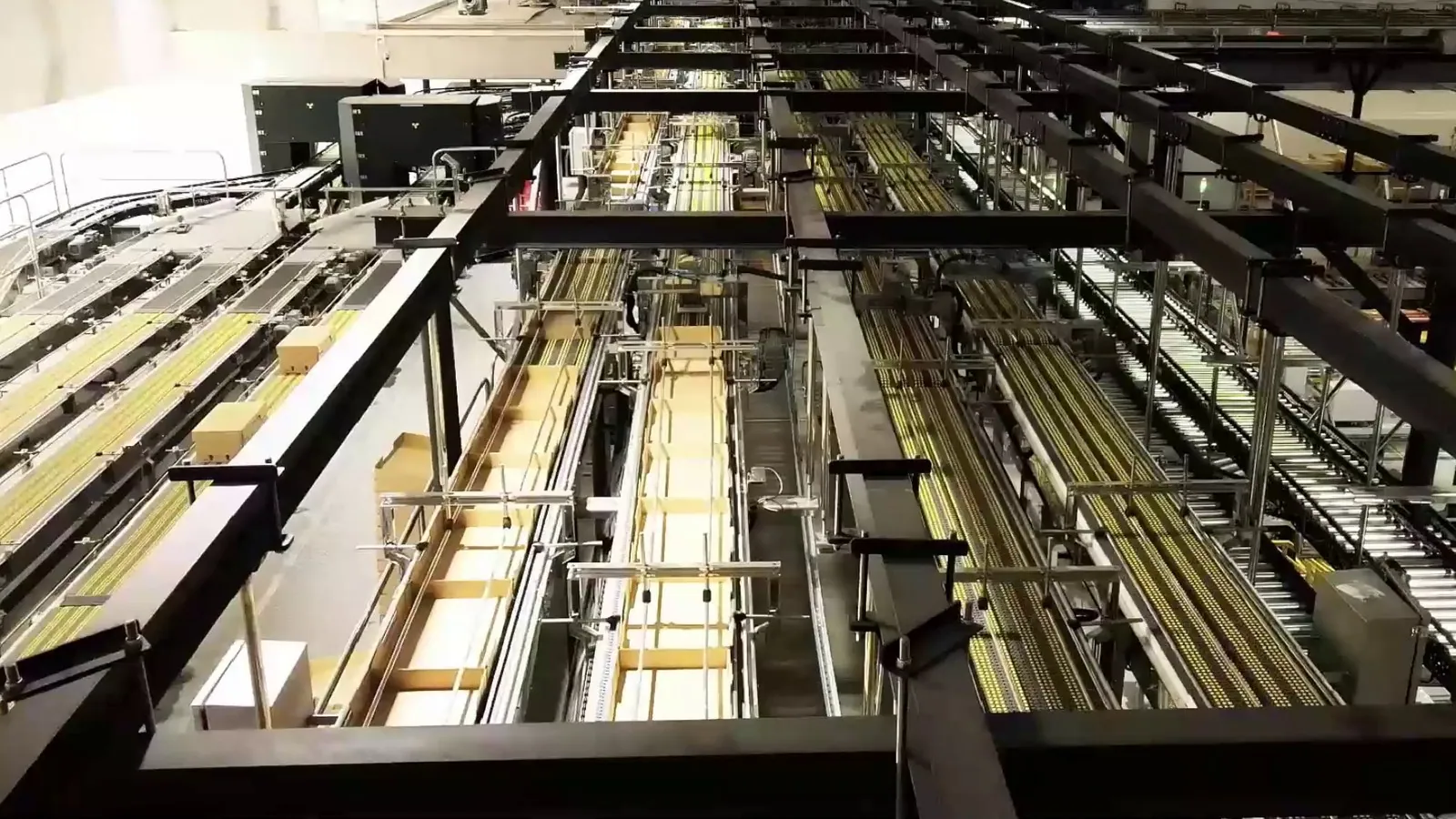
Your plant is a strong candidate for TRFIntraflow when most of these statements are true:
Before quoting, TRF reviews five inputs with your team: the units conveyed (dimensions, weight range and bottom construction for each SKU), the line rates and number of lines, layout drawings with levels, columns, aisles and utilities, the points where the flow breaks today, and the case packers, palletizers, scanners and warehouse systems the conveyors must connect to.
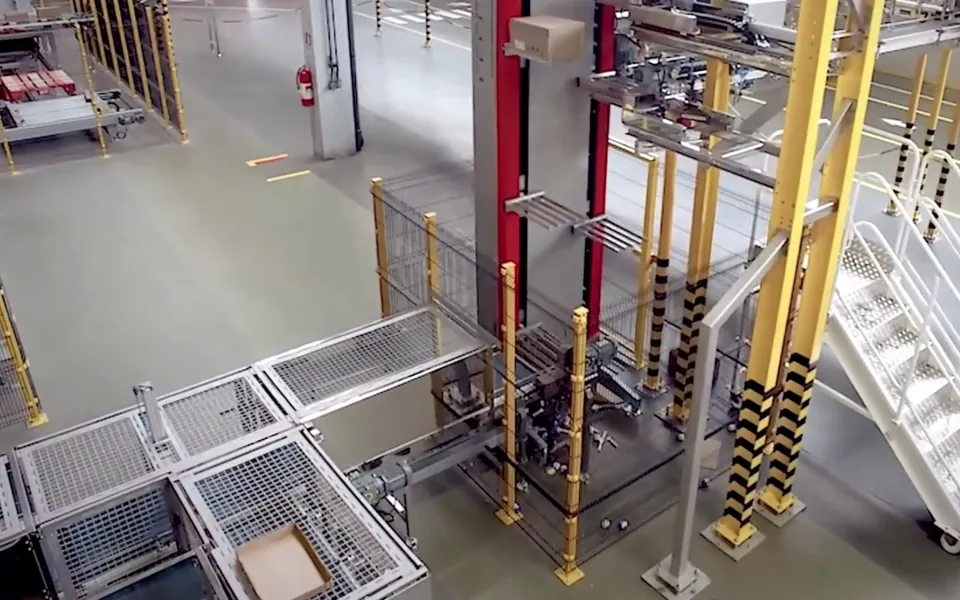
Choose by what is conveyed and how each zone is cleaned. Use TRFIntraflow when the item is a case, carton, tray, tote or other packaged unit moving between automation processes. Use TRFCleanflow when the item is exposed food or the conveyor sits in a hygienic or washdown zone: Dry fits industrialized foods with moderate, infrequent cleaning by vacuum, brushing and wipe-down, and Washdown fits animal protein and similar products with daily sanitation using chemicals, high pressure and high temperature. If a zone is mostly dry but sometimes cleaned wet, or sits next to a wet zone, TRF engineering reviews the sanitation procedure with your team before specifying the line.
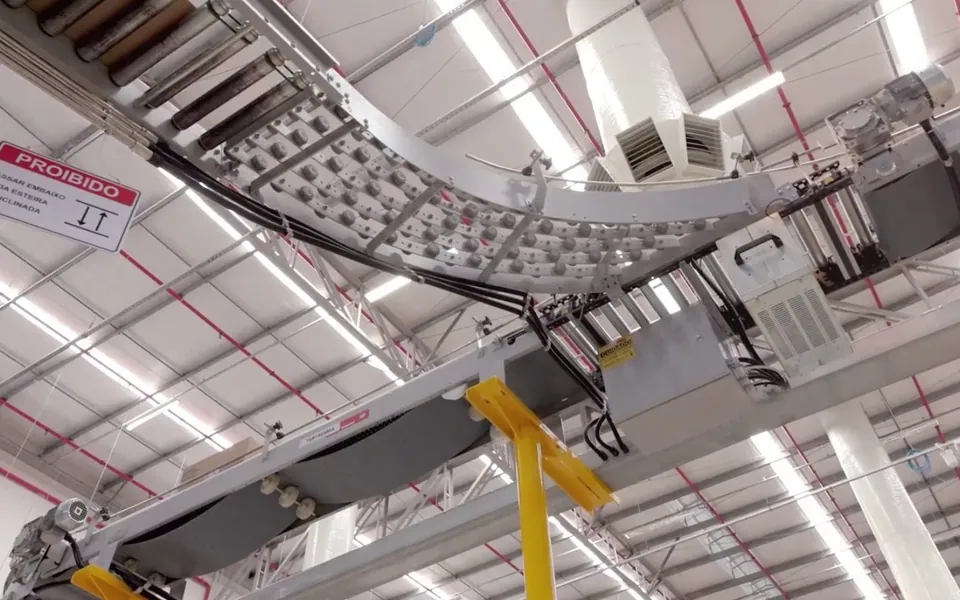
| Criterion | TRFIntraflow | TRFCleanflow Dry | TRFCleanflow Washdown |
|---|---|---|---|
| What it moves | Packaged goods: cases, cartons, trays, totes | Exposed food in dry, low-moisture areas | Exposed food in wet, food-contact zones |
| Production zone | Secondary packaging and palletizing | Processing and primary packaging | Processing and primary packaging |
| Typical functions | Transport, accumulate, merge, divert, sort, elevate | Convey, incline, transfer, distribute, merge | Convey, incline, transfer, distribute, merge |
| Cleaning routine | Outside the exposed-food zone | Moderate, infrequent: vacuum, brushing, wipe-down | Daily sanitation with chemicals, high pressure, high temperature |
| Construction (design targets) | Heavy-duty industrial design for demanding production environments | 304 stainless steel, IP65 electrical baseline, optional enclosed or covered product path | 304 stainless steel with 316 optional, continuous welds, IP66 and IP69K electrical, NEMA 4X enclosure |
| Typical fit | Cases bottlenecked or moved by hand | Industrialized foods with moderate, infrequent cleaning | Animal protein and similar products with daily washdown |
| Main priority | Flow and scalability | Hygiene and uptime | Hygiene and uptime |
When a project crosses both environments, TRF combines the platforms as one coordinated material-flow system. With case packing and robotic palletizing, including TRFSubzero for areas below 32°F, from the same partner, the whole line is scoped as one end-of-line project, with the interfaces to stretch wrapping, labeling and warehouse systems defined in the same engineering. The Avon case study covers conveying, case handling and vertical transport.
Catalog
Tell us where to send it and a TRF Sales Engineer will email you the TRFIntraflow catalog with specifications and configurations.
Thank you.
A TRF Sales Engineer will email you the TRFIntraflow catalog.
Questions
Case intralogistics, the part of intralogistics that follows packaging, is the movement of packed cases, cartons, trays and totes inside a plant after packaging: transporting, accumulating, merging, diverting, sorting, elevating and delivering them to a palletizer or a warehouse interface at the rate of the lines. TRFIntraflow is the TRF platform for this job, from a single conveyor section to complete multi-line systems.
A custom-engineered conveyor system is usually more reliable in operation than off-the-shelf sections because accumulation, merges, routing and controls are designed together for the real line rates. Custom does not mean one-off hardware: TRFIntraflow uses standard, repeatable modules, and the engineering goes into arranging and controlling them around your flow, with heavy-duty industrial design for demanding production environments.
A single supplier can engineer, build and install your entire conveyor system: TRF takes ownership of TRFIntraflow projects from system design and engineering to manufacturing, controls, assembly, installation and commissioning. One partner is accountable for the agreed project scope, which helps reduce the integration risk of combining sections and controls from several suppliers. The same team can integrate the case packers and palletizers at both ends.
Custom conveyor systems cost what their scope requires: number of lines served, line rates, case size and weight, layout and floor space, the number of accumulation, routing and elevation points, and the interfaces with case packers, palletizers and warehouse systems. TRFIntraflow is always quoted as a complete engineered system, never as loose sections, after a flow review with your data.
Roller, belt and modular belt conveyors can be combined in one system: TRFIntraflow uses all three with transfers, curves, turntables, accumulation, merges, diverts and elevation modules. TRF selects each module for the unit conveyed, the path it follows and the function of that segment, then connects them with sensors, PLC, HMI and machine communication under one control logic.
Case handling automation in a protein plant moves sealed cases from packaging to palletizing on conveyors that accumulate, merge, route and elevate them without manual pushing or lifting. In the United States, protein plants buy TRF mainly for this conveying and end-of-line work: TRFIntraflow for packaged cases and TRFCleanflow for exposed product between processing and packaging.
Conveyor capacity for a packaging line is calculated from product size, spacing between units, accumulation strategy, transfer design and the rates of the machines at both ends, with average and peak rates considered separately. TRF calculates capacity for each layout from your line data instead of quoting a catalog number, and sizes buffers so a short stop downstream does not have to stop the line upstream.
A conveyor system can grow when you add lines if it is built from modules and the layout leaves room for the next merge, divert or accumulation zone. TRFIntraflow scales from a single conveyor section to complete multi-line systems, and TRF plans for future additions with you during the layout study.
A conveyor system can exchange data with your warehouse management system when the project requires it: WMS and warehouse interfaces are part of the TRFIntraflow system integration modules, together with barcode and vision interfaces and machine communication. TRF defines which data each case carries, where it is read and how the routing logic uses it during project engineering.
If cases are still pushed by hand, if the palletizer stops the case packer, or if several lines need to reach one palletizing area, start with a flow review. Share your layout, case data, line rates and the equipment the conveyors must connect to. A TRF Sales Engineer outlines how TRFIntraflow connects packaging to palletizing in your plant, with one partner from layout to startup.
Want to see TRF installations first? Browse the TRF case studies.