
High Throughput
TRFSpeed is designed for production environments where the palletizer should not become the bottleneck.
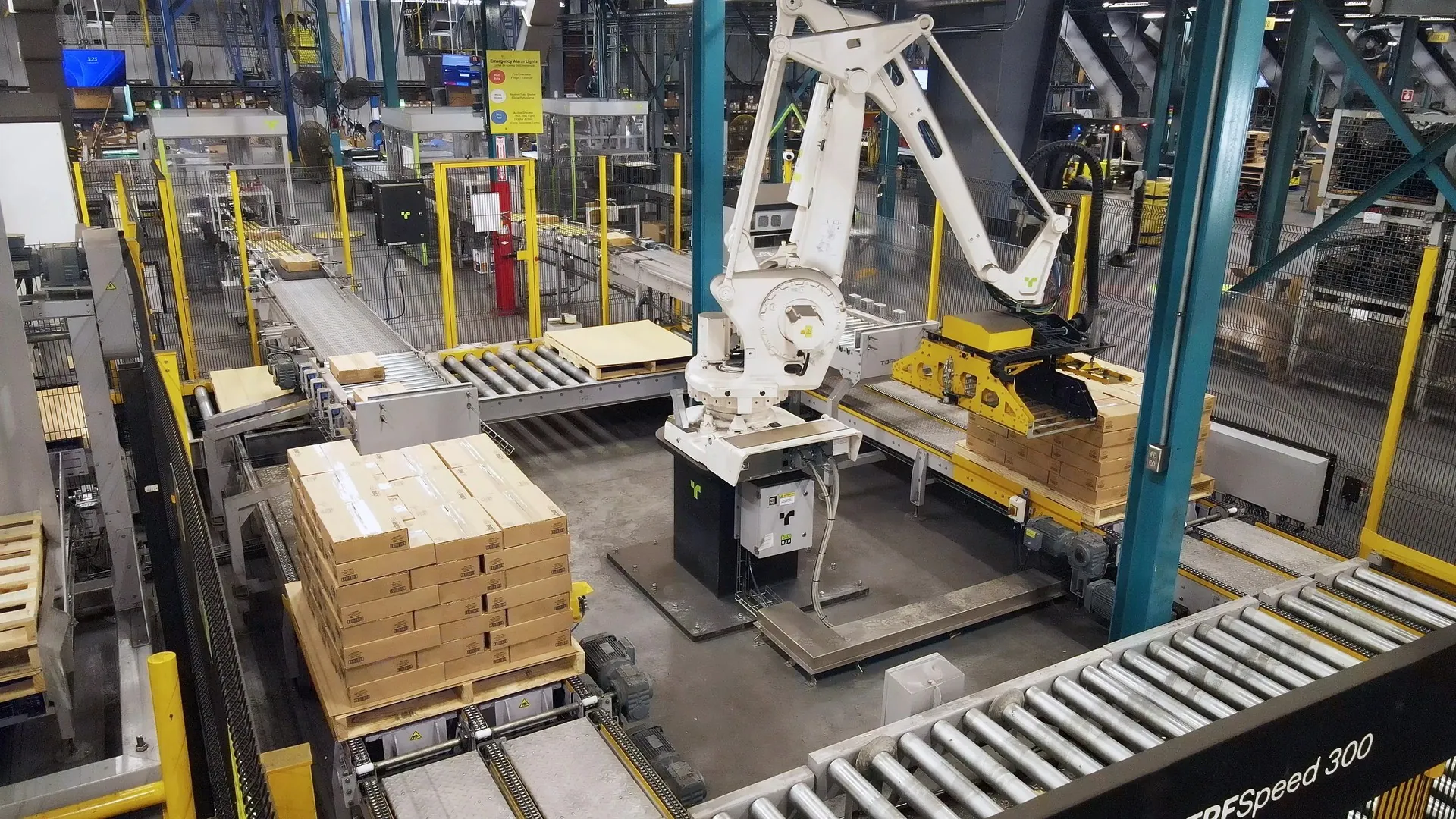
Robotic Palletizing / TRFSpeed
Modular, scalable and built for reliable 24/7 performance.
A high-speed palletizer from TRF Industrial Automation, TRFSpeed is an automated palletizing system that scales from a dedicated robotic cell to a centralized palletizing system for multiple lines in high-volume, multi-shift production, including plants running 24/7. It handles 15 or more cases per minute and cases up to about 80 lb.
Designed for throughput
Designed so the palletizer does not become the bottleneck of your end of line.
Engineered for demanding production
Industrial architecture for multi-shift plants, including 24/7 production.
More lines, one solution
Consolidates several production lines into one palletizing area.
Integrates with your end of line
Conveyors, accumulation, pallet handling, slip sheets, wrapping and labeling.
Payback calculator
Discover the potential cost savings of a TRFSpeed over a 20-year system life. Enter your line data to see the preview; your work email unlocks the full breakdown.
Results are estimates based on the data you enter and typical reference values. Actual payback depends on your application, configuration and project scope, confirmed by a TRF Sales Engineer.
Reference list price: US$ 350,000 for the TRFSpeed 100, EX Works Lenexa, Kansas, installation not included. Installation, line integration and options are quoted with your application.
As robotic palletizing equipment, TRFSpeed is configured for each production flow, so the quote confirms the scope for your plant. The investment follows line speed, case weight, pallet pattern and layout: how many lines feed the palletizing point, how far apart they are and how much pallet handling the cell needs. To estimate your payback, use the calculator below with your location, your shifts and the operators who palletize by hand today.
20-year labor savings
Break-even point
Your hourly labor rate
Robot hourly "labor" rate
This is an initial planning estimate, not a quote and not a guarantee of savings.
It does not include financing, taxes, layout changes or the specific integration of your line. Your complete calculation, with every item for your plant, is done with a TRF Sales Engineer.
Connect With a Sales Engineer| Year | Manual labor | System purchase | Mainte- nance | Electri- city | Robot total cost | Net savings | Cumulative savings |
|---|
This calculator compares your current manual labor costs against the total cost of owning and operating a robotic system over its 20-year lifespan, considering the system purchase price, maintenance (5% of the system price per year) and electricity. The break-even point divides the first-year system cost (purchase, one year of maintenance and one year of electricity) by the annual manual labor cost. Labor data from the U.S. Bureau of Labor Statistics; electric data from the U.S. Energy Information Administration (2024 to 2025). Figures are undiscounted and exclude inflation, financing and taxes.
| Item | TRFSpeed |
|---|---|
| Platform | High-performance robotic palletizing, configurable from a dedicated cell to a centralized multi-line system |
| Typical speed | 15 or more cases per minute |
| Case weight | Up to about 80 lb, subject to application and end-of-arm tool validation |
| Robot | Industrial robot architecture, with multipick where the rate calls for it |
| Pallet handling | Automatic pallet handling, slip sheets and pallet discharge, according to the project configuration |
| Integration | Conveyors, accumulation, pallet handling, slip sheets, wrapping, labeling and warehouse interfaces |
| Typical line | Two or three shifts, including continuous 24/7 production, and plants with several lines to consolidate |
| Below 32°F | TRFSubzero for palletizing areas below 32°F |
| Price | Reference list price US$ 350,000 (TRFSpeed 100, EX Works Lenexa, KS); scope confirmed in each quote |
Typical ranges. TRF engineering confirms final capacity for each application (product, end-of-arm tool, pallet pattern, reach and process).
High-capacity plants choose TRFSpeed when the end of the line has to keep up with production. These are the six reasons.
TRFSpeed is designed for production environments where the palletizer should not become the bottleneck.
An industrial architecture designed for repeatability and dependable performance across multi-shift production, including plants running 24/7.
The flow of several production lines can be consolidated into one coordinated high-speed palletizing system, instead of one palletizer per line.
A project can start as a single palletizing point and grow into a broader, centralized system as your plant expands.
TRFSpeed fits conveyors, accumulation, pallet handling, slip sheets, wrapping, labeling and warehouse interfaces as one end of line.
A repeatable platform keeps enough engineering flexibility to match your layout and production logic, and its modular engineering helps reduce project risk.
A high-speed palletizer is an automated palletizing system, one cell or a group of connected cells, that builds pallets at the rate of a continuous packaging operation, usually a robotic palletizing system with an industrial robot, automatic pallet handling and conveyors that feed it from one or more production lines. It is the end-of-line station that has to keep up with everything upstream.
Compared with a compact cell, a high speed palletizing system adds the functions that keep it moving at higher rates. Multipick, picking more than one case per cycle, raises effective throughput. Automatic pallet handling keeps empty pallets flowing in and full pallets flowing out. Slip sheets, when the load needs them, are placed in the same sequence. These functions decide whether the typical range holds on your line, so they are validated with each application.
TRFSpeed is an industrial robotic palletizer built for that reality without forcing every customer into a full custom project. It is a configurable platform: modular engineering helps reduce project risk, while the configuration keeps the flexibility each production flow requires. A system that starts as a dedicated robotic palletizing cell can be planned for extension when a new line comes online, within a coordinated engineering and controls approach.
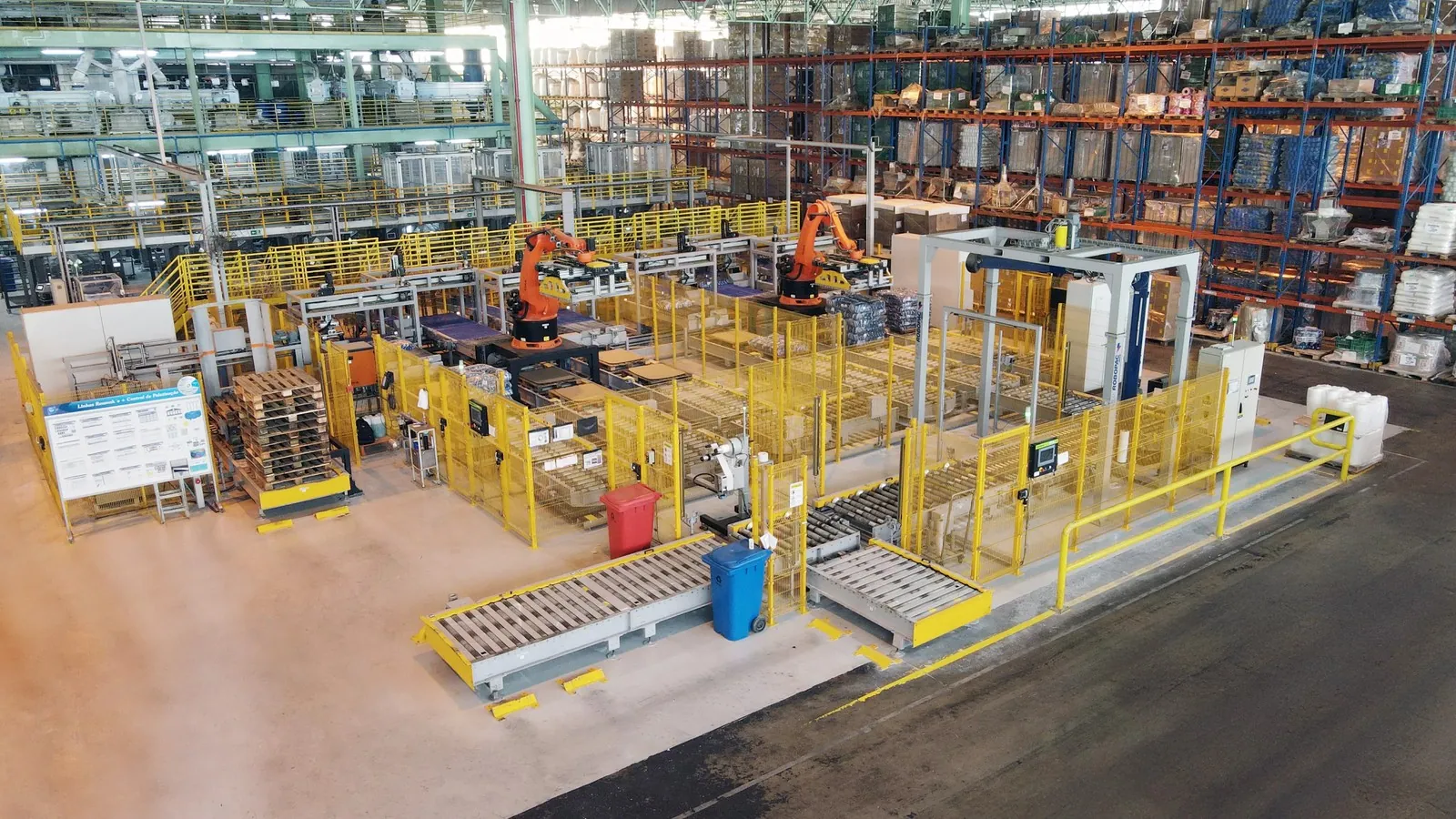
A dedicated cell palletizes one line at its own rate. A centralized multi-line system receives cases from several lines, routes them and builds a pallet for each SKU in one palletizing area.
| Question | Dedicated palletizing cell | Centralized multi-line system |
|---|---|---|
| Lines served | One line | Two or more lines consolidated in one area |
| Conveying | Short run from the case packer to the cell | Routing, merging and accumulation from each line to the palletizing area |
| Floor space | Space at the end of each line | One palletizing area, freeing space along the lines |
| Growth | Add a cell per new line | Add a line to the existing system where capacity allows |
| Typical driver | A single line is the bottleneck | Several lines, capacity expansion or labor concentrated at the end of line |
The choice depends on how many lines you run, how far apart they are, the product mix and how much you expect to grow. TRF reviews these factors in the application study and sizes the system so the palletizer does not become the bottleneck of the plant.
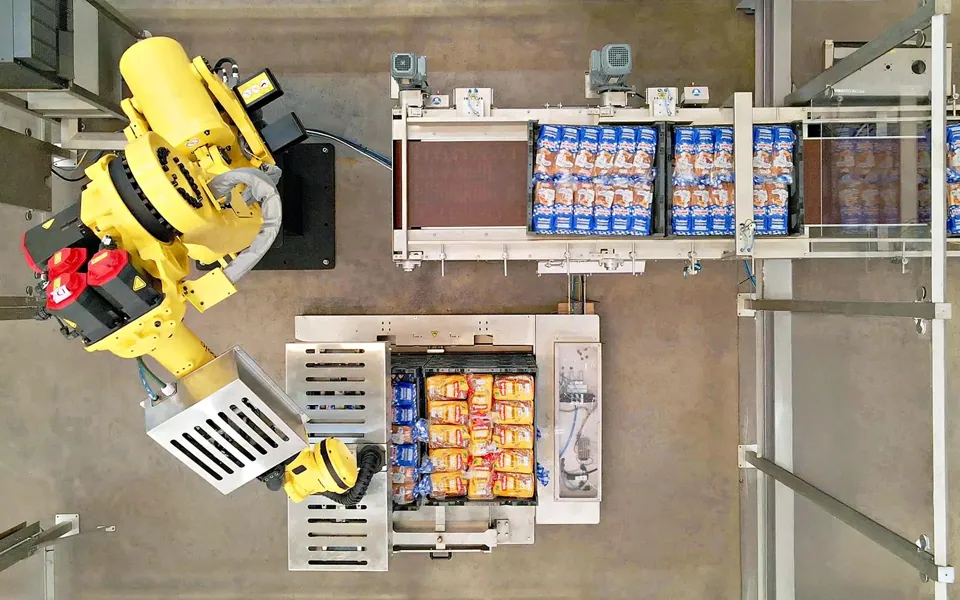
A high-speed palletizer fits high-capacity plants that run continuously and plants with several lines to consolidate. Five customer profiles fit TRFSpeed:
The platform is selected by cases per minute and case weight, so rate, weight and pack format decide the fit for your load. The pages by palletized product, such as the case palletizer and tray palletizer pages, explain the selection for each one.
Your operation is a strong candidate for TRFSpeed when most of these statements are true:
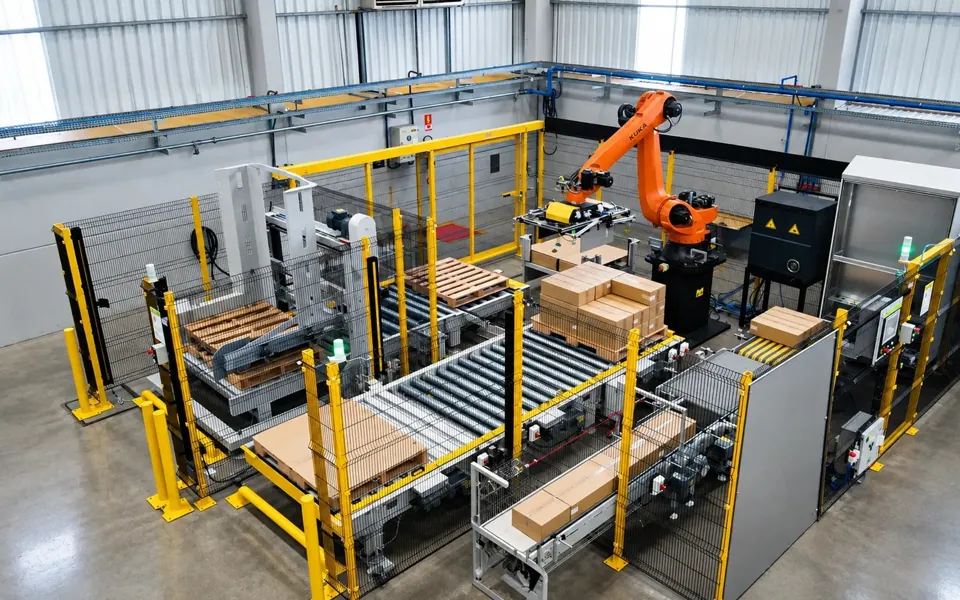
Before quoting, TRF validates the application with your line data: the product, the end-of-arm tool, the pallet pattern, the reach and the process, including the rate of each line, the conveyor arrangement and the pallet handling the system needs. A layout of the end-of-line area shows how many lines can reach one palletizing point.
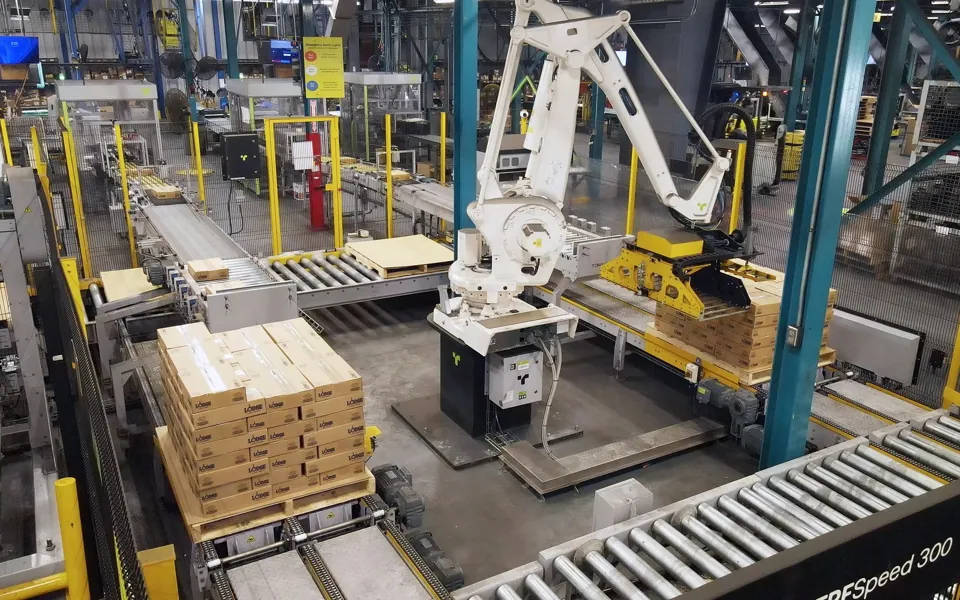
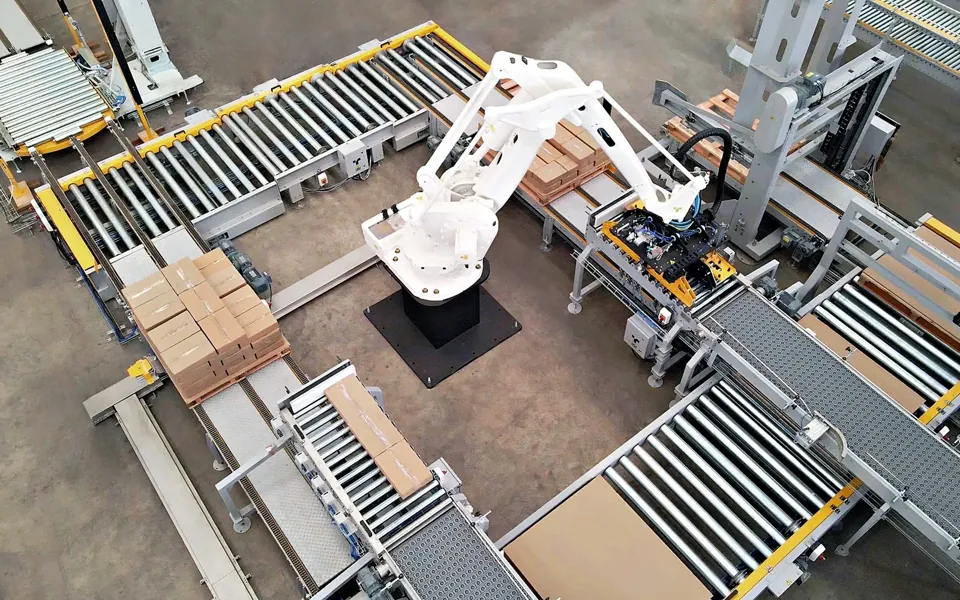
Choose by line speed, case weight and floor space. The three TRF palletizing platforms form one family, and the right model is defined by your line setup and rate.
| Platform | Typical speed | Case weight | Typical fit |
|---|---|---|---|
| TRFCobot | Up to 10 cases per minute | Up to 26 lb | Lower-speed, high-mix lines with limited floor space |
| TRFCompact | Up to 15 cases per minute | Up to about 65 lb | Medium-speed, limited floor space |
| TRFSpeed | 15 cases per minute or more | Up to about 80 lb | High volume, continuous or multi-line palletizing; TRFSubzero for areas below 32°F |
If your rate, case weight or growth plans go beyond the range of one platform, the next platform in the same family covers higher speeds and payloads. Compare all platforms on the robotic palletizing page. Each platform can also be the last station of a complete TRF end of line, with case packing and conveying supplied by the same partner.
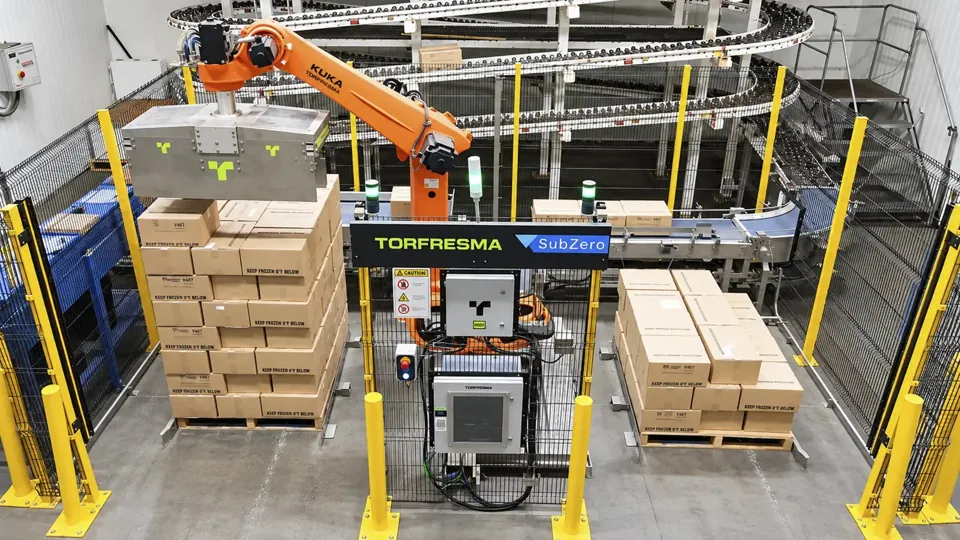
For palletizing areas below 32°F, such as frozen food, ice cream and frozen meat, TRF offers TRFSubzero, built on the TRFSpeed architecture for below-freezing areas, with speed and case weight validated per application. Cold-chain applications are covered on the frozen food and ice cream and protein processing pages.
Catalog
Tell us where to send it and a TRF Sales Engineer will email you the TRFSpeed catalog with specifications and configurations.
Thank you.
A TRF Sales Engineer will email you the TRFSpeed catalog.
Questions
A high-speed palletizer from TRF, the TRFSpeed 100, has a reference list price of US$ 350,000, EX Works Lenexa, Kansas, installation not included. Installation, line integration and options are quoted with your application, because line speed, case weight, the number of lines feeding the cell, pallet handling and layout change the scope. Use the payback calculator on this page to compare it with what manual palletizing costs you today.
A high speed robotic palletizer such as TRFSpeed handles 15 or more cases per minute, with cases up to about 80 lb, as a typical range for commercial screening. Multipick, which picks more than one case per cycle, and automatic pallet handling help the cell hold that rate. TRF confirms the final rate for your product, end-of-arm tool, pallet pattern, reach and process.
Slip sheet palletizing places a thin sheet between layers, under the load or between the products and the pallet. Slip sheets are needed when layers need separation or extra friction, when the load needs more stability, or when the receiving operation requires them. On TRFSpeed, slip sheet placement is one of the pallet handling functions configured for the project, along with automatic pallet feeding and pallet discharge.
Yes, a palletizer can be integrated with an existing conveyor and wrapping line when the interfaces are defined in the application study: infeed rates and orientation, spacing, signals exchanged between machines and how full pallets travel to the stretch wrapper or the warehouse. TRF engineers these interfaces as part of the project and can supply TRFIntraflow conveyors where the line needs accumulation, routing or elevation.
Yes, a high-speed palletizer helps keep the end of the line from becoming the bottleneck when it is sized for your peak rate, not the shift average. TRFSpeed is designed for production environments where the palletizer should not become the bottleneck: multipick and automatic pallet handling keep the cell moving, and accumulation ahead of the cell absorbs short variations between the lines and the palletizer.
Yes, one high-speed palletizer can build pallets for several SKUs at once when it serves a multi-line system with more than one pallet position. Each recipe holds the case data and pallet pattern of one SKU, and on a multi-line TRFSpeed system the recipes also define how cases from each line are routed and which pallet they build. Pallet positions and reach are validated in the layout.
The payback period for a high-speed palletizer on a multi-shift line depends on the labor hours it replaces on every shift, local labor cost and the installed cost of the system. The investment is paid once while the savings repeat on each shift, so two- and three-shift plants recover it sooner.
A robotic palletizer requires periodic inspection of the robot, end-of-arm tool, sensors, conveyors and pallet handling, following the manufacturer's schedule, plus replacement of wear parts before they fail. On a line that runs 24/7, these tasks are planned into scheduled stops. For TRF-supplied equipment, Parts and Service covers technical support, spare parts kept in the United States and the TRFCare preventive maintenance program.
TRF Industrial Automation makes high-speed robotic palletizers for food, CPG and chemical manufacturers in the US, and designs, builds, installs and supports them. Its palletizing family covers TRFCobot, TRFCompact, TRFSpeed and TRFSubzero, plus custom palletizers, and the same partner supplies case packing and conveyor systems, so the end of line can be engineered as one project with one point of contact.
If the end of your line limits production today, or a new line will arrive before the current palletizer is paid off, TRFSpeed is the high-speed palletizer TRF designed for that horizon: high throughput, multi-shift production and multi-line consolidation. Send the rates of each line, case weights, pallet patterns, shifts and a layout of the end-of-line area, and a TRF Sales Engineer will size the system with you.
See TRF systems in real production environments in the TRF case studies.