
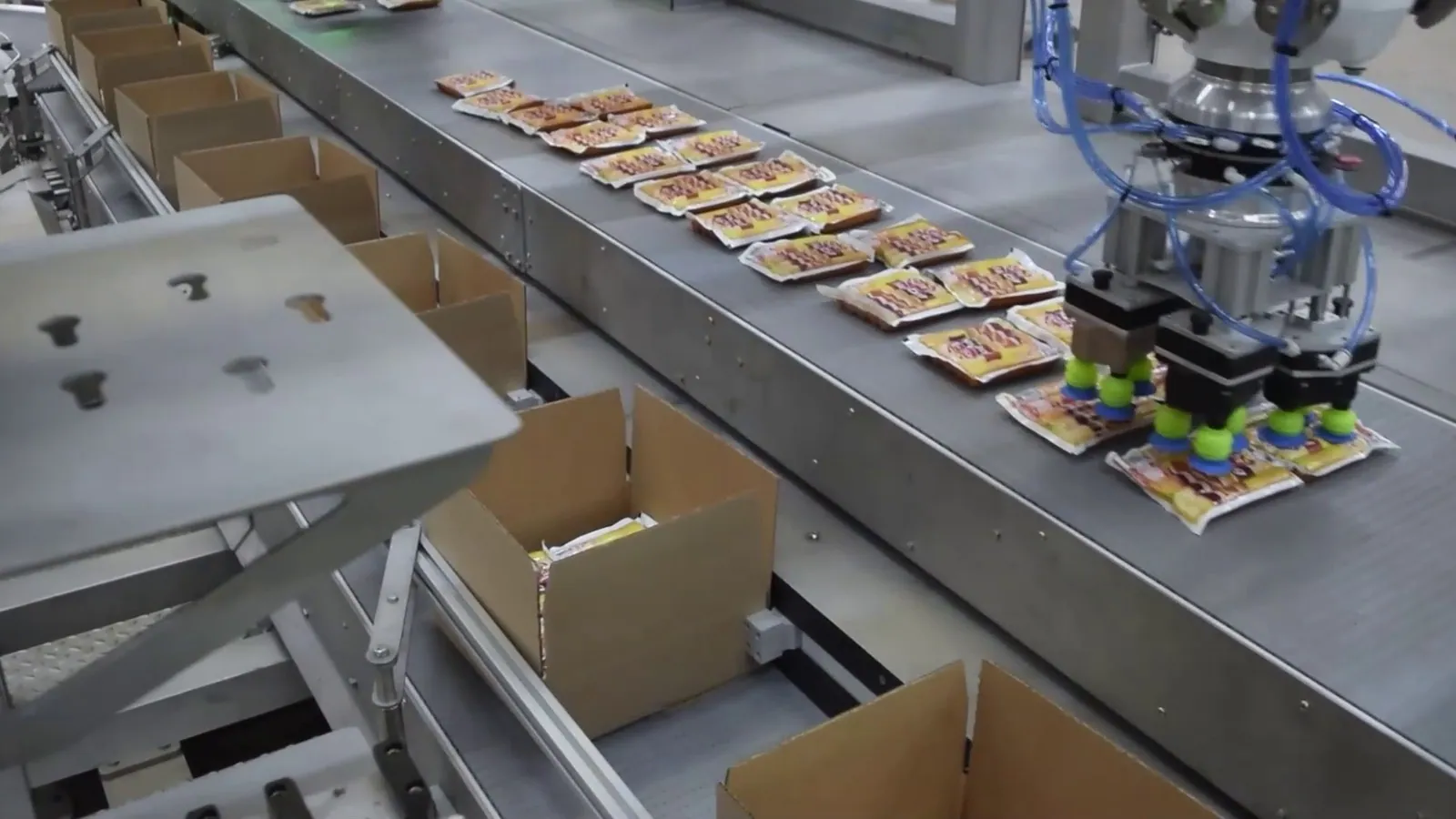
Case Packing / Flow Wrap Case Packer
Flow wrap case packer for fast flow pack lines.
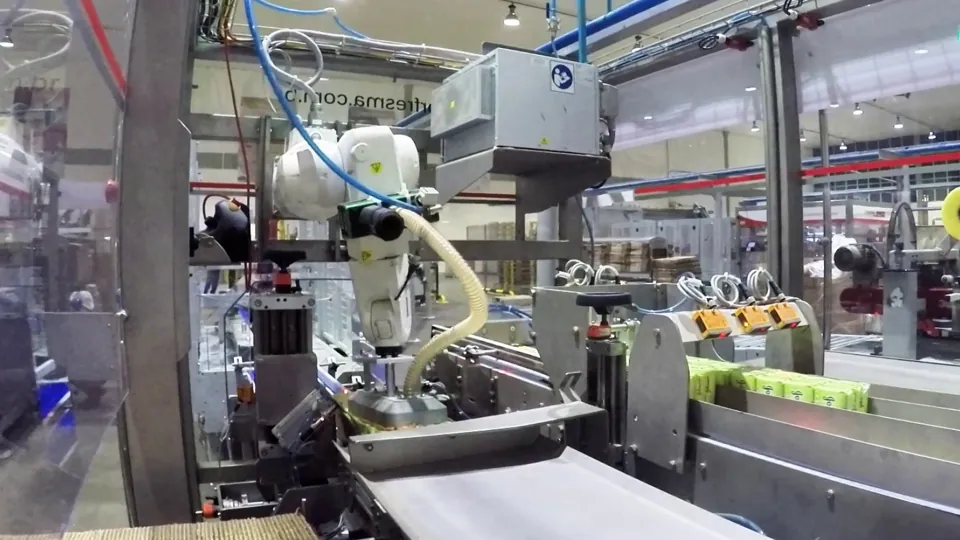
Robotic top-load packing that keeps up with your flow wrappers, protects brittle products and changes SKUs by recipe.
A flow wrap case packer is a top-load machine that loads flow packs, the horizontally wrapped packages produced by flow wrappers, into shipping cases in a set count, pattern and orientation. TRF Industrial Automation packs flow packs with TRFRapidpack, the robotic case packer built for high-mix lines.
Custom engineering
Solutions engineered for your production requirements.
Turnkey integration
From system design through installation and startup.
High reliability
Built for continuous operation.
U.S. support
Technical support for customers across the United States.
Lifecycle support
From startup to long-term performance.
What is a flow wrap case packer?
A flow wrap case packer is secondary packaging equipment that collects flow packs from one or more flow wrappers and loads them into a shipping case through its open top. It receives packages at wrapper speed, arranges them in the count and orientation the case requires and places them in a way that protects the wrap and the product inside.
Every TRF case packer loads from above, and the full case moves on to closing, conveying and palletizing. The top load case packer page explains the format for the whole family.
Flow wrapped products reach the end of the line in a fast, continuous stream, and they behave differently from rigid packages:
- Soft, not rigid. The film follows the shape of the product, so packages flex when handled and settle when stacked.
- Seal geometry. The fin seal along one face and the crimped ends add thickness at specific points, which affects how packages nest.
- Brittle contents. Biscuits, wafers, crackers and thin bars break if they are squeezed, dropped or loaded under too many layers.
- Position at the discharge. Spacing and orientation can vary when the wrapper accelerates, stops or restarts.
Flow wrap lines are common in bakery and snacks, confectionery and food processing plants, often with many SKUs on the same wrapper.
Does a flow wrap case packer need vision-guided robotics?
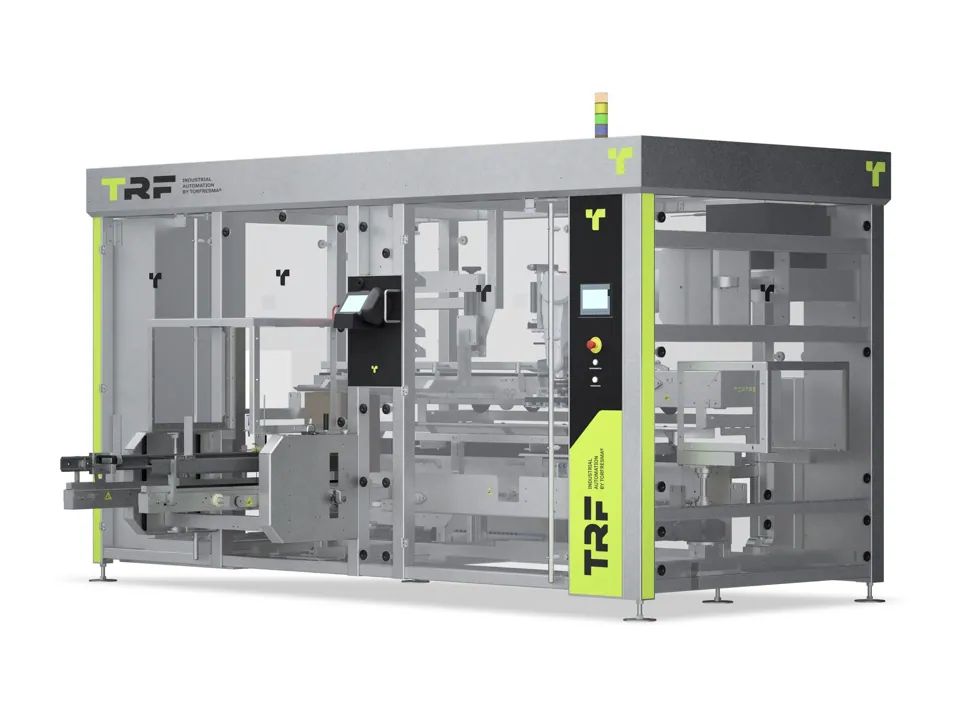
Only when package positions vary. When flow packs leave the wrapper with consistent spacing and orientation, indexed picking is simple: the robot knows where each package will be. When packages arrive rotated, shingled, with variable gaps or merged from more than one wrapper, vision guidance lets the delta robots find each package before picking it. TRFRapidpack supports both approaches.
During the application review, TRF looks at how packages leave each wrapper, how they are conveyed to the packer and what happens to the flow when a wrapper stops. Accumulation between wrapper and packer absorbs short stops, so the case packer can keep a stable rhythm.
The end-of-arm tool is chosen for the package, not for the category. Film, fin seal position, weight, headspace and the orientation required in the case decide how the package is held and whether the robot picks one package or a group at a time. TRF validates the tool with your real flow packs, including packages at the size and weight limits of each SKU.
How are flow packs packed into cases?
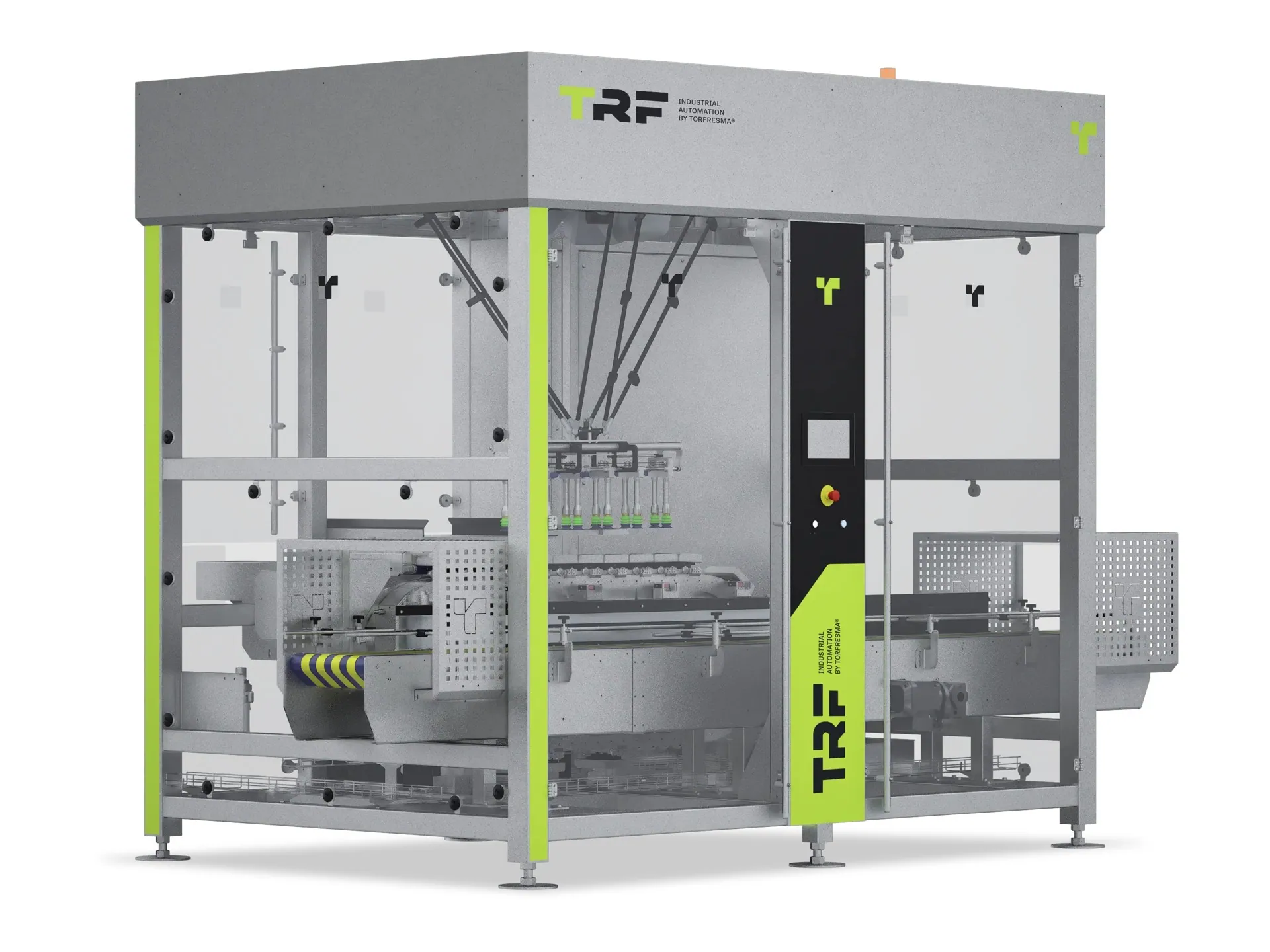
Flow packs are packed in a pattern that sets the count, rows, layers and orientation in each case. The pattern defines the cycle the packer must perform and the case that will be used, so it is decided early in the project.
- On edge, in rows. Packages stand on their long edge, side by side, common for bars and cookie packs and easy to unload at the store.
- Flat, in layers. Packages lie face up or face down in stacked layers, common for thin or wide flow packs that need support.
- Shingled. Packages overlap like roof shingles, which can stabilize soft packages.
- Alternating fin seals. Rows rotate so fin seals and crimped ends do not stack on each other, which keeps the layer flat.
Because flow packs compress, the case must let the flaps close without squeezing the layer while still holding the load stable in transport. The number of layers also sets how much weight rests on the bottom row, so fragile products may need fewer layers or a different orientation.
Flow wrapping lines often carry several flavors, seasonal formats and customer-specific cases. TRFRapidpack changes products and patterns by recipe, with reduced mechanical adjustments, so many changeovers become software selections. The project documents which SKUs share a recipe and which, if any, need a format part.
Which flow wrap case packer fits your line setup and speed?
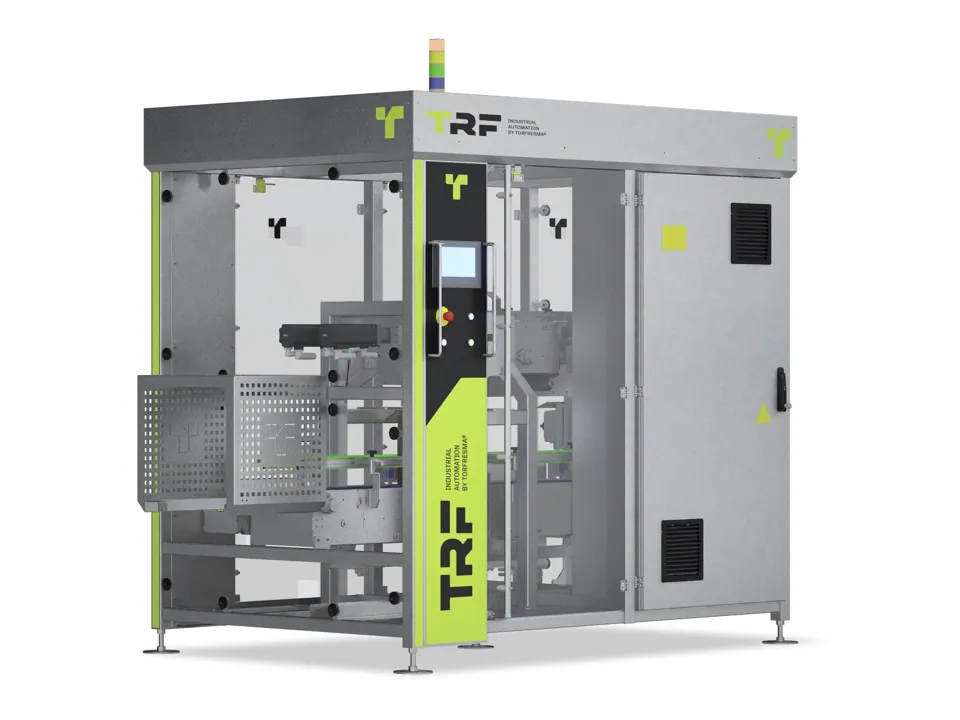
Flow packs are a TRFRapidpack application. The table shows how the three TRF case packing platforms compare for this package.
| Line setup and speed | TRFRapidpack | TRFOnepack | TRFDroppack |
|---|---|---|---|
| Application range | For applications of about 100 to 200 products per minute | For applications of about 20 to 50 products per minute | For applications of about 20 to 500 products per minute |
| Packing principle | Delta robots, vision-guided or indexed | Erects, packs and seals the case in one machine | Controlled gravity loading |
| Flow packs | Yes | Not for flow packs | Not for flow packs |
| Product fragility | Controlled handling for delicate products | Robotic placement at moderate rates | Requires a package that tolerates the drop |
| Primary driver | Flexibility | Integration | Efficiency |
Application ranges for commercial screening, not machine speeds. TRF engineering validates final capacity for each application (flow pack, end-of-arm tool or drop path, pack pattern and case).
TRFRapidpack is the starting point for flow wrap lines, because flow wrapping usually means speed and SKU variety. It fits medium- to high-speed lines in food and CPG plants, handles delicate and irregularly shaped products, and can scale from one robotic module to several as production grows.
TRFOnepack erects the case from a flat blank, loads it robotically and seals it in one coordinated machine, for small and mid-sized manufacturers replacing manual or semi-automatic packing. It is not the platform for flow packs.
TRFDroppack loads repetitive flexible packages by controlled gravity, with no robotic end-of-arm tooling, on lines that need medium to low throughput without robotic complexity. It is not the platform for flow packs.
Each platform can run standalone or as part of a complete TRF end-of-line system, with case forming and closing, TRFIntraflow conveying and a TRF case palletizer at the end of the line. The case packing page compares the three platforms side by side.
Questions
Frequently asked questions
Is a Flow Pack the Same as a Flow Wrap?
A flow pack is the same package as a flow wrap: a tube of film formed around the product, sealed along its length and crimped at both ends, also called horizontal form-fill-seal. Buyers in the US usually say flow wrap or flow wrapped product, while TRF also uses flow pack for the same soft, roughly rectangular package. On this page, all of these terms mean one package.
How Many Flow Packs per Minute Can a Flow Wrap Case Packer Pack?
A flow wrap case packer from TRF packs flow packs in applications of about 100 to 200 products per minute, the application range of TRFRapidpack. That is not a nominal machine speed. Actual capacity depends on the flow pack, the pick tool, the pack pattern, how many packages are picked per cycle and the wrapper discharge, and TRF engineering validates it for each line.
Can Several Flow Wrappers Feed One Case Packer?
Several flow wrappers can feed one case packer when the combined rate and the layout allow it. TRF reviews how many wrappers feed the packer, how packages arrive, how much accumulation exists and how the flow behaves when one wrapper stops. The infeed, the picking method and the collation are then defined for the combined flow, often with vision guidance when lanes merge.
How Does a Flow Wrap Case Packer Protect Brittle Products?
A flow wrap case packer helps protect brittle products such as biscuits, wafers and thin bars by controlling the pick, the placement and the load in the case. The tool holds the package without pressing on the product and releases it in position rather than dropping it. TRF checks broken product, seal condition and pattern stability with your real flow packs on TRFRapidpack.
Can a Flow Wrap Case Packer Feed My Existing Palletizer?
A flow wrap case packer can feed an existing palletizer when the case closing, conveying and controls interfaces are engineered together. TRFIntraflow carries sealed cases to the palletizer you own or to a TRFCobot, TRFCompact or TRFSpeed, and the signals between wrappers and packer are defined in the same project. See end-of-line integration.
What Is the ROI of a Flow Wrap Case Packer?
The ROI of a flow wrap case packer comes from comparing its installed cost with annual savings: operators casing packages by hand per shift, shifts per day, local labor cost, wrapper output lost to packing backlogs, broken product and time saved at flavor and format changes. There is no typical figure, so a TRF Sales Engineer builds the estimate with your line data.
Start your flow wrap case packer evaluation
The right flow wrap case packer depends on your wrappers, your SKUs, your patterns and your speed. Send TRF your package data and samples, pack patterns, products per minute per wrapper and a drawing of the area. A TRF Sales Engineer evaluates TRFRapidpack against your line, validates picking, pattern and case with real flow packs, and confirms the scope.
Want to see TRF installations first? Browse the TRF case studies.
Next step
Keep your production running.
Tell us about your products, rates and floor space. A TRF Sales Engineer answers with the platform, the layout and the next step for your line.