
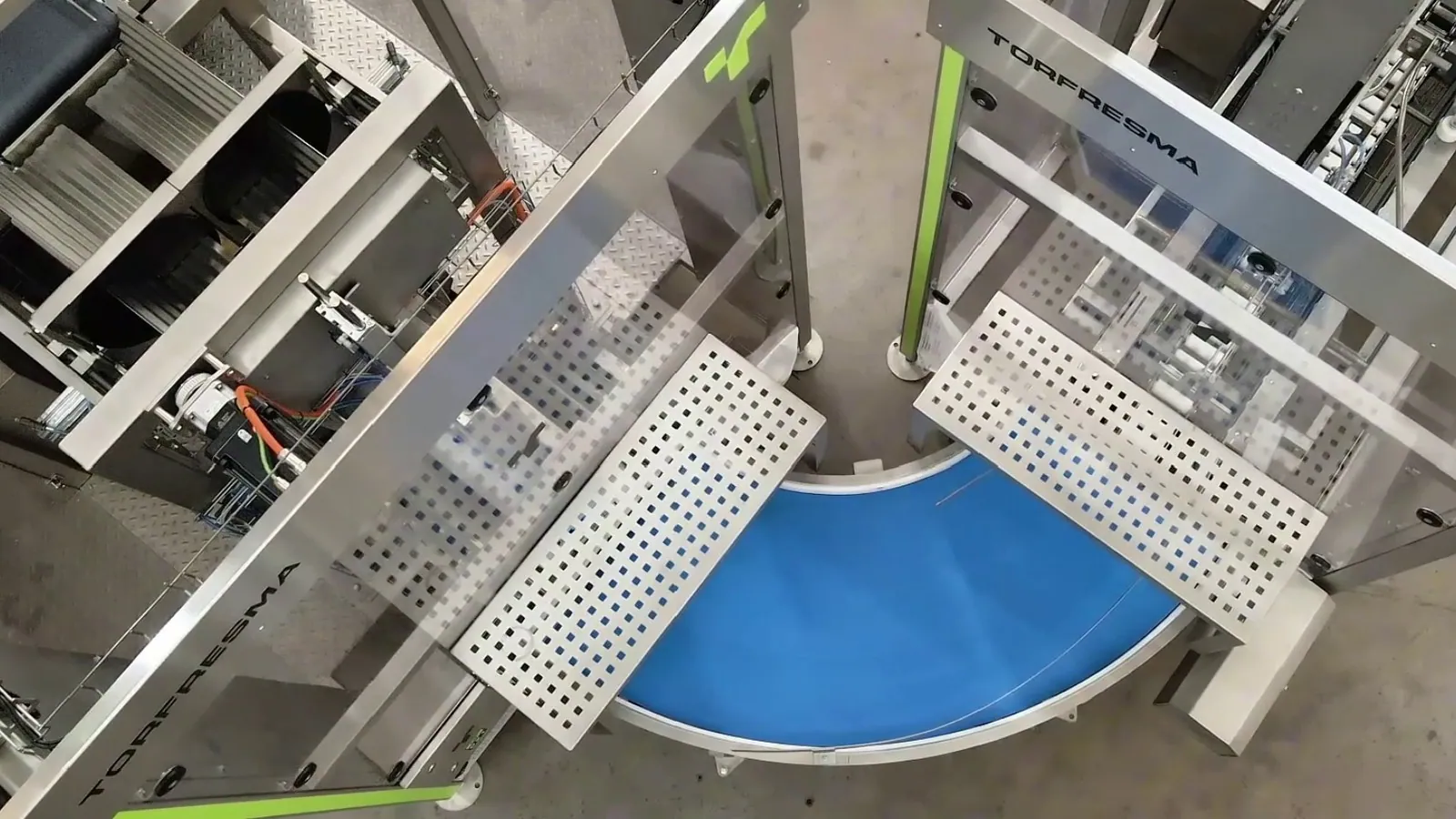
Case Packing / Pouch Case Packer
Pouch case packer for robotic or gravity loading.
Pack pouches into cases with vision-guided robotic loading or controlled gravity loading.
A pouch case packer is a top-load machine that groups filled pouches and places them into shipping cases, by robotic pick-and-place for high-mix lines or by controlled gravity loading for repetitive formats. TRF Industrial Automation packs pouches with TRFRapidpack, its robotic case packer, and TRFDroppack, its gravity drop packer. Your line setup and speed decide which one fits.
Custom engineering
Solutions engineered for your production requirements.
Turnkey integration
From system design through installation and startup.
High reliability
Built for continuous operation.
U.S. support
Technical support for customers across the United States.
Lifecycle support
From startup to long-term performance.
What is a pouch case packer?
A pouch case packer is secondary packaging equipment that receives pouches from the filling and sealing machine and loads them, in a defined count and pattern, into a shipping case. It has to keep pace with the filler, arrange pouches in the orientation the case requires and place them without stressing the seals or the film.
Every TRF case packer loads from above. The case is presented open at the top, the pouches enter vertically, and the full case moves on to sealing, conveying and palletizing. What separates the options is how pouches reach the case: picked by robots, or collated and released through a controlled drop. The top load case packer page explains the format across the whole family.
Pouches are harder to automate than rigid packages. Contents shift and move the center of gravity, two pouches of the same SKU can lie differently on the conveyor, seals and zippers must not be pulled or crushed, and stand-up pouches carry their weight low on a gusseted base. That is why TRF validates each application with real pouches before recommending a platform.
Pouch lines are common in food processing, frozen food and ice cream, pet food and confectionery plants, where hand packing limits the filler.
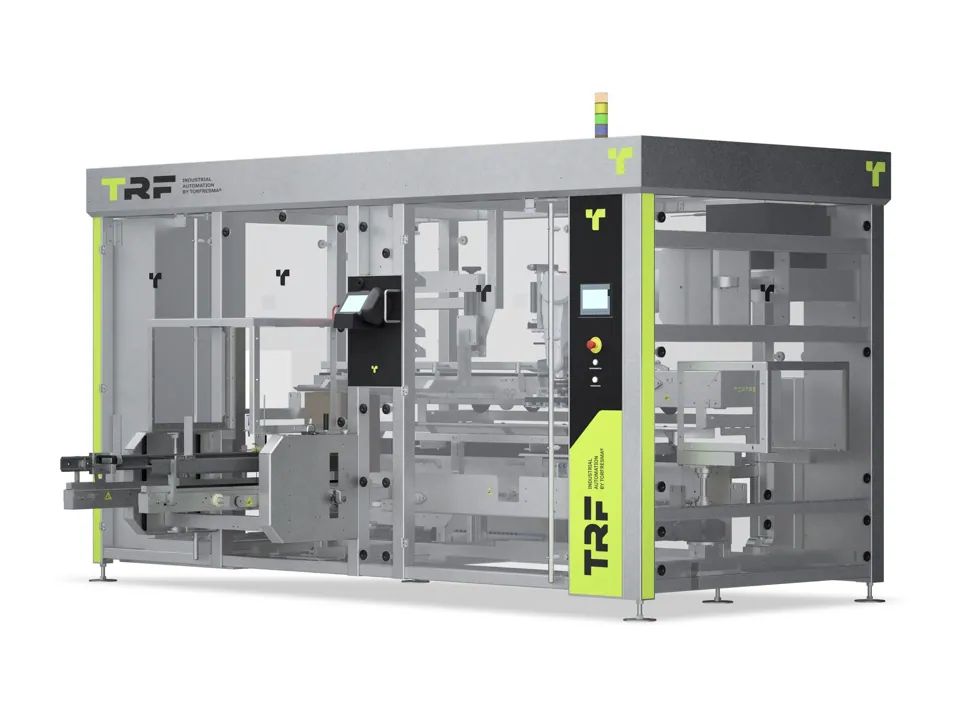
How are pouches packed into cases?
Pouches are packed in a pattern that sets the count per case, the rows and layers and the position of each pouch. For pouches, orientation is often what decides between robotic and gravity loading.
- Flat, in layers. Pouches lie on their face, one layer over another, common when cases go to distribution rather than straight to the shelf.
- On edge, in rows. Pouches stand side by side, which uses case volume well and suits cases opened in the store.
- Standing upright. Stand-up pouches rest on their base, often with the front panel facing a defined side of the case.
- Shingled. Pouches overlap partially, which can stabilize flexible packages in the case.
Robotic placement holds a specific orientation pouch by pouch. Gravity loading sets the pattern through collation and the drop path, which works when the pattern repeats and the pouch settles predictably. Case dimensions, pattern and fill are defined together, to keep pouches from shifting in transport and seals from being stressed when the flaps close. When fill levels vary between pouches, TRF engineering accounts for that variation in the pattern and in the loading method.
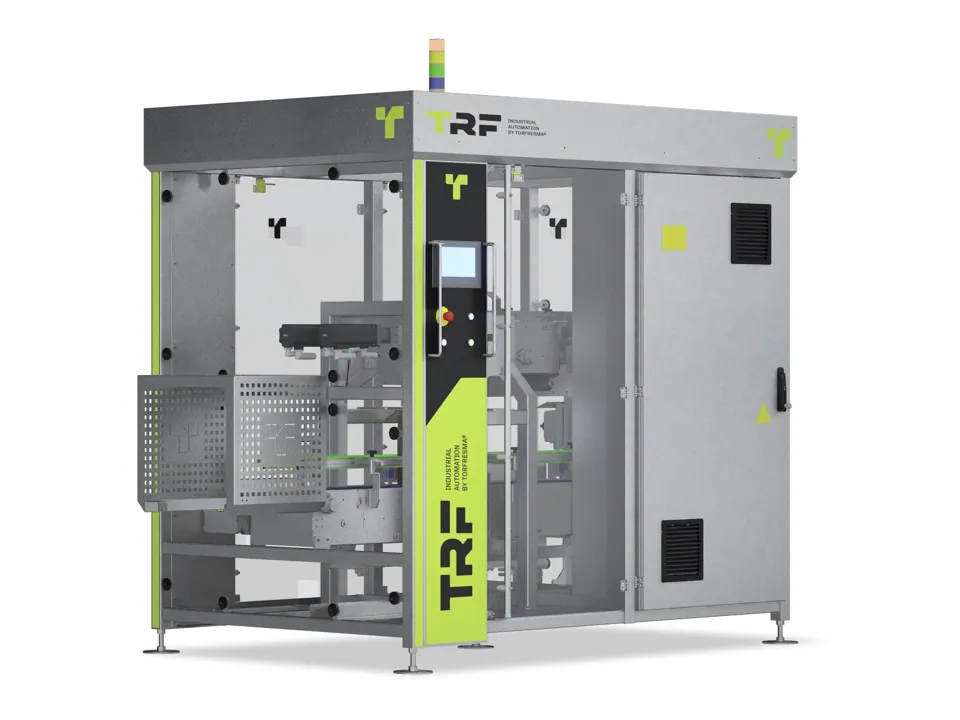
Does a pouch case packer need vision-guided robotics?
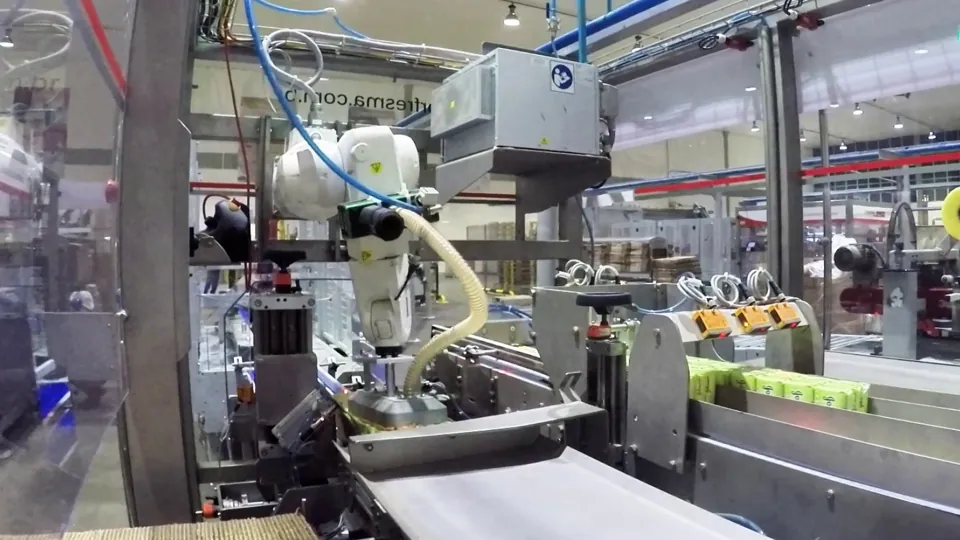
Only when pouch position varies. TRFRapidpack picks with vision-guided delta robots when pouches arrive in a random flow, and with indexed picking when they arrive in a controlled position. The choice follows how pouches leave the filler, how many SKUs the line runs and the orientation the case requires.
Gravity packing with TRFDroppack needs no vision and no robotic tooling, which suits repetitive pouches that tolerate a controlled drop. Seal strength, fill and product type are reviewed together before a pouch is assigned to gravity packing.
Either way, protection comes from controlling every contact with the pouch. TRFRapidpack is designed for controlled handling of delicate, flexible or irregularly shaped products, with an end-of-arm tool selected for your film, fill and weight. During validation, TRF checks seal and zipper condition after loading, pouch position in the case and pattern stability when the case is closed and conveyed.
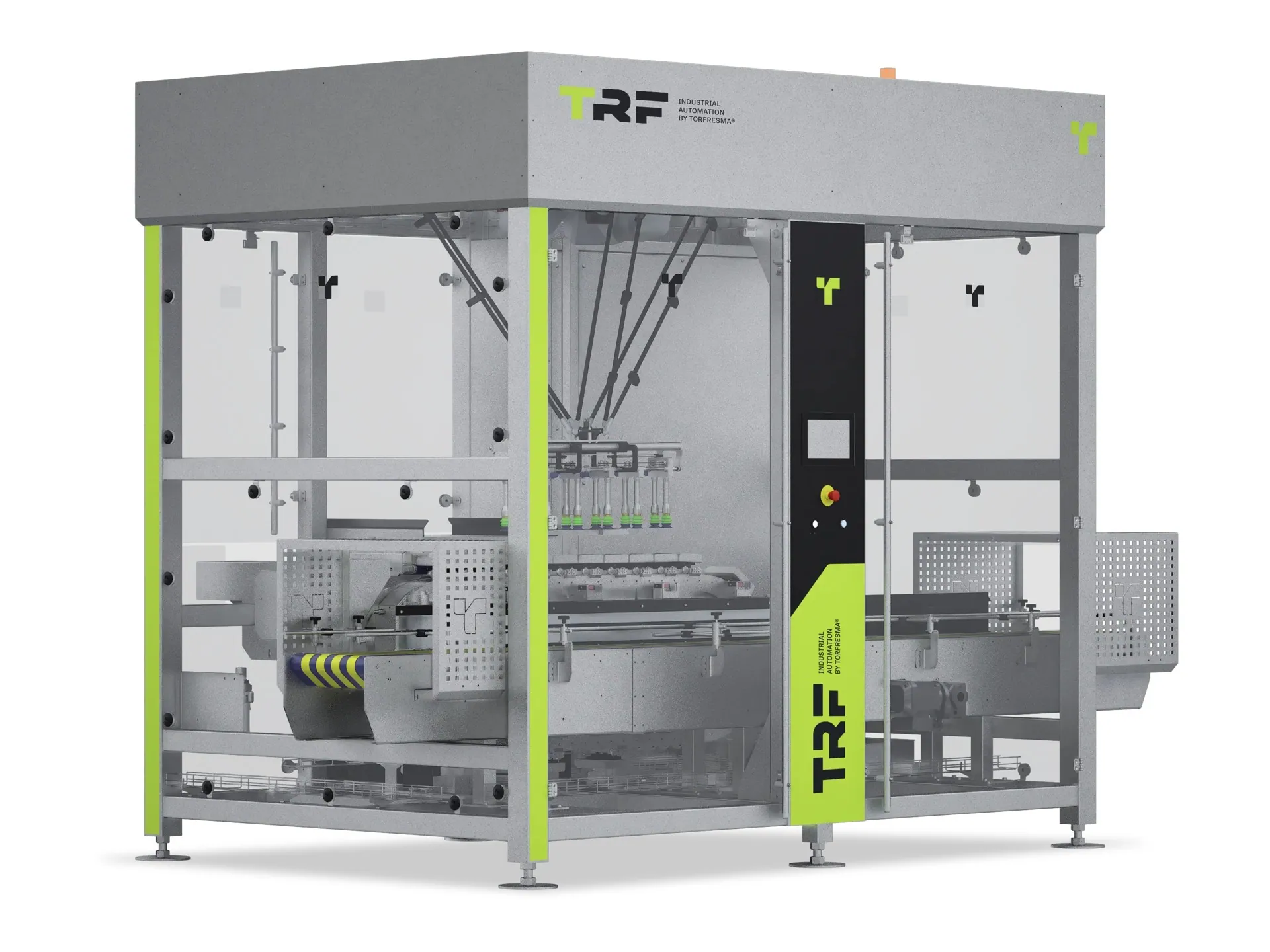
Which pouch case packer fits your line setup and speed?
Choose by line setup and speed. The three TRF case packing platforms form one family, and the right model is defined mainly by your SKU mix, how pouches arrive, whether the case must be erected and sealed in the same machine and the products per minute your line runs.
| Line setup and speed | TRFRapidpack | TRFOnepack | TRFDroppack |
|---|---|---|---|
| Application range | For applications of about 100 to 200 products per minute | For applications of about 20 to 50 products per minute | For applications of about 20 to 500 products per minute |
| Packing principle | Delta robots, vision-guided or indexed | Erects, packs and seals the case in one machine | Controlled gravity loading |
| Pouches | Yes | Not for pouches | Yes |
| SKU mix | High mix, frequent pattern changes | Multiple recipes within the validated application | Repetitive, standardized formats |
| Primary driver | Flexibility | Integration | Efficiency |
Application ranges for commercial screening, not machine speeds. TRF engineering validates final capacity for each application (pouch, end-of-arm tool or drop path, pack pattern and case).
TRFRapidpack is the flexible robotic case packer for medium- to high-speed pouch lines with multiple SKUs, frequent pattern changes or orientation requirements. It can grow from one robotic module to several as production increases.
TRFDroppack is the gravity drop packer for repetitive pouch formats that tolerate a controlled drop, on lines that need medium to low throughput without robotic complexity. Fewer complex components and no robotic end-of-arm tooling keep operation simple.
TRFOnepack erects the case from a flat blank, loads it robotically and seals it in one coordinated machine, for small and mid-sized manufacturers replacing manual or semi-automatic packing. It is not the platform for pouches.
Each platform can run standalone or as part of a complete TRF end-of-line system, with case forming and closing, TRFIntraflow conveying and robotic palletizing from the same partner. Compare the three side by side on the case packing page.
Questions
Frequently asked questions
How Many Pouches per Minute Can a Pouch Case Packer Pack?
A pouch case packer from TRF packs pouches in applications of about 100 to 200 products per minute with TRFRapidpack, or about 20 to 500 with TRFDroppack, the gravity platform. These are application ranges, not machine speeds. Actual capacity depends on the pouch, the pick tool or drop path, the pack pattern and the filler discharge, and TRF engineering validates it for each line.
Can a Pouch Case Packer Place Stand-Up Pouches Upright?
A pouch case packer can place stand-up pouches upright when it uses robotic placement, because the robot holds a defined orientation pouch by pouch, including the front panel facing a set side of the case. TRFRapidpack does this with an end-of-arm tool selected for your film, fill and gusseted base. Gravity loading suits pouches that lie flat or on edge in a repeating pattern.
When Should Pouches Be Gravity-Packed Instead of Picked by a Robot?
Pouches should be gravity-packed instead of picked by a robot when the format repeats, the pattern is standardized and the pouch settles predictably after a controlled drop. TRFDroppack then removes vision, robotic tooling and their maintenance from the line. Seal strength, fill and product type are reviewed together before a pouch is assigned to gravity packing.
How Fast Can a Pouch Case Packer Change Over Between SKUs?
A pouch case packer changes over between SKUs mostly in software when it is robotic: on TRFRapidpack, product and pattern changes are recipe-based with reduced mechanical adjustments. TRFDroppack is designed for standardized patterns, where changes are less frequent. During engineering, TRF documents which changes are recipe selections and which, if any, require a format part.
Can a Pouch Case Packer Handle Frozen Pouches?
A pouch case packer can handle frozen pouches within the validated application: frozen food bags and IQF product bags are standard TRFDroppack products, and frozen food is a focus industry for TRFRapidpack. TRF validates the pouch, pattern and operating temperature with real product. Downstream, TRFSubzero palletizes in areas below 32°F.
What Is the ROI of Automating Pouch Case Packing?
The ROI of automating pouch case packing comes from comparing the installed cost with annual savings: people packing pouches by hand on each shift, shifts per day, local labor cost and the output the filler gains when packing stops being the constraint. Fewer stressed seals and zippers add value beyond labor. A TRF Sales Engineer builds the estimate with your data.
Start your pouch case packer evaluation
The right pouch case packer depends on your pouches, your SKUs and your speed. Send TRF your pouch data and samples, case formats, products per minute and a drawing of the area. A TRF Sales Engineer evaluates TRFRapidpack and TRFDroppack against your line, validates the pick tool or drop path, orientation and pattern with real product, and confirms the scope.
Want to see TRF installations first? Browse the TRF case studies.
Next step
Keep your production running.
Tell us about your products, rates and floor space. A TRF Sales Engineer answers with the platform, the layout and the next step for your line.