
Simplicity
A gravity-based architecture avoids robotic handling when the application does not require it, so the machine stays simple to run.
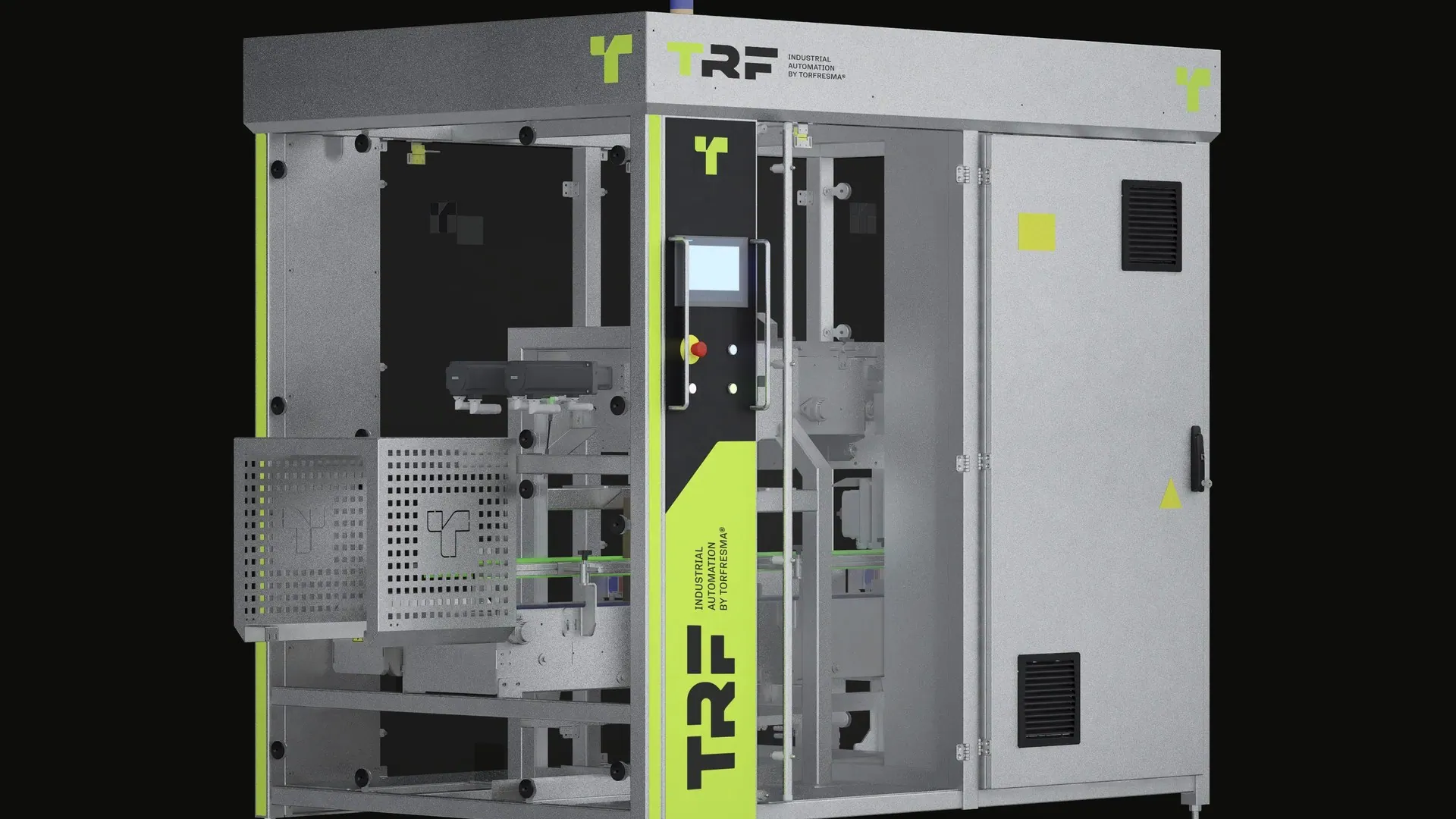
Case Packing / TRFDroppack
Efficient automation designed for reliable, high-throughput production.
A drop case packer collates flexible packages above an open case and loads them through a controlled gravity drop, and TRFDroppack is the drop case packer from TRF Industrial Automation for bags, pouches and other flexible packages, in applications of about 20 to 500 products per minute.
Simple by design
Gravity loading avoids robotic handling when the application does not need it.
Compact vertical packing
Vertical product movement can provide a compact packaging architecture.
Less to maintain
Fewer complex components and no robotic end-of-arm tooling.
Built for flexible bags
Pillow bags, pouches, VFFS packages, IQF and frozen food bags.
| Item | TRFDroppack |
|---|---|
| Packing principle | Automatic collation, then controlled gravity loading into the case |
| Application range | For applications of about 20 to 500 products per minute |
| Throughput class | Medium to low throughput lines |
| Loading method | Top-load case packing |
| Product formats | Pillow bags, pouches, flexible bags, VFFS packages, IQF product bags, frozen food bags, grated cheese bags, rice and grains, pet food and similar free-flowing packaged products |
| Tooling | No robotic end-of-arm tooling requirements |
| Mechanical complexity | Reduced, with fewer complex components |
| Product movement | Vertical, which can provide a compact packaging architecture |
| Integration | Standalone case packer, or part of a complete TRF end-of-line system |
Application range, not a machine speed rating. TRF engineering confirms final capacity for each application (how the package behaves in the drop, collation pattern, count per case and case format).
Food manufacturers choose TRFDroppack when the package is flexible, the pattern repeats and simplicity matters more than robotic flexibility. These are the six reasons.
A gravity-based architecture avoids robotic handling when the application does not require it, so the machine stays simple to run.
Reduced mechanical complexity supports consistent industrial operation.
The machine automates repetitive product grouping and manual case loading, so operators stop counting and loading by hand.
Vertical product movement can provide a compact packaging architecture where floor space at the packing step is tight.
Fewer complex components and no robotic end-of-arm tooling to specify, change and service.
Continuous, controlled case loading supports high-throughput case packing and labor savings with a less complex automation architecture.
A drop case packer is a case packing machine that groups packaged products above an open case and releases them into it through a controlled drop, using gravity instead of a robot to place the product. It is also called a gravity case packer, and it suits flexible packages, such as bags and pouches, that settle into the case on their own.
A robotic case packer picks each product and places it in the case. That suits variable products, orientations and patterns, but it adds robots and end-of-arm tooling to specify and maintain. When a product tolerates a controlled drop and the pack pattern repeats every cycle, a flexible bag case packer built on gravity reduces that complexity. When patterns change often or packages must be oriented, robotic packing is the better tool.
Gravity case packing is the logic behind TRFDroppack, built for lines where the product and the pack pattern do not require the complexity of robotic handling. Simple by design, it runs as a standalone case packer or as one part of a complete TRF end of line.
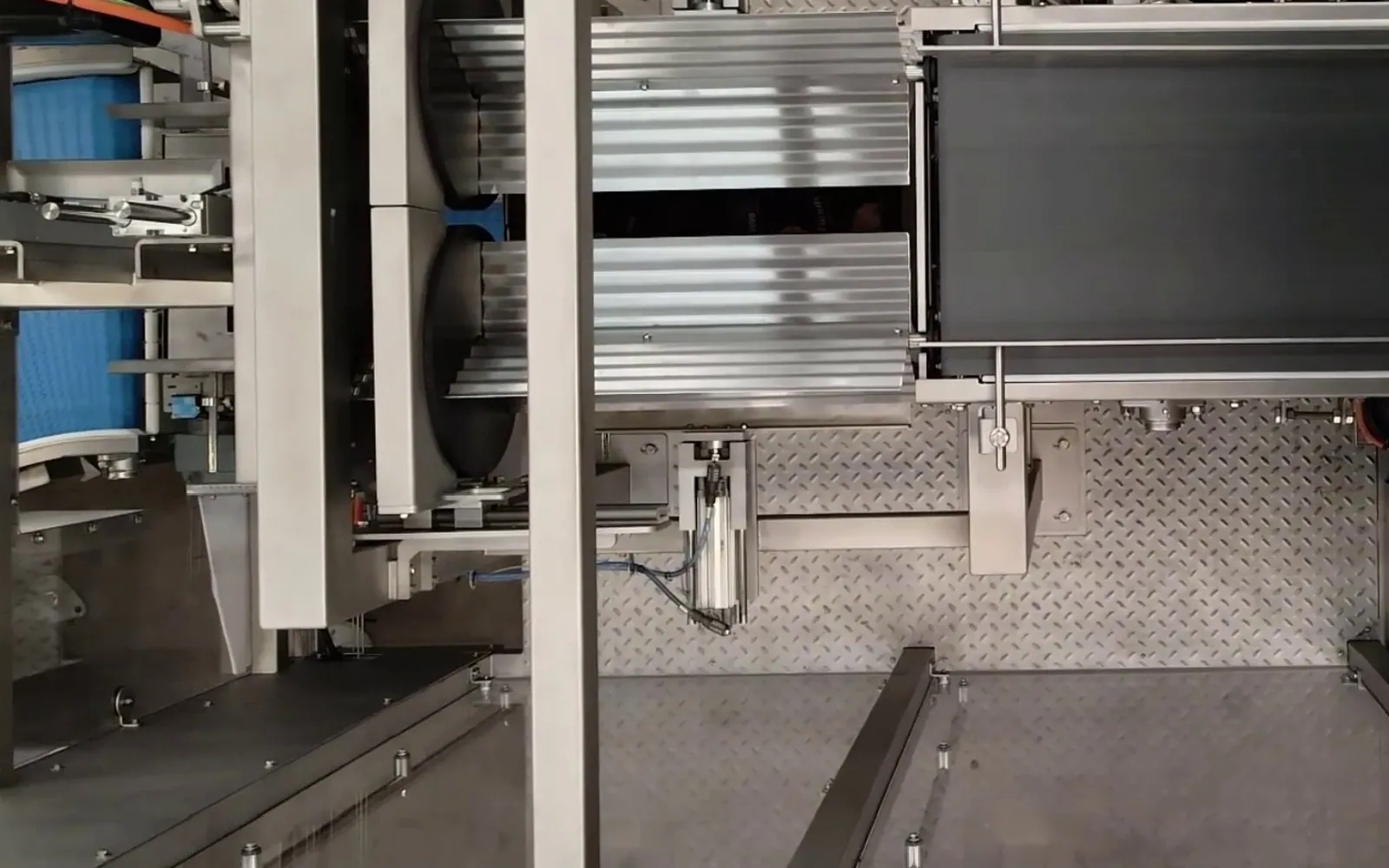
Gravity packing fits mid-sized and large food manufacturers running repetitive flexible packages, where simplicity and low operational complexity matter more than maximum robotic flexibility. TRFDroppack packs:
Typical plants are in food processing, frozen food and ice cream, dairy and cheese for grated cheese bags, and pet food. The bag case packer page goes deeper into VFFS, IQF, pet food, rice and grains and grated cheese bags.
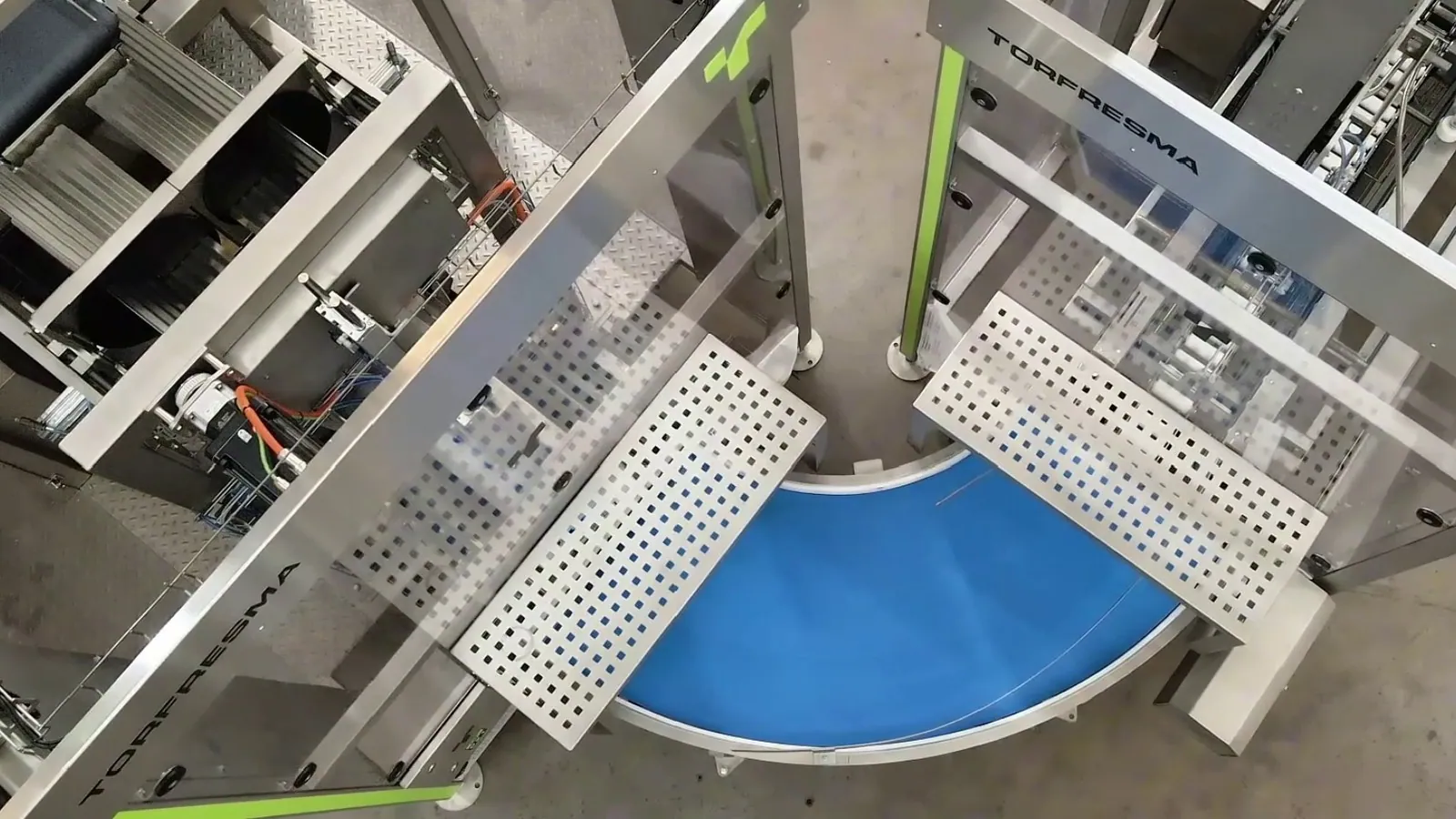
Your line is a strong candidate for TRFDroppack when most of these statements are true:
Before quoting, TRF validates five factors with your line data: how the package behaves in the drop (stiffness, fill level and seal), the collation pattern, the count per case, the case format, and the flow from the bagger upstream to conveying and palletizing downstream.
Choose by product behavior, SKU mix, rate and how much of the case process belongs in one machine. The three TRF case packing platforms form one family, and line setup and speed define the model.
| Platform | Application range | Packing principle | Typical fit |
|---|---|---|---|
| TRFRapidpack | About 100 to 200 products per minute | Delta robots, vision-guided or indexed picking | High-mix lines, multiple SKUs, variable product flow |
| TRFOnepack | About 20 to 50 products per minute | Case erecting, robotic packing and case sealing in one machine | Small and mid-sized plants consolidating secondary packaging |
| TRFDroppack | About 20 to 500 products per minute | Controlled gravity loading | Repetitive flexible packages and standardized patterns |
Application ranges, not nominal machine speeds. TRF engineering confirms final capacity for each application (product, pack pattern, tooling, case format and process).
The ranges overlap, so speed alone rarely decides. If the pattern changes often or the product must be oriented, robotic packing fits. If the package is flexible and the pattern repeats, gravity is the simpler answer. The case packing page compares the family in more detail.
Every platform runs standalone or as part of a complete TRF end of line: TRFIntraflow conveys and routes the cases, and TRFCobot, TRFCompact or TRFSpeed build the pallet. Projects that span several lines are scoped together as one end of line.
Applications
Each product has its own page with the pattern, gripper and line details that matter for that load.
Catalog
Tell us where to send it and a TRF Sales Engineer will email you the TRFDroppack catalog with specifications and configurations.
Thank you.
A TRF Sales Engineer will email you the TRFDroppack catalog.
Questions
The throughput range of a gravity case packer from TRF covers applications of about 20 to 500 products per minute, positioned for medium to low throughput lines. That is an application range, not a nominal machine speed. The rate a given line reaches depends on the package, the collation pattern, the count per case and the equipment upstream and downstream, all validated by TRF engineering for TRFDroppack.
A vertical case packer moves the product downward into the case instead of placing it with a robot arm, which is how a gravity drop case packer works. It is the right fit when the package is flexible, the pack pattern repeats and the priority is efficiency with low mechanical complexity. TRFDroppack uses that vertical movement, which can also keep the packing station compact.
A drop case packer costs what its package, collation pattern, case format, rate and integration scope require, so TRF quotes TRFDroppack per application from your line data. Payback comes from labor savings and throughput improvement with a less complex automation architecture. Fewer complex components and no robotic end-of-arm tooling also mean less to service over the life of the machine.
A drop case packer often needs less floor space than a robotic cell because the product moves vertically into the case, which can provide a compact packaging architecture. The final footprint depends on the case format, the collation area and how the bagger upstream and the conveyor downstream connect. TRF confirms the layout for your plant during the application review.
A drop case packer requires less maintenance than a robotic case packer because it has fewer complex components and no robotic end-of-arm tooling to specify, change and service. Routine checks focus on the collation area, the drop mechanism and the case handling. For TRF-supplied equipment, Parts and Service covers technical support, spare parts kept in the United States and the TRFCare program.
A drop case packer can feed a palletizer and conveyors already in your plant when the interfaces are engineered with the project. TRF reviews existing equipment and controls before defining the scope, and TRFIntraflow adds sensors, PLC and HMI, machine communication and palletizer interfaces. The bag palletizer page covers the palletizing side of a flexible bag line.
If the package is flexible and the pattern repeats, TRFDroppack is the drop case packer TRF built for that line. Start with your line data: bag or pouch specifications, target rates and case format. A TRF Sales Engineer validates the fit and confirms whether TRFDroppack, TRFRapidpack or TRFOnepack is right for your plant.
Want to see TRF installations first? Browse the TRF case studies.