Let’s Talk Automation
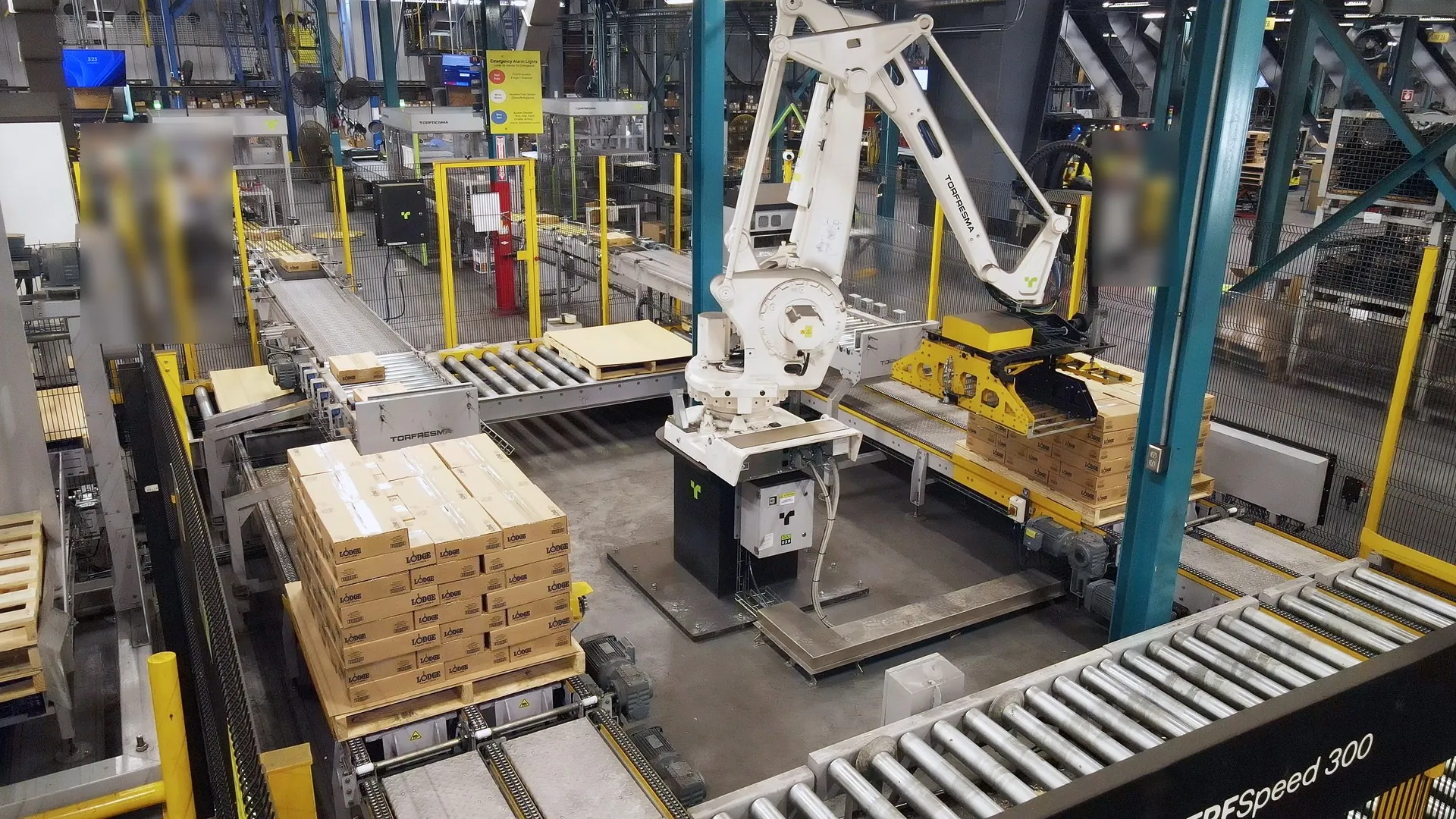
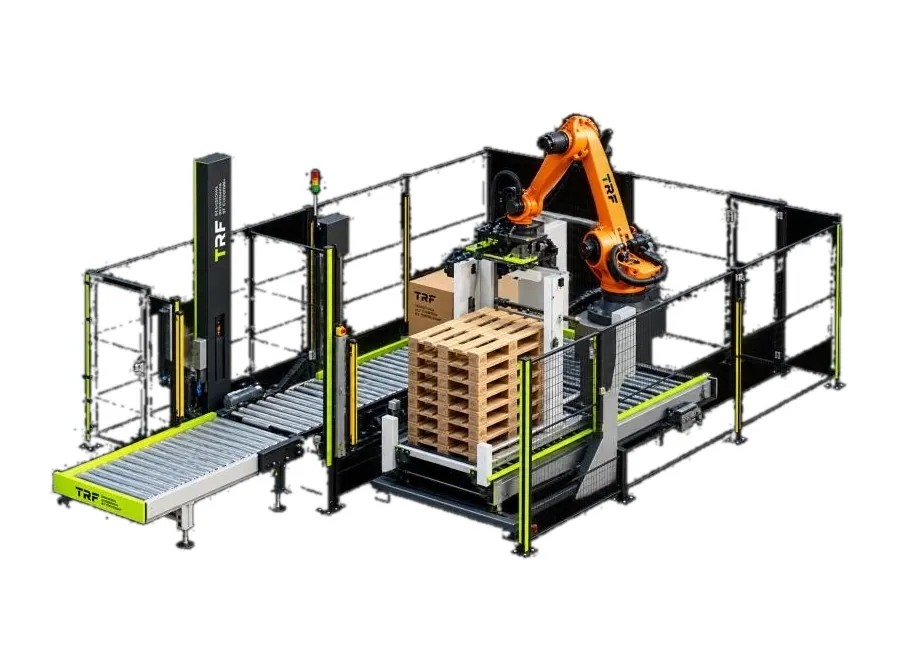
Robotic palletizing cell stacking cases onto a pallet at the end of a production line.

Robotic Palletizing

Robotic palletizing solutions built for every production challenge.

From a cobot for short runs to high-speed multi-line systems, the right palletizer follows your line setup and speed.

Robotic palletizing is the use of an industrial or collaborative robot to stack cases or boxes onto pallets automatically, replacing manual pallet building at the end of food, CPG and chemical production lines.

Custom engineering

Solutions engineered for your production requirements.

Turnkey integration

From system design through installation and startup.

High reliability

Built for continuous operation.

U.S. support

Technical support for customers across the United States.

Lifecycle support

From startup to long-term performance.

Key facts about TRF robotic palletizing

Fact Detail
Platforms TRFCobot, TRFCompact, TRFSpeed and TRFSubzero, plus custom palletizers
Typical speed range Up to 10 cases per minute on TRFCobot, up to 15 on TRFCompact and 15 or more on TRFSpeed
Typical case weight Up to about 80 lb per unit, validated per application
Below-freezing palletizing TRFSubzero, for palletizing areas below 32°F
Products palletized Bags, sacks and bundles; boxes, cases and cartons; trays and crates; pails and buckets are evaluated per application within the published weights; drums and special loads go to a custom palletizing system
Purchase drivers Labor, ergonomics, throughput, floor space, pallet consistency and SKU flexibility
Integration Conveyors, case packers, pallet handling, slip sheets, wrapping, labeling and warehouse interfaces

What is robotic palletizing and how does a robotic palletizer work?

A robotic palletizer is a cell in which a palletizing robot picks finished units from a conveyor and stacks them on a pallet in a programmed pattern, layer by layer, until the load is complete. Buyers also call this automated palletizing or palletizing automation, and a palletizer by itself can mean a robotic cell or a conventional machine.

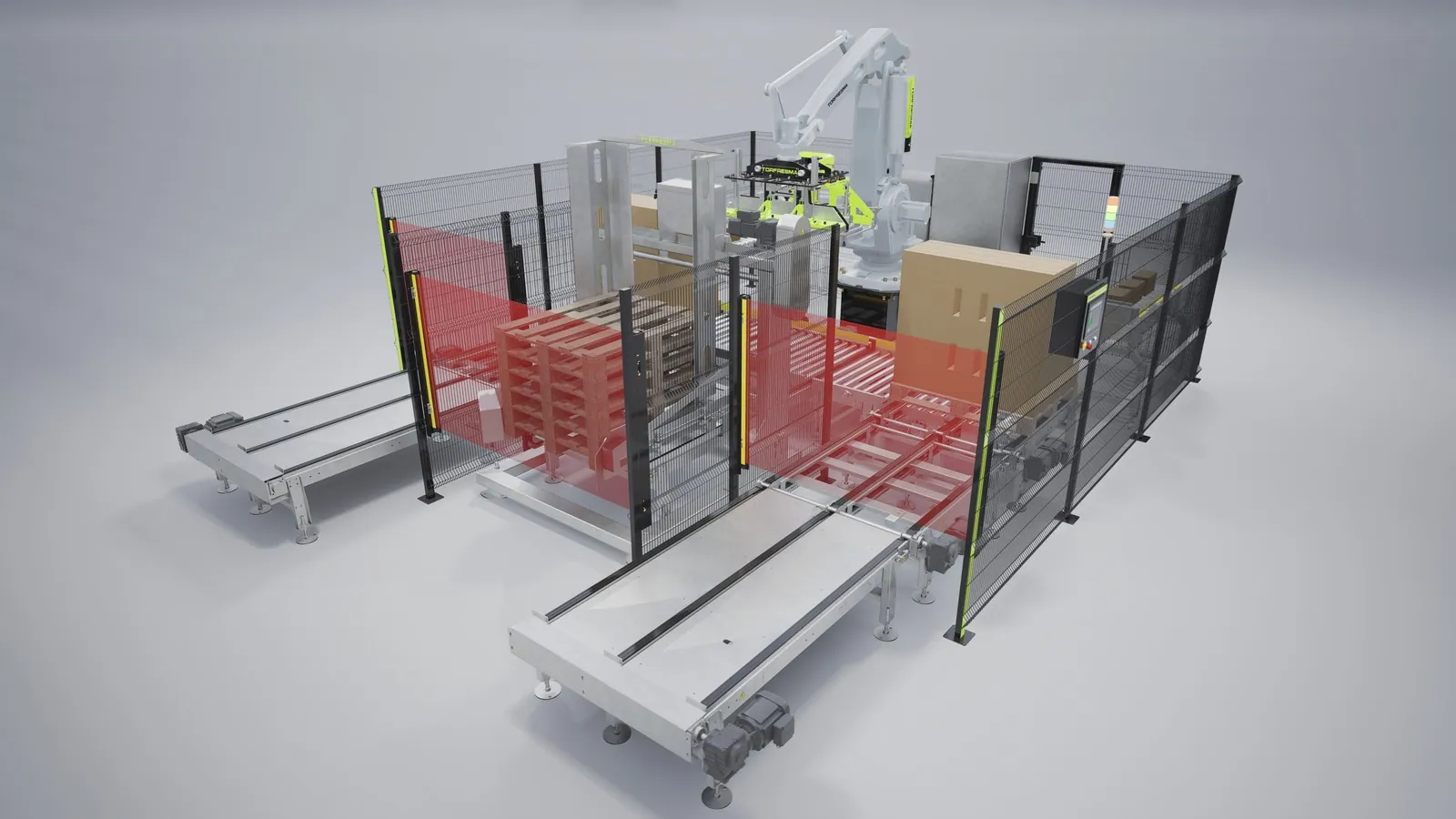
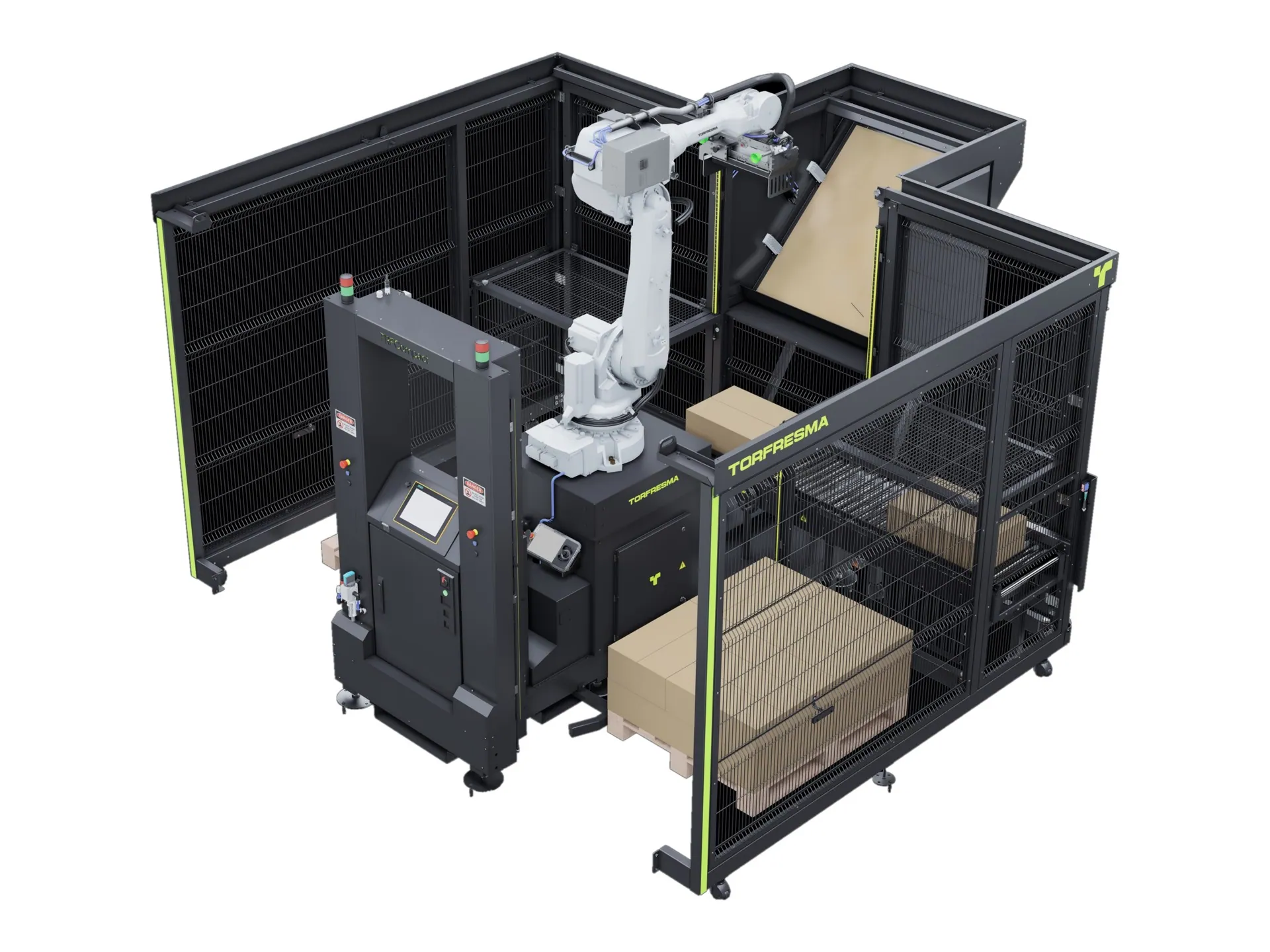
The cell has a few standard parts. An infeed conveyor presents units in a known position, and the robot, collaborative or industrial, carries an end-of-arm tool selected for the product, such as vacuum, clamp or fork tooling. A pallet station holds the pallet being built, and options include pallet dispensing, slip sheets between layers and automatic pallet discharge.

Each pallet pattern is stored as a recipe, so an SKU change becomes a selection instead of a mechanical adjustment. What changes from one platform to the next is the rate per minute, the unit weight, the floor space and the number of lines a single cell can serve.

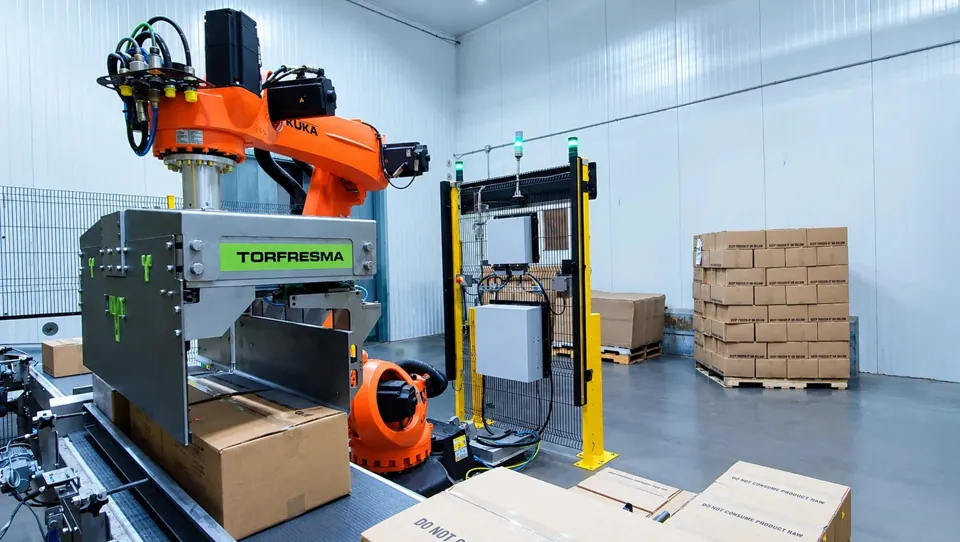
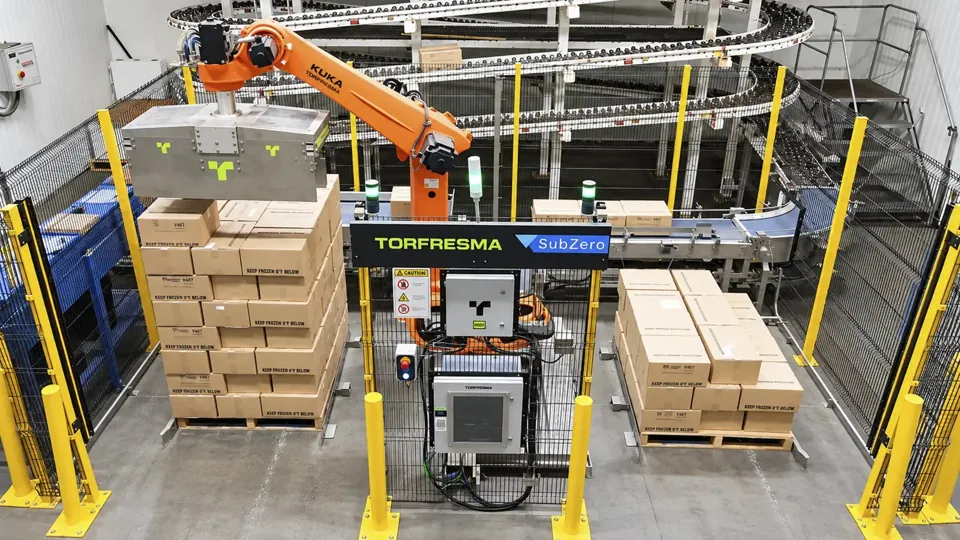
TRFSubzero gripper and KUKA robot handling a case on the infeed conveyor inside a refrigerated room at Custom Foods

Why do manufacturers invest in robotic palletizing?

Manufacturers automate palletizing to take repetitive lifting off the end of the line and keep pallet output steady on every shift. Four problems usually start the project:

  • Labor. Palletizing is repetitive work that is hard to staff. Automation lets you reassign operators to line supervision, quality checks and changeovers.
  • Ergonomics. Manual pallet building means lifting, bending and twisting, case after case. A robotic palletizer takes that motion off your team.
  • Throughput and line stops. When pallet building cannot keep up, cases back up and the packaging line slows. A palletizer sized for your peak rate helps make pallet output independent of how fast people can lift.
  • Floor space and changeovers. Compact cells fit tight end-of-line areas, and stored recipes handle frequent SKU and pallet pattern changes.
TRFCobot collaborative palletizer with infeed conveyor and two pallet stations

TRF robotic palletizing platforms

The TRF robotic palletizing systems move from accessible collaborative automation to compact industrial performance and high-throughput integrated palletizing. TRFSubzero covers palletizing areas below freezing, and a custom palletizer covers what falls outside the standard ranges.

How do you choose between TRFCobot, TRFCompact and TRFSpeed?

Choose by line speed, case weight and floor space. The three TRF palletizing platforms form one family, and the right model is defined by your line setup and rate.

Platform Typical speed Case weight Typical fit
TRFCobot Up to 10 cases per minute Up to 26 lb Lower-speed, high-mix lines with limited floor space
TRFCompact Up to 15 cases per minute Up to about 65 lb Medium-speed, limited floor space
TRFSpeed 15 cases per minute or more Up to about 80 lb High volume, continuous or multi-line palletizing; TRFSubzero for areas below 32°F

If your rate, case weight or growth plans go beyond the range of one platform, the next platform in the same family covers higher speeds and payloads. Compare all platforms on the robotic palletizing page. Each platform can also be the last station of a complete TRF end of line, with case packing and conveying supplied by the same partner.

The ranges overlap on purpose, so more than one platform can fit the same line. Start with TRFCobot when the problem is manual labor, low speed, high mix and a limited budget. Choose TRFCompact when the plant needs industrial robustness and more speed in restricted floor space, and TRFSpeed for high throughput, continuous operation, several lines or broad end-of-line integration.

When two platforms could work, choose the one that matches your required throughput, production intensity and growth plans, not simply the lowest initial investment. To test the investment level, run the palletizing ROI calculator with your shifts, your state and your labor data.

Which products can a robotic palletizer handle?

TRF palletizes bags and bundles, boxes, cases and cartons, trays and crates, and evaluates pails and buckets per application within the published case weights. Drums and other loads outside those weights go to a custom palletizing system. Each product page presents TRFCobot, TRFCompact, TRFSpeed and the custom system, because the right model is defined by line setup and speed rather than by the product alone.

  • Bag palletizer, with a section on sacks: bags, sacks, and film-wrapped bundles and multipacks, where shape and stability drive the tooling and the pallet pattern.
  • Box palletizer: corrugated boxes, shipping cases leaving the case packer and cartons grouped into stable layers, in distribution, e-commerce, co-packing and CPG operations.
  • Tray palletizer, with a section on crates: loaded trays and open crates stacked in stable layers.
  • Pail and bucket palletizer: pails and buckets, evaluated per application within the published weights.
  • Custom palletizer: drums and any other load, pallet handling or layout that falls outside the standard platforms.
Bag palletizing with a TRF robotic palletizer.
Box palletizing with a TRF robotic palletizer.
Tray palletizing with a TRF robotic palletizer.
Pail palletizing with a TRF robotic palletizer.

Line data to prepare before sizing a palletizer

A palletizing proposal starts from data, not from a catalog. Gather the inputs below before your first conversation with a TRF Sales Engineer:

  • Product and packaging: dimensions, unit weight in lb, packaging type and how rigid or flexible the unit is when picked.
  • Rate: cases per minute per line, peak versus average, and how many lines feed the palletizing area.
  • Pallet: pallet type and size, the pattern for each SKU, load height and whether slip sheets are used.
  • Layout: distance from infeed to pallet stations, available floor space, ceiling height and forklift access.
  • Operation: shifts per day, changeover frequency and the operating temperature of the area.
  • Interfaces: the upstream case packer or conveyor and the downstream wrapper, labeler and warehouse systems.

Those inputs define payload, cycle rate, reach and layout, and they show whether the project fits a standard platform or custom palletizing systems. They also define the interfaces: TRFIntraflow supplies the conveying and accumulation that feed the cell, and end-of-line integration puts case packing, conveying and palletizing under one engineering scope.

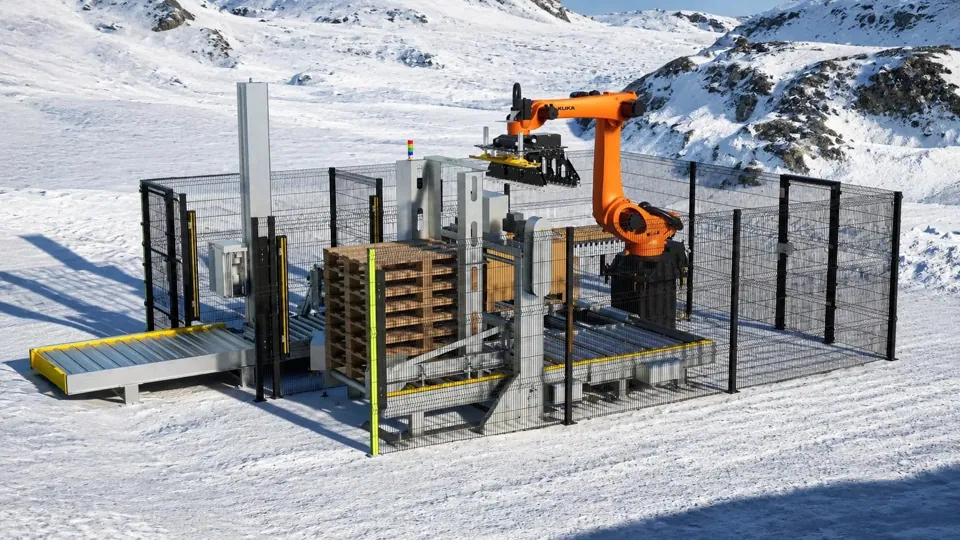
TRFSubzero palletizing cell with fencing and an orange robot stacking cases on a pallet in a snowy cold environment

Industries and case studies

TRF palletizing platforms serve food processing, frozen food and ice cream, protein processing, chemicals, pharmaceutical, personal care and cosmetics, CPG, co-packers and e-commerce and distribution plants. The full list is on the industries page.

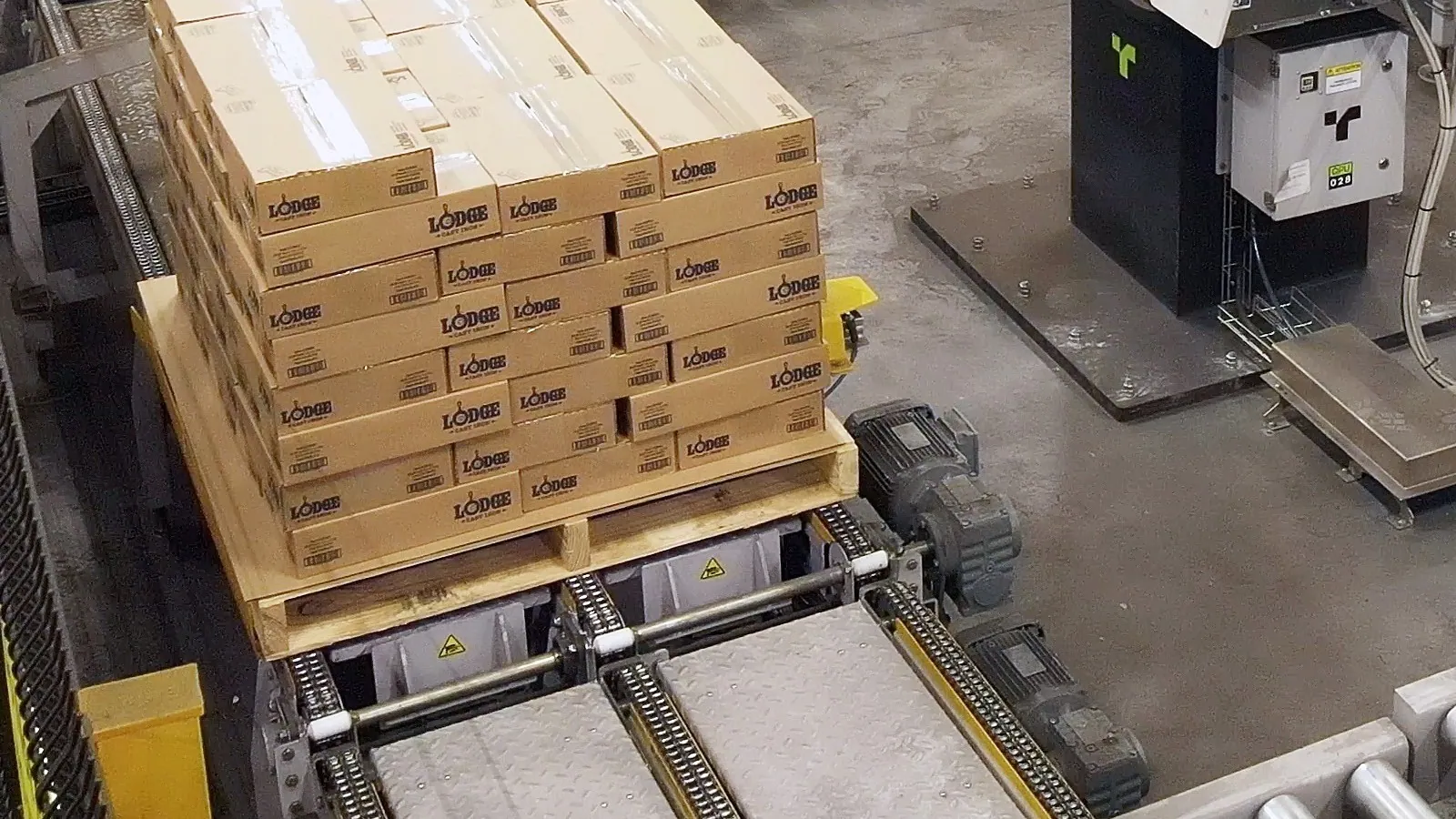
Published installations include Custom Foods, palletizing below freezing in De Soto, Kansas, and Lodge Cast Iron, ergonomic case packing plus robotic palletizing in Tennessee. Both are in the case studies section.

Robotic palletizing cell at Custom Foods working in a below-freezing room

Questions

Frequently asked questions

What Is Palletization?

Palletization is the process of grouping finished products, such as cases, bags, trays or bundles, into a stable load on a pallet so a forklift or pallet jack can move, store and ship them as one unit. In a plant, palletization happens at the end of the packaging line, by hand or with robotic palletizing that builds every layer in a stored pattern.

What Is the Difference Between a Cobot Palletizer and a Traditional Robotic Palletizer?

The difference between a cobot palletizer and a traditional palletizing robot is the robot: a cobot palletizer uses a collaborative robot, designed for shared workspaces and moderate speeds, in a compact standardized cell, while a traditional palletizer uses an industrial robot with higher speed, payload and duty cycle. TRFCobot is the collaborative option; TRFCompact and TRFSpeed use industrial robots.

How Many Cases per Minute Can a Robotic Palletizer Handle?

A robotic palletizer handles from about 1 to about 35 cases per minute across the TRF platforms: TRFCobot covers up to 10, TRFCompact up to 15 and TRFSpeed 15 or more. These are typical ranges for commercial screening. TRF confirms the final rate for your product, end-of-arm tool, pallet pattern and reach, and applications above that range move to a custom palletizer.

What Is EOAT and How Does It Affect Palletizer Payload?

EOAT stands for end-of-arm tool, the gripper at the end of the robot that picks each unit, such as vacuum, clamp or fork tooling. The robot has to carry the unit weight plus the tool, and the combined weight when it picks more than one unit at a time, so a heavier tool reduces the payload left for the product. That is why platform ranges are always subject to EOAT and reach validation.

How Is a Palletizing Robot Different From a Depalletizing Robot?

A palletizing robot builds loads, picking units from a conveyor and stacking them on a pallet, while a depalletizing robot does the reverse, unloading layers or units from an incoming pallet onto a conveyor. Both use similar robots and end-of-arm tools, but the infeed, the vision needs and the pallet flow differ. Depalletizing needs in e-commerce and distribution are reviewed case by case with a TRF Sales Engineer.

How Does a Robotic Palletizer Handle SKU or Pallet Pattern Changeovers?

A robotic palletizer handles SKU and pallet pattern changeovers with stored recipes: changing SKU usually means selecting the recipe that holds the case data, pick logic and pattern for the new product. When the new unit fits the same end-of-arm tool, the change happens mostly in software; otherwise the cell needs a tool change. TRF reviews your full SKU and pattern list before recommending a platform.

How Much Does a Robotic Palletizer Cost?

A robotic palletizer from TRF has a reference list price of US$ 120,000 for the TRFCobot, US$ 180,000 for the TRFCompact Dual and US$ 350,000 for the TRFSpeed 100, all EX Works Lenexa, Kansas, installation not included. Installation, line integration and options are quoted with your application. The robotic palletizer cost guide explains each cost driver.

What Is the Typical Payback Period for a Robotic Palletizer?

The typical payback period for a robotic palletizer has no single figure: it depends on the labor hours the palletizer replaces, shifts per day, local labor cost and the cost of the system. The estimate divides the total system cost, including maintenance, by the yearly labor cost of manual palletizing minus the electricity the robot uses. The palletizing ROI calculator applies this method with reference wages by state.

Plan your robotic palletizing project

The right palletizing solutions start with an application review: your products and unit weights, your line rate, your pallet patterns, your floor space and the equipment the palletizer connects to. With that data, a TRF Sales Engineer recommends TRFCobot, TRFCompact, TRFSpeed, TRFSubzero or a custom palletizer and shows how the cell fits your end of line.

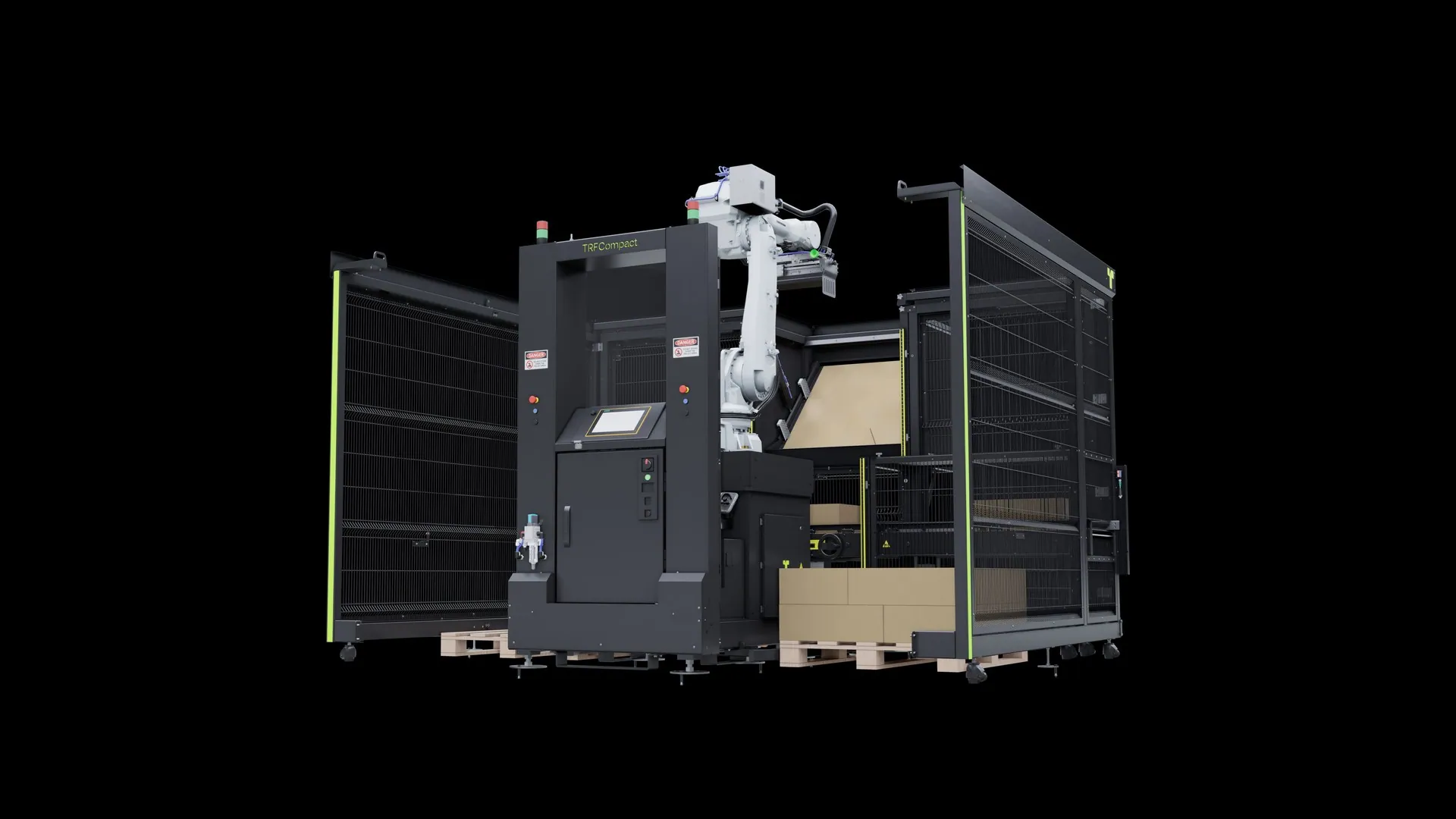
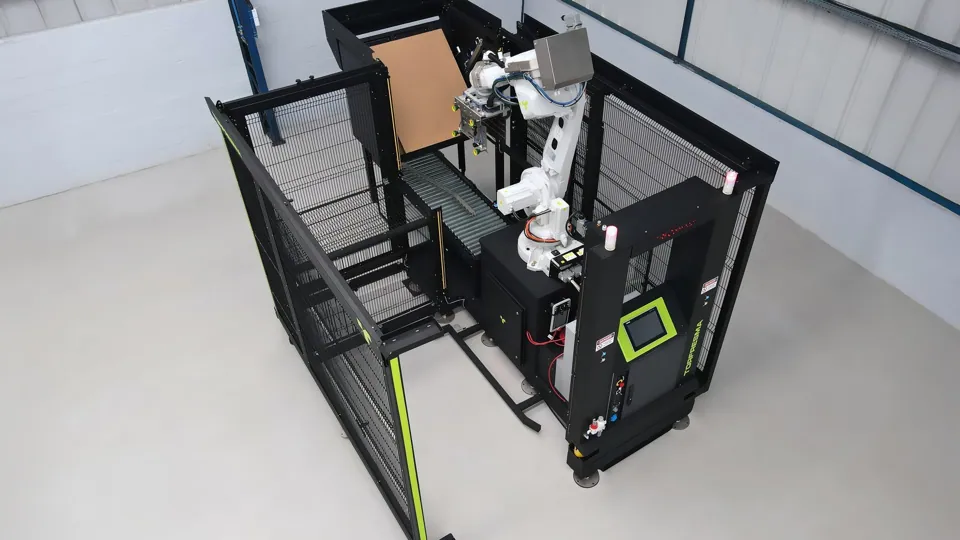
TRFCompact robotic palletizing cell installed on a plant floor

Next step

Keep your production running.

Tell us about your products, rates and floor space. A TRF Sales Engineer answers with the platform, the layout and the next step for your line.