
Resources / Case Studies / Custom Foods
Cold chain palletizing case study: Robotic palletizing below freezing at Custom Foods.
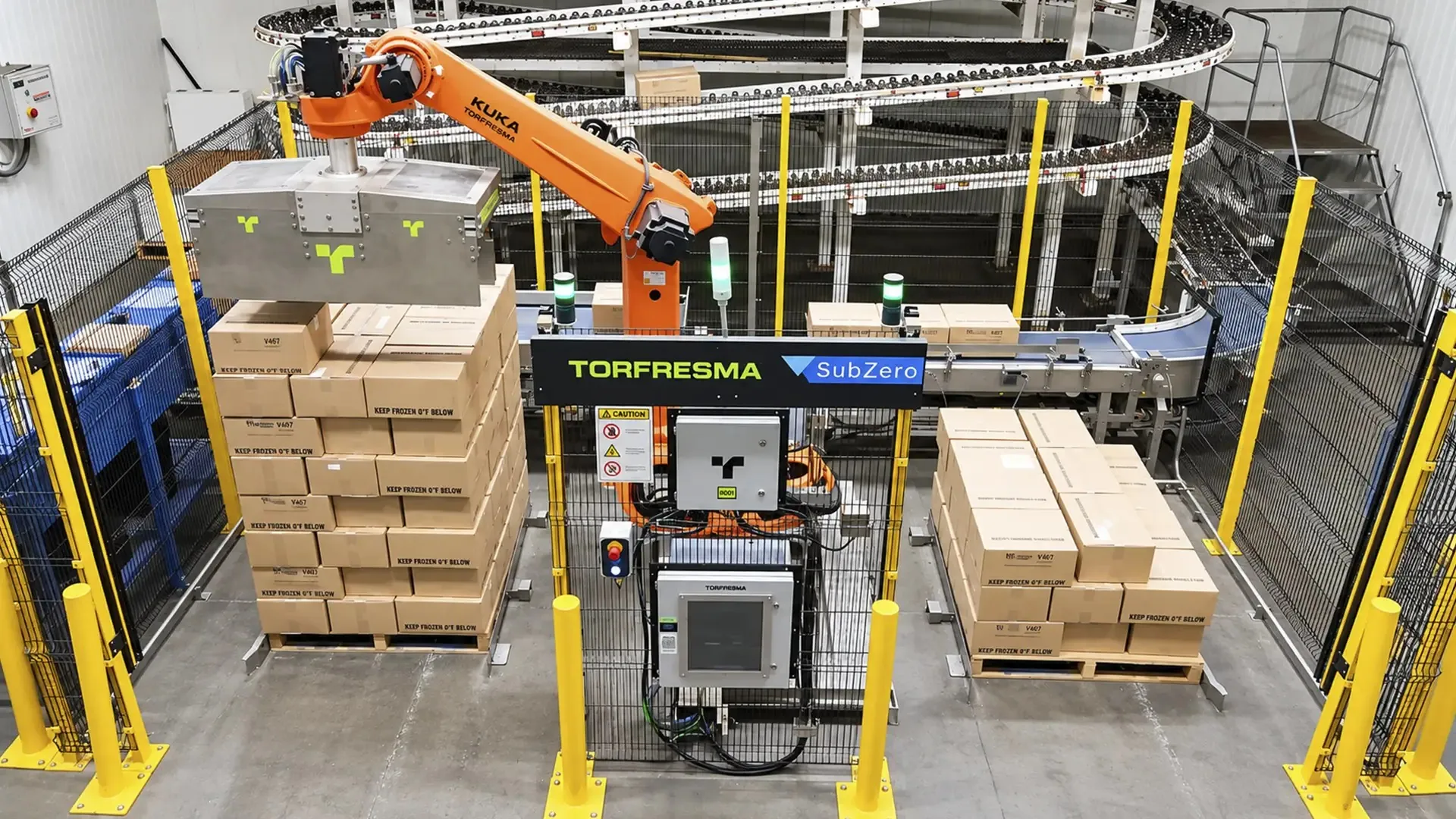
Robotic palletizing in a below-freezing environment in De Soto, Kansas.
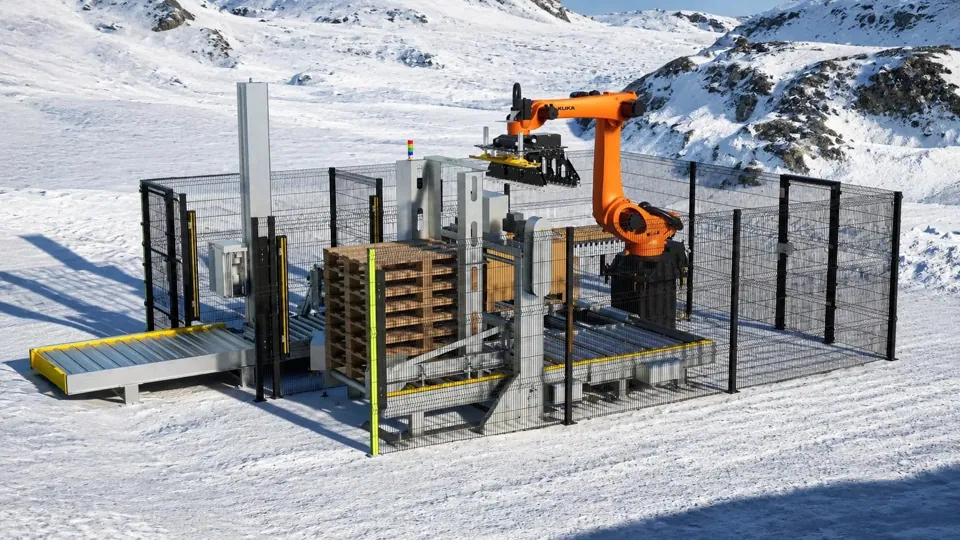
This cold chain palletizing case study documents how TRF Industrial Automation automated end-of-line palletizing at Custom Foods Inc. in De Soto, Kansas, where production runs in refrigerated and sub-zero conditions, with a TRFSubzero robotic palletizing system for cold storage.
Custom engineering
Solutions engineered for your production requirements.
Turnkey integration
From system design through installation and startup.
High reliability
Built for continuous operation.
U.S. support
Technical support for customers across the United States.
Lifecycle support
From startup to long-term performance.
The customer describes palletizing in refrigerated and sub-zero environments as one of the greatest challenges in the food industry. At Custom Foods, operating under freezing conditions directly affected end-of-line performance, productivity and workforce efficiency. TRF answered with a complete robotic palletizing solution engineered for cold storage.
Key facts
| Item | Details |
|---|---|
| Customer | Custom Foods Inc. |
| Location | De Soto, Kansas, United States |
| Sector | Food production with refrigerated and sub-zero operations |
| Application | End-of-line palletizing in cold storage conditions |
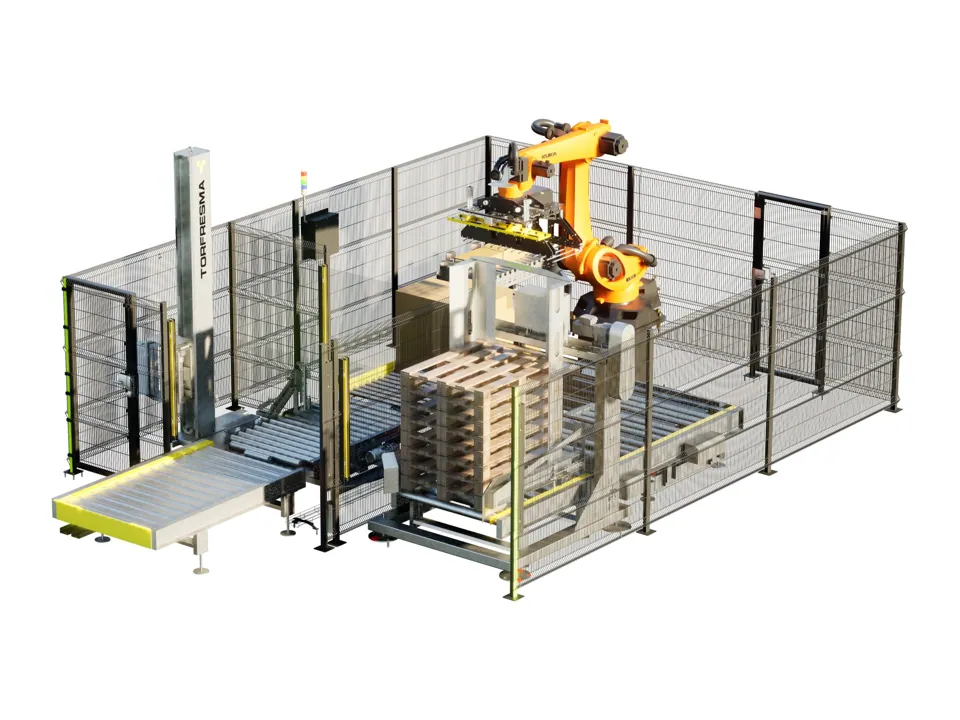
| System supplied | TRFSubzero robotic palletizing system for cold storage applications |
| Robot | KUKA KR QUANTEC PA Arctic, designed for sub-zero operation |
| Engineering | Components and engineering developed specifically for frozen environments |
| Outcomes reported | Higher end-of-line throughput, standardized and stable operation regardless of temperature, improved employee safety and ergonomics |
| Supplier | TRF Industrial Automation |
The challenge: Why palletizing below freezing is hard
The case lists four challenges the plant faced before automation:
- Productivity declines over time. Manual output falls as exposure to the cold accumulates across a shift.
- Physical limitations of manual operations. Repetitive lifting is harder to sustain in sub-zero conditions than at ambient temperature.
- High ergonomic risk. Lifting, twisting and reaching case after case in the cold puts strain on operators.
- Difficulty maintaining production throughput. When the palletizing station cannot hold rate, the whole line slows down.
The solution: A TRFSubzero system engineered for cold storage
TRF implemented a complete robotic palletizing solution for cold storage. The case describes three elements:
- A TRFSubzero robotic palletizing system for cold storage applications.
- A KUKA KR QUANTEC PA Arctic robot, designed for sub-zero operation and engineered to work reliably at extreme temperatures.
- Components and engineering developed specifically for frozen environments.
What changed at the end of the line
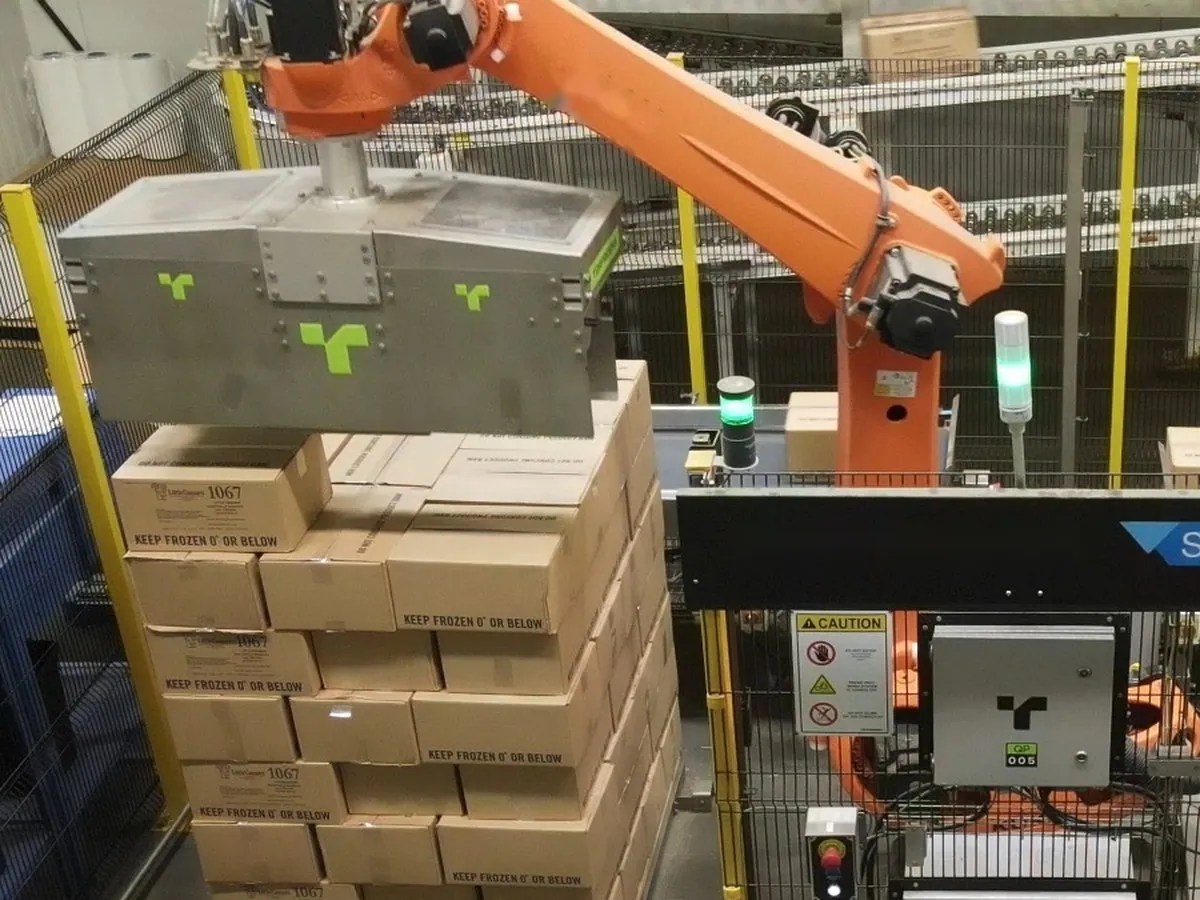
The customer reports three outcomes at Custom Foods:
- A significant increase in end-of-line throughput.
- A standardized and stable operation regardless of temperature.
- Improved employee safety and ergonomics.
The repetitive lifting in sub-zero conditions moves from people to the robot.
Can a robotic palletizer operate below freezing?
Yes, when the cell is engineered for it, as at Custom Foods: a robot designed for sub-zero operation, with components and engineering developed for frozen environments. TRFSubzero is the TRF palletizing system for areas below 32°F, used in frozen food, ice cream, and refrigerated and frozen areas.
For areas at normal temperature, the TRF palletizing family covers lines by speed and case weight:
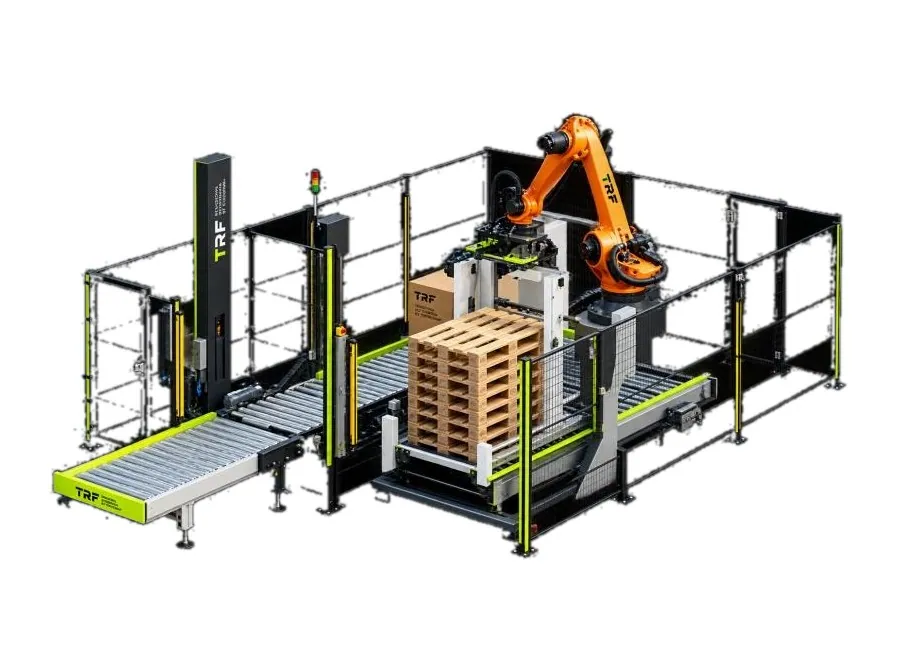
| Platform | Typical speed | Case weight | Typical fit |
|---|---|---|---|
| TRFCobot | Up to 10 cases per minute | Up to 26 lb | Lower-speed, high-mix lines with limited floor space |
| TRFCompact | Up to 15 cases per minute | Up to about 65 lb | Industrial duty cycle in a compact cell |
| TRFSpeed | 15 or more cases per minute | Up to about 80 lb | High volume, continuous or multi-line palletizing |
| TRFSubzero | Validated per application | Validated per application | Palletizing in areas below 32°F |
Typical ranges. TRF engineering confirms final capacity for each application (product, end-of-arm tool, pallet pattern, reach and process).
Applications outside these envelopes are engineered as a custom palletizer. To check fit by package, see the case palletizer, box palletizer and carton palletizer pages.
How do you build the business case for freezer automation?
Build it like any palletizing project, with extra attention to the labor inputs of a cold area.
In a freezer, productivity that declines across a shift and throughput lost when the station cannot hold rate belong next to that number. Run your own shifts and labor cost in the palletizing ROI calculator, and read how much a robotic palletizer costs for the investment side.
Cold chain palletizing applies across frozen food and ice cream, protein processing and broader food processing plants with refrigerated or frozen finished goods.
Questions
Frequently asked questions
What Payload Does a Palletizing Robot Need for My Product?
The robot must carry the case weight plus the end-of-arm tool, and for multi-case picks, the combined weight of the cases. How a case behaves when cold also affects gripping. TRF validates the final payload with your product, end-of-arm tool, pallet pattern and reach, and the table above shows the typical case weight for each platform.
How Does a Robotic Palletizer Handle SKU or Pallet Pattern Changeovers?
A changeover usually means selecting a stored recipe that holds the case dimensions, pick logic and pallet pattern for the new SKU. When the new case fits the same end-of-arm tool, the change happens mostly in software. TRFCobot and TRFCompact store multiple recipes and pallet patterns, so a SKU change does not mean rebuilding the process.
Who Makes Robotic Case Palletizers With Local Support in the US?
TRF Industrial Automation designs, builds, installs and supports robotic palletizers for manufacturers across the United States, from the collaborative TRFCobot to TRFSubzero for areas below 32°F. This Custom Foods installation in Kansas is one published example. How technical support, spare parts and preventive maintenance work for TRF equipment is explained on the Parts and Service page.
Next step: Talk about your cold area
If your plant palletizes in a chilled or frozen area, start with the data: case dimensions and weights, line speed, the temperature of the area and a layout sketch. A TRF Sales Engineer validates the fit and comes back with a concept for your cold chain palletizing project. To size the investment first, use the palletizing ROI calculator.
More installations are in the case studies section, including Avon and Lodge Cast Iron.
Next step
Keep your production running.
Tell us about your products, rates and floor space. A TRF Sales Engineer answers with the platform, the layout and the next step for your line.