
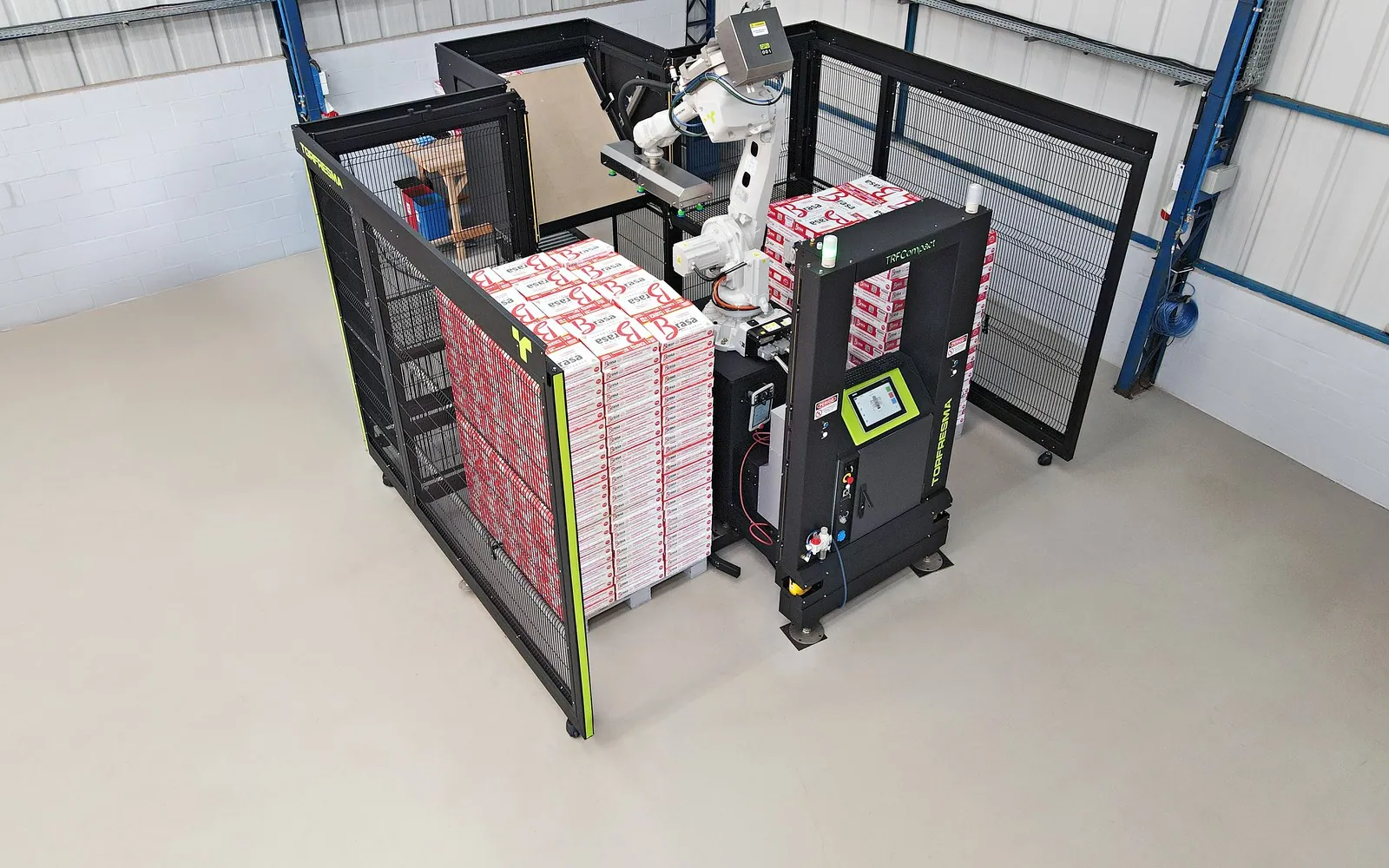
Robotic Palletizing / Kansas / Lenexa, KS
Robotic palletizing for Lenexa, KS manufacturers.
Robotic palletizing for Kansas plants, engineered and supported by a team based in Lenexa.
Robotic palletizing is the automatic stacking of cases onto pallets by an industrial or collaborative robot, engineered and supported for Lenexa, Kansas, manufacturers by TRF Industrial Automation from its base in the city.
Custom engineering
Solutions engineered for your production requirements.
Turnkey integration
From system design through installation and startup.
High reliability
Built for continuous operation.
U.S. support
Technical support for customers across the United States.
Lifecycle support
From startup to long-term performance.
Key facts about robotic palletizing in Lenexa, KS
| Fact | Detail |
|---|---|
| Platforms | TRFCobot, TRFCompact, TRFSpeed and TRFSubzero, plus custom palletizers |
| TRF base | 14840 W 107th St, Lenexa, KS 66215, phone (913) 242-8019 |
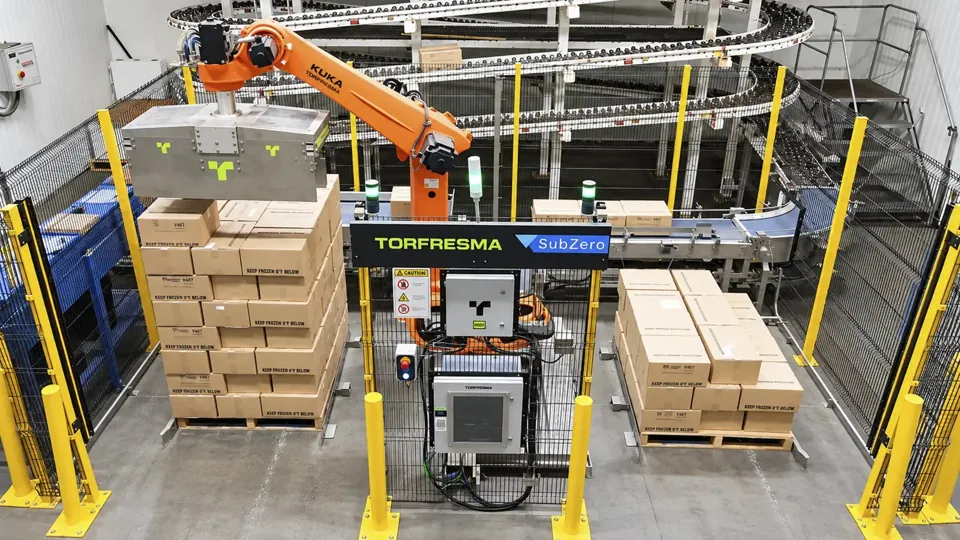
| Below freezing | TRFSubzero, for palletizing in areas below 32°F |
| Support model | Remote support first; technicians based in Lenexa when a visit is needed |
| Kansas installation | Custom Foods, De Soto, Kansas: robotic palletizing below freezing |
| Coverage | United States, served from Lenexa |
What does a robotic palletizer do on a Kansas line?
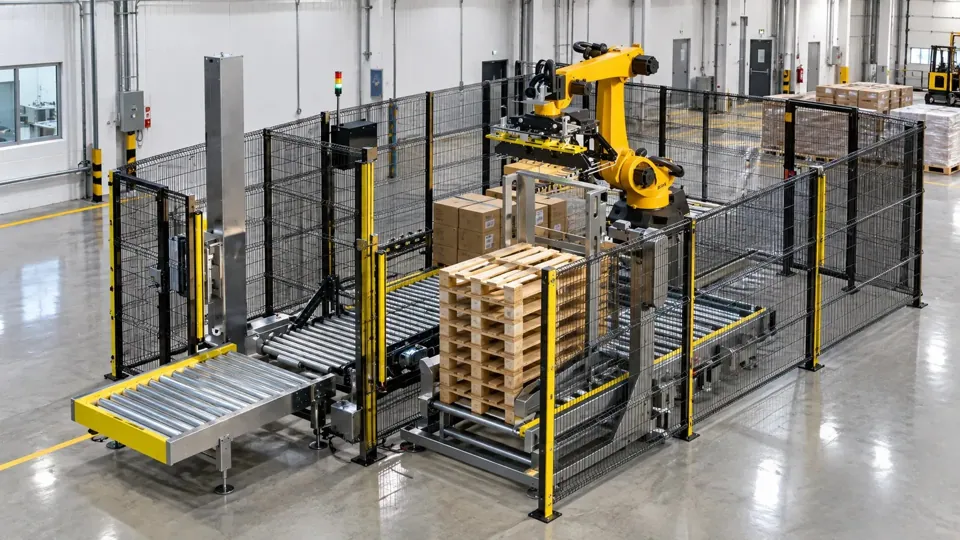
A robotic palletizer takes finished cases from a conveyor and stacks them on a pallet in a programmed pattern, layer by layer, until the load is complete. The robot, collaborative or industrial, carries an end-of-arm tool selected for the case type, size, weight and surface.
Each pallet pattern is stored as a recipe with the case dimensions, the pick logic and the layer arrangement. A plant running several SKUs switches recipes when the product changes instead of rebuilding the process, and operators move from lifting cases to supervising the line.
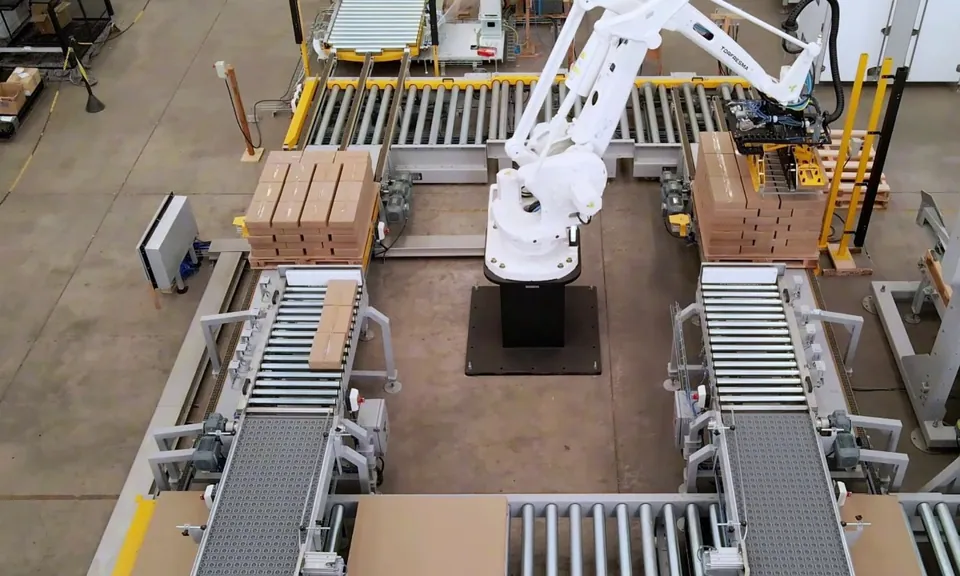
Automation for Kansas food and consumer goods plants
The TRF palletizing platforms fit these kinds of plants:
- Food processing: small and mid-sized food manufacturers that still palletize by hand, and larger plants with several lines.
- Meat processing: meat processing lines, including below-freezing areas (below 32°F).
- Frozen food and ice cream: palletizing below 32°F with TRFSubzero.
- Co-packers and CPG: short runs, frequent SKU changes and pallet pattern flexibility.
- E-commerce and distribution: repetitive case handling at the end of the line.
Kansas already has a documented TRF installation. In De Soto, Kansas, TRF supplied Custom Foods with robotic palletizing for production below freezing.
How TRF supports Kansas plants from Lenexa
Support for a Kansas plant starts at the base where TRF's field service technicians work. A request is handled remotely first: a technician works the issue with your own team over a call or a remote connection, without waiting for a trip.
When hands-on work is needed, the technician travels from Lenexa. For a plant in Lenexa or the Kansas City area, that is a local trip. Customers who already run TRF equipment find the support contact and the spare parts process on the Parts and Service page.
How do you choose between TRFCobot, TRFCompact and TRFSpeed?
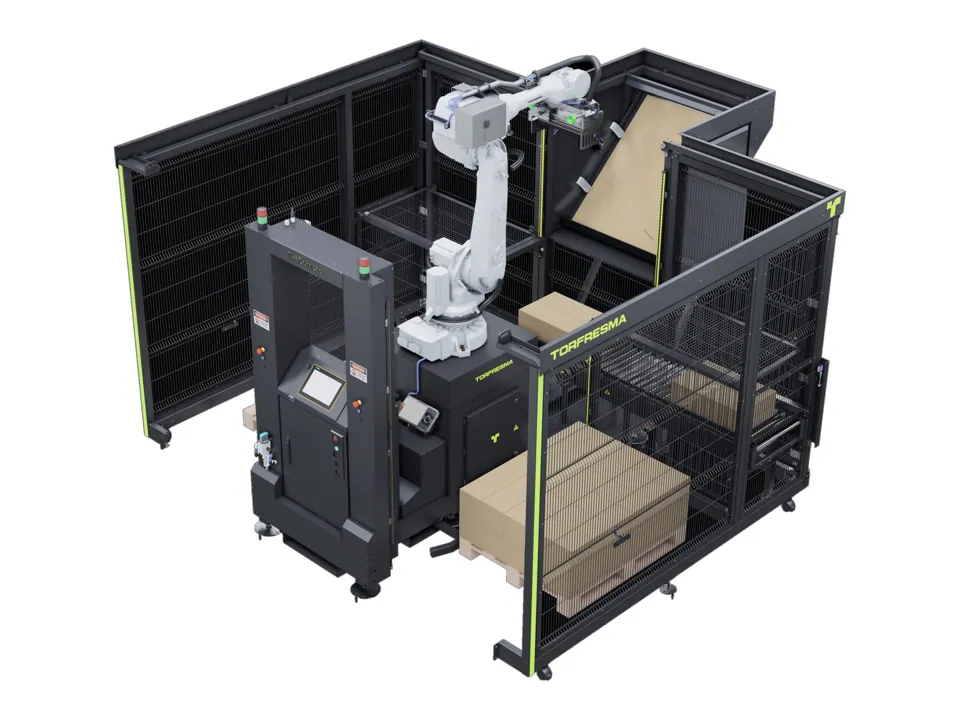
Choose by line speed, case weight and floor space. The three TRF palletizing platforms form one family, and the right model is defined by your line setup and rate.
| Platform | Typical speed | Case weight | Typical fit |
|---|---|---|---|
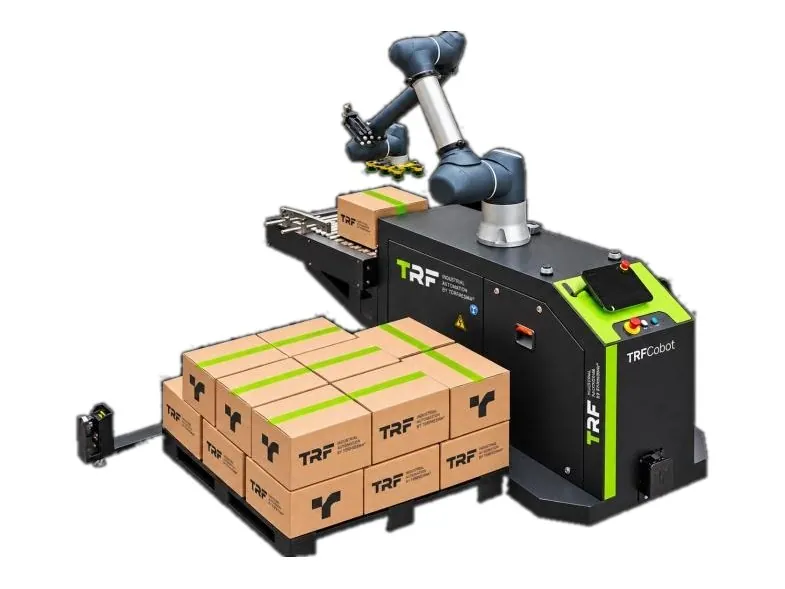
| TRFCobot | Up to 10 cases per minute | Up to 26 lb | Lower-speed, high-mix lines with limited floor space |
| TRFCompact | Up to 15 cases per minute | Up to about 65 lb | Medium-speed, limited floor space |
| TRFSpeed | 15 cases per minute or more | Up to about 80 lb | High volume, continuous or multi-line palletizing; TRFSubzero for areas below 32°F |
If your rate, case weight or growth plans go beyond the range of one platform, the next platform in the same family covers higher speeds and payloads. Compare all platforms on the robotic palletizing page. Each platform can also be the last station of a complete TRF end of line, with case packing and conveying supplied by the same partner.
TRFCobot is the entry point for a plant still palletizing by hand on a lower-volume, high-mix line. TRFCompact brings an industrial robot's duty cycle into a compact, standardized cell for plants where floor space is the real constraint. TRFSpeed scales from a dedicated cell to a centralized system that consolidates several packaging lines into one palletizing area.
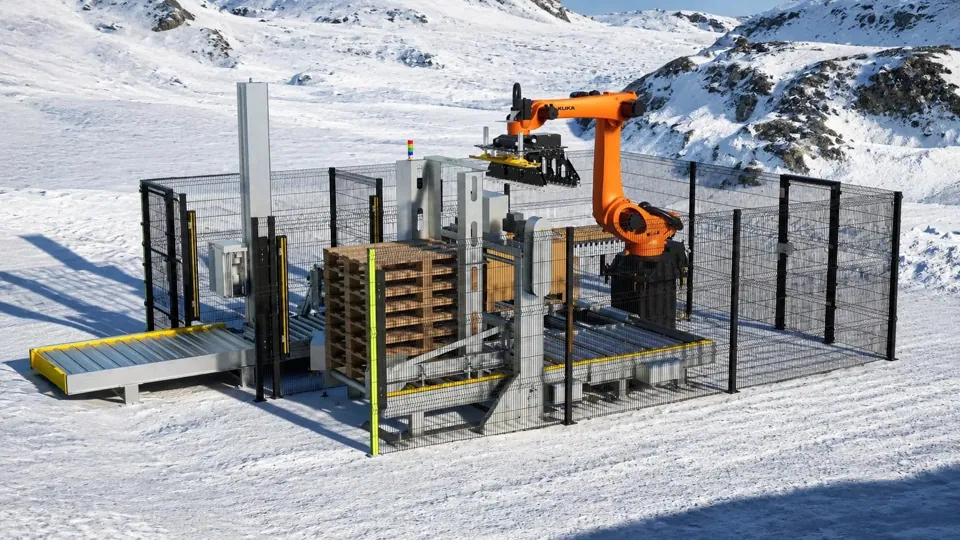
For palletizing in areas below 32°F, TRFSubzero serves frozen food, ice cream and frozen meat in below-freezing areas. When the product, rate or layout falls outside every standard platform, the custom palletizer is engineered around the application.
How does a palletizer connect to the line you already run?
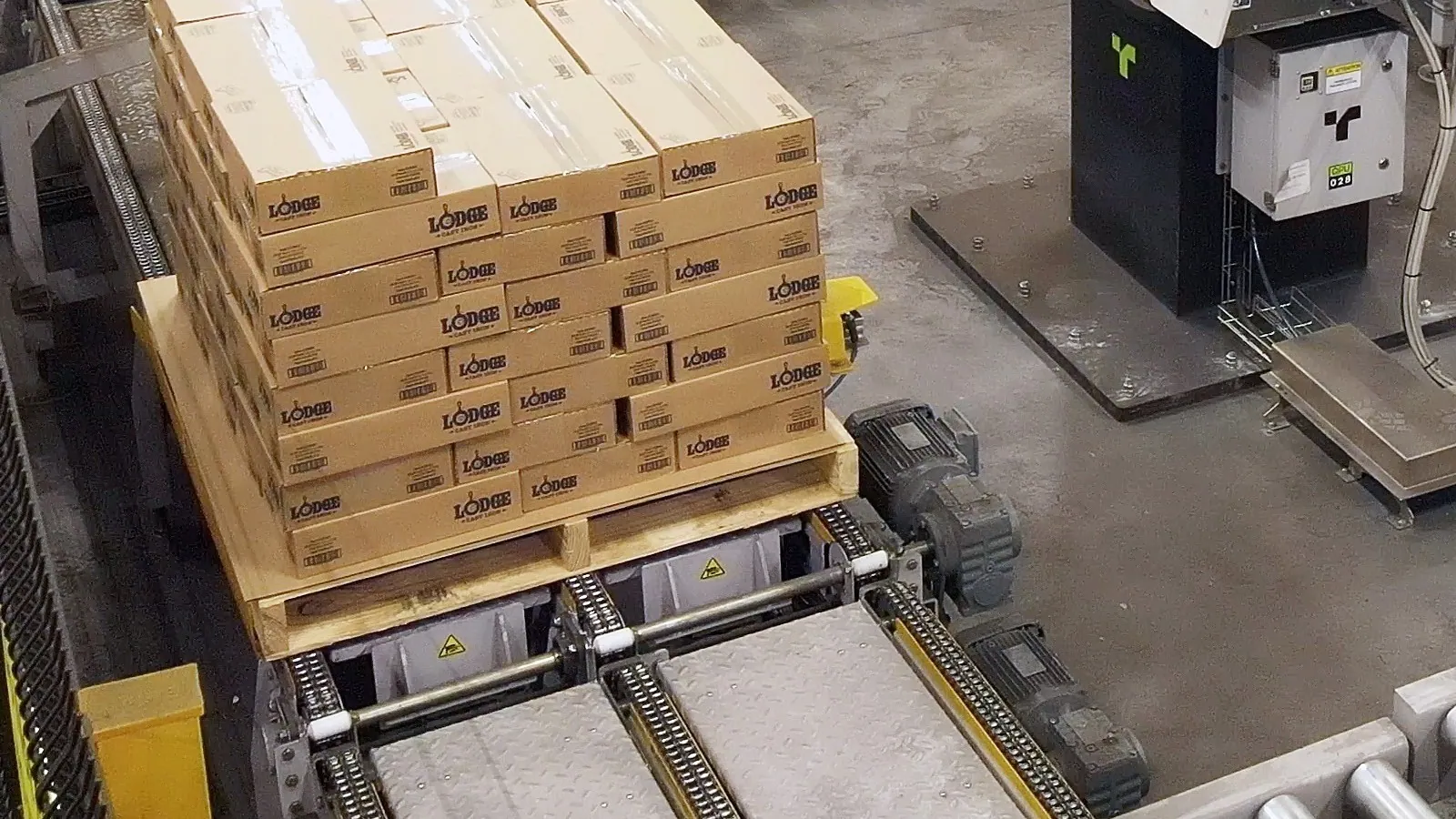
A palletizer connects to the line you already run through the infeed, the accumulation and the pallet outfeed, because it rarely stands alone: cases arrive from a case packer at a controlled rhythm, with accumulation upstream to absorb a pallet change without stopping the line behind it. TRFSpeed in particular is built to integrate with conveyors, accumulation, pallet handling, slip sheets, wrapping, labeling and warehouse interfaces.
TRFIntraflow provides the conveying, accumulation and palletizer interfaces, and case packing platforms deliver the case the palletizer stacks. When a Kansas project buys all three as one scope, end-of-line integration puts them under one engineering plan and one responsible partner.
What to prepare before requesting a technical consultation in Lenexa
An application review moves faster when a few details are ready in advance:
- Product and packaging: case dimensions, weight in lb and how the case behaves when gripped.
- Line rate: cases per minute, and how many lines feed the palletizing area.
- Pallet requirements: pallet type and size, the pattern for each SKU and whether slip sheets are used.
- Floor space: the area available for the cell and access for forklifts or pallet trucks.
- Operating environment: shifts per day, changeover frequency and whether the area is below freezing.
- Existing equipment: any case packer, conveyor or stretch wrapper the palletizer connects to.
Questions
Frequently asked questions
Is There a Robotic Palletizer Supplier Based in Lenexa, Kansas?
Yes, TRF Industrial Automation is a robotic palletizer supplier based in Lenexa, Kansas, at 14840 W 107th St, Lenexa, KS 66215, phone (913) 242-8019. Its field service technicians are centralized there and support TRF equipment across the United States. For a plant in Lenexa or the Kansas City area, a site visit, a layout walkthrough or a first meeting is a local trip.
Who Supplies Robotic Palletizing for Frozen Food Plants in Kansas?
TRF Industrial Automation supplies robotic palletizing for frozen food plants in Kansas with TRFSubzero, the TRF palletizer for areas below 32°F. The Custom Foods case study documents robotic palletizing below freezing at a plant in De Soto, Kansas. Rate, case weight and construction are validated for each application with your products and the temperature of the area.
How Much Does a Robotic Palletizer Cost for a Kansas Plant?
A robotic palletizer for a Kansas plant starts from the same reference list prices as anywhere in the US: US$ 120,000 for the TRFCobot, US$ 180,000 for the TRFCompact Dual and US$ 350,000 for the TRFSpeed 100, EX Works Lenexa, Kansas, installation not included. Installation and line integration are quoted with your application. The robotic palletizer cost guide explains each cost driver.
What Is the Payback of a Robotic Palletizer for a Kansas Plant?
The payback of a robotic palletizer for a Kansas plant depends on the labor hours it replaces, shifts per day, local labor cost and the installed cost of the system. The palletizing ROI calculator starts from the reference production wage for Kansas, which you can replace with your loaded rate, and returns an initial estimate that a TRF Sales Engineer completes.
Can a Robotic Palletizer Fit an Older Kansas Plant With Limited Space?
Yes, a robotic palletizer can fit an older Kansas plant with limited space when the platform is chosen for the footprint. TRFCompact brings an industrial robot into a compact, standardized cell designed for brownfield plants, and TRFCobot fits small end-of-line areas on lower-speed lines. TRF lays the cell out on your plant drawing, against existing conveyors and aisles, before the quote.
Does a Lenexa Palletizer Supplier Serve Plants Outside Kansas?
Yes, TRF serves manufacturers across the United States from its base in Lenexa, Kansas. Projects are engineered, installed and supported from Lenexa, with remote support first and technicians traveling from Lenexa when a visit is needed. Plants in Kansas and the Kansas City area simply have the shortest trip, which helps during layout reviews, installation and startup.
Plan your robotic palletizing project in Lenexa
For a Kansas manufacturer, the next step is an application review covering products, line rate, pallet patterns, floor space and the equipment the palletizer connects to. The difference in Lenexa is proximity: the TRF base and its technicians are in the same city as your plant.
Start with the robotic palletizing page to compare the platforms in full, or send your line data and a Sales Engineer validates the fit.
Next step
Keep your production running.
Tell us about your products, rates and floor space. A TRF Sales Engineer answers with the platform, the layout and the next step for your line.