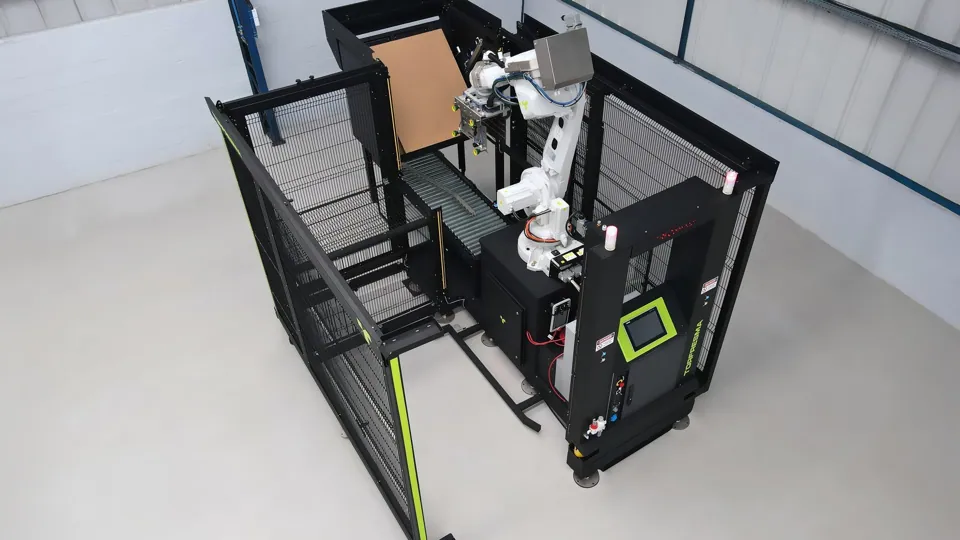
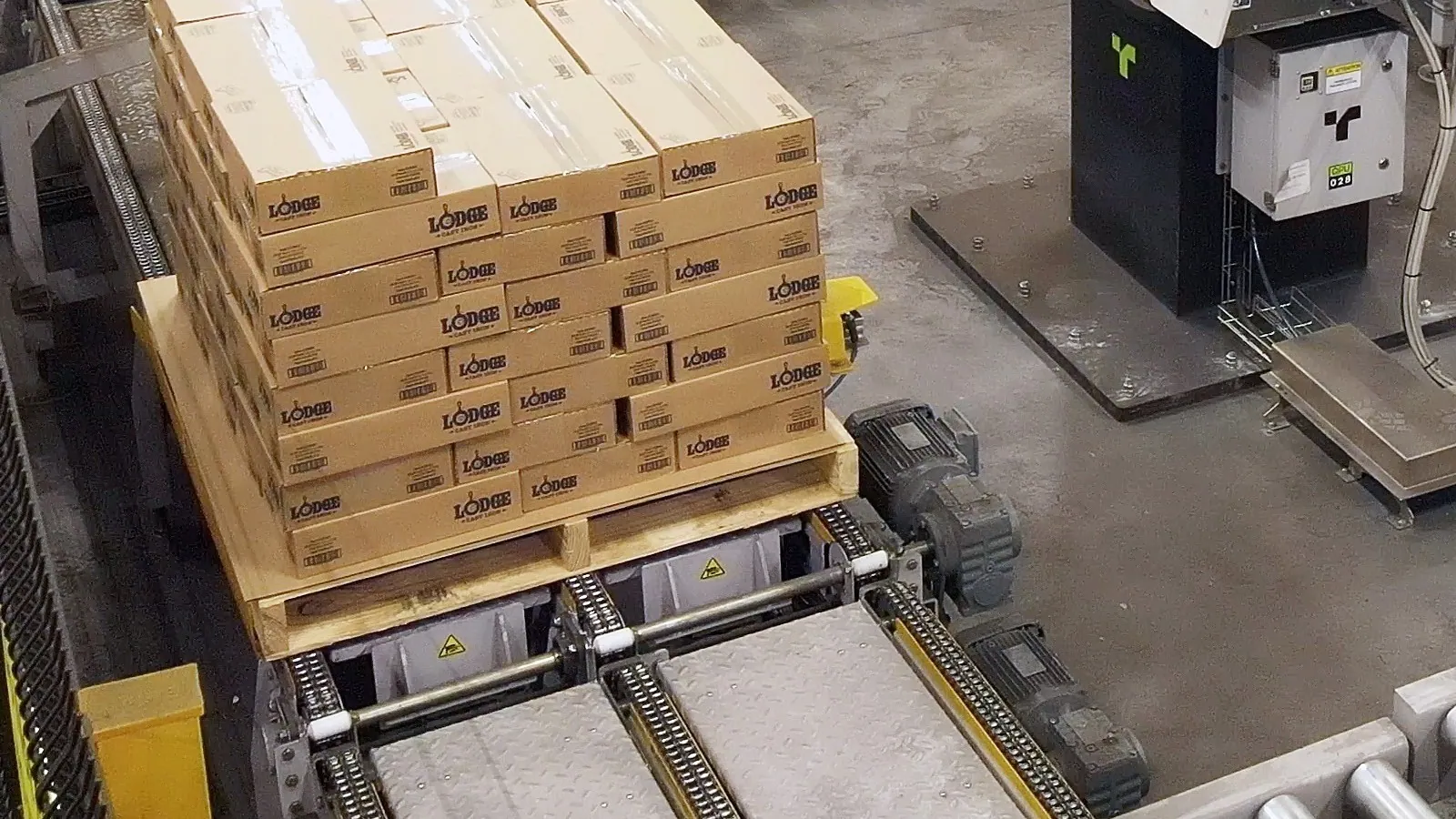
How do you choose between TRFCobot, TRFCompact and TRFSpeed?
Choose by line speed, case weight and floor space. The three TRF palletizing platforms form one family, and the right model is defined by your line setup and rate.
| Platform |
Typical speed |
Case weight |
Typical fit |
| TRFCobot |
Up to 10 cases per minute |
Up to 26 lb |
Lower-speed, high-mix lines with limited floor space |
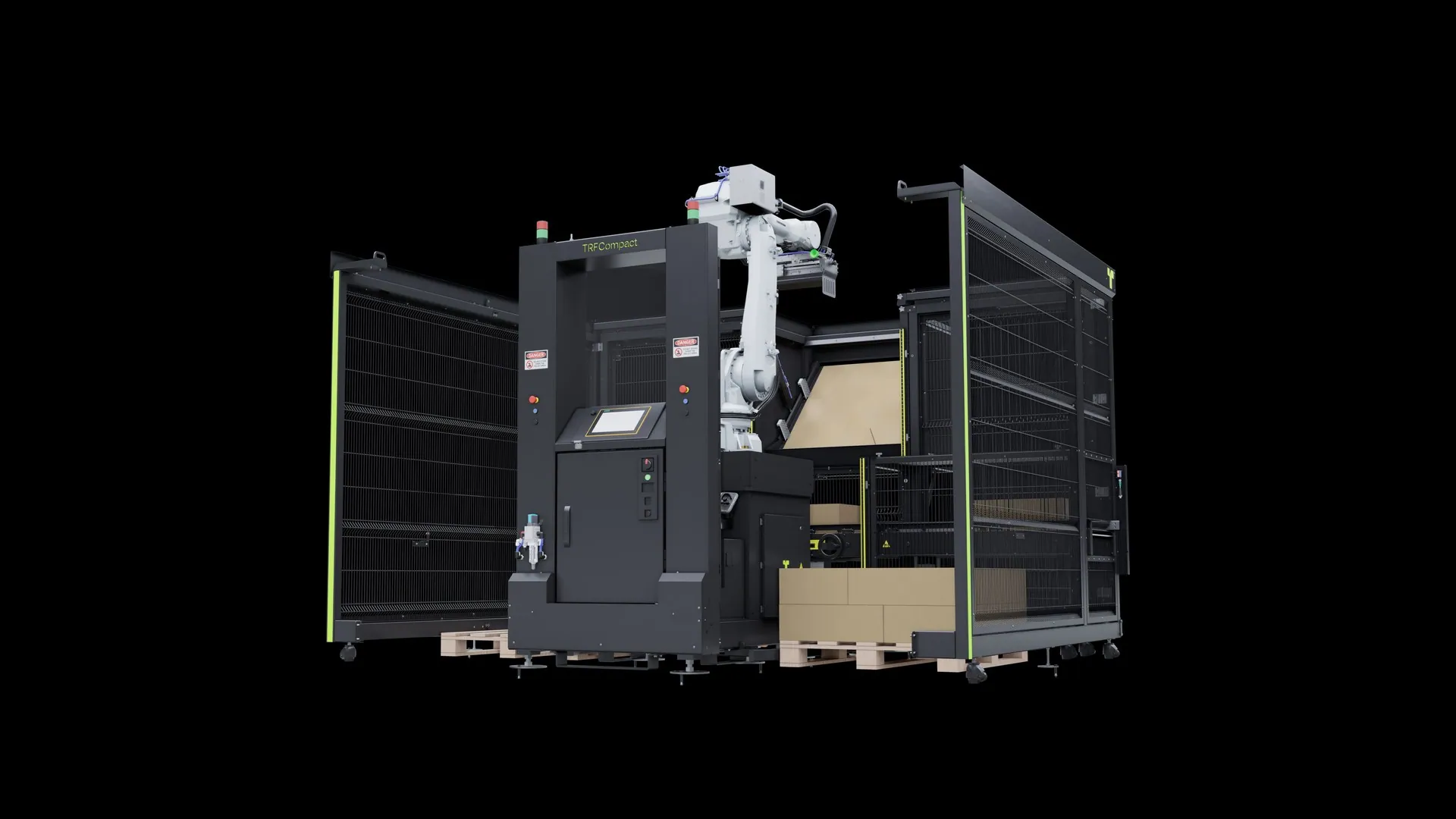
| TRFCompact |
Up to 15 cases per minute |
Up to about 65 lb |
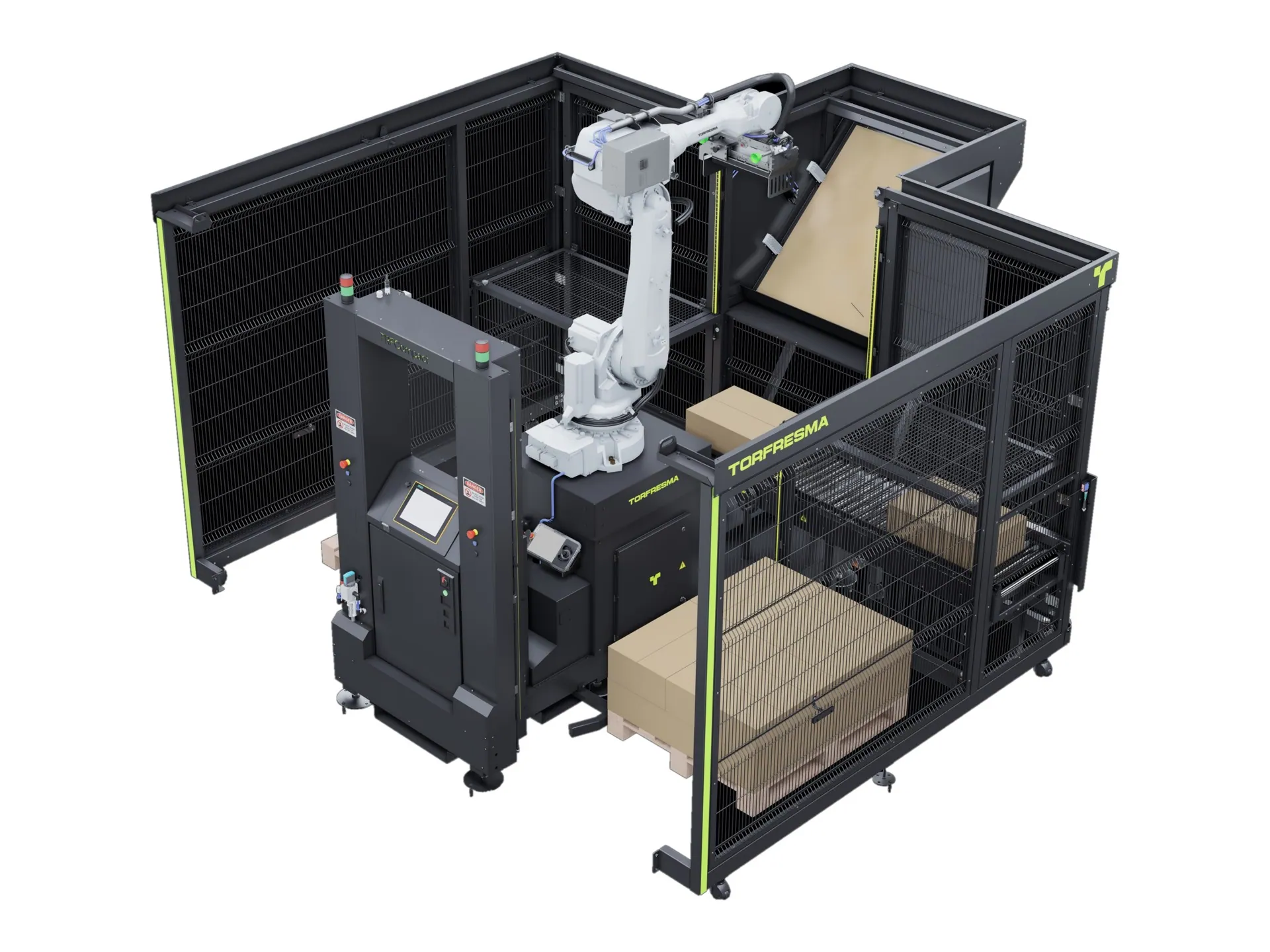
Medium-speed, limited floor space |
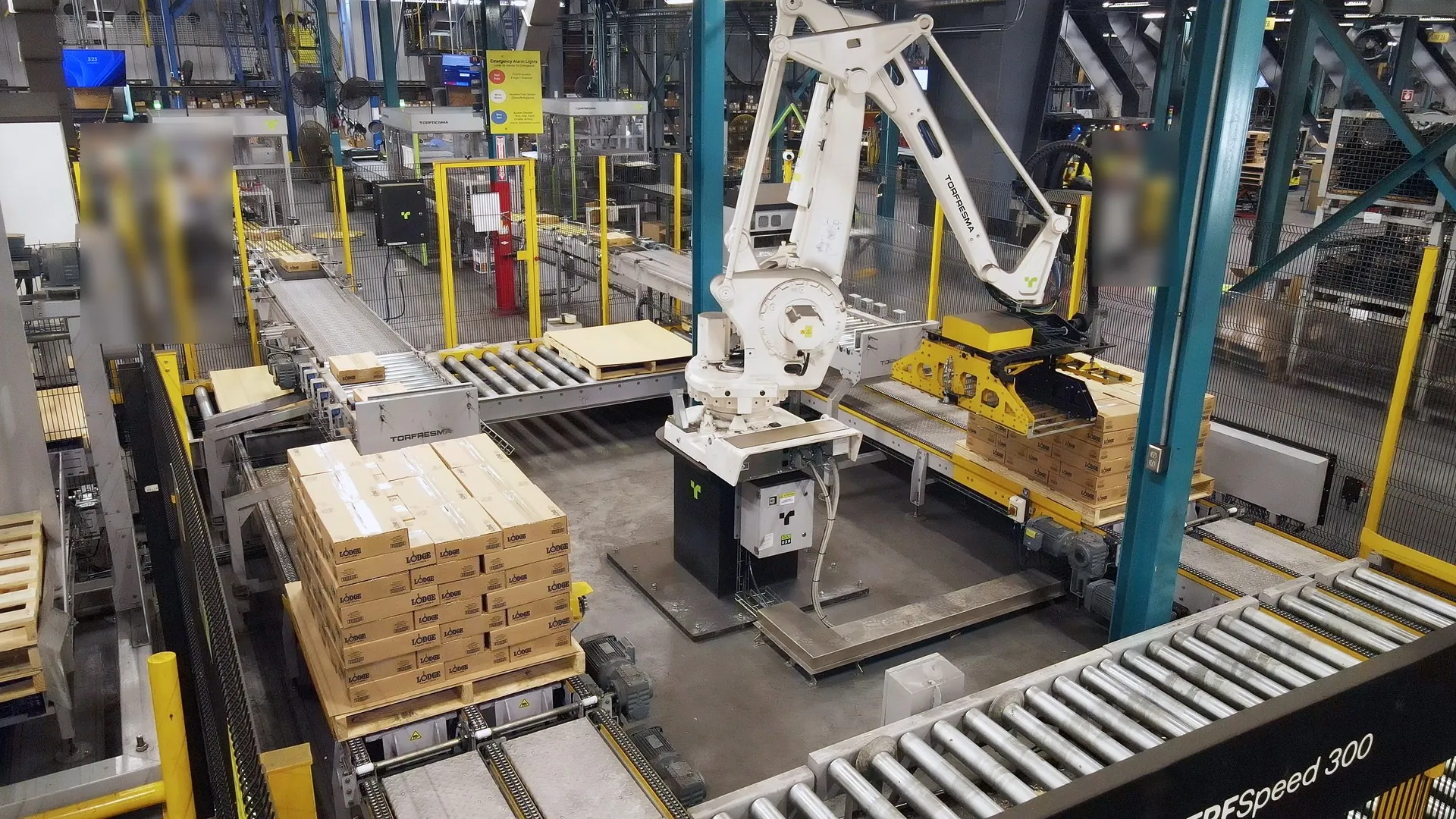
| TRFSpeed |
15 cases per minute or more |
Up to about 80 lb |
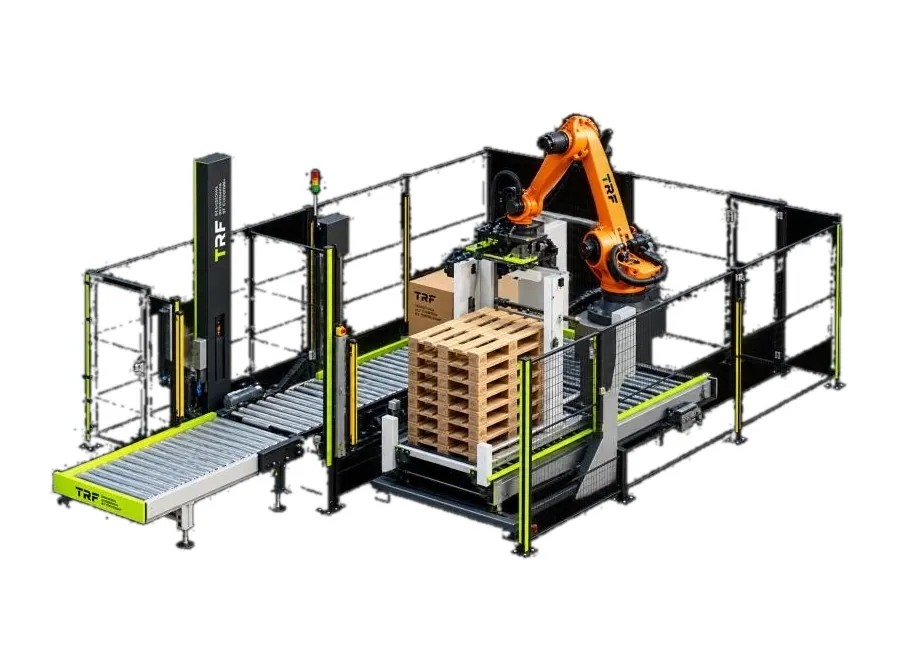
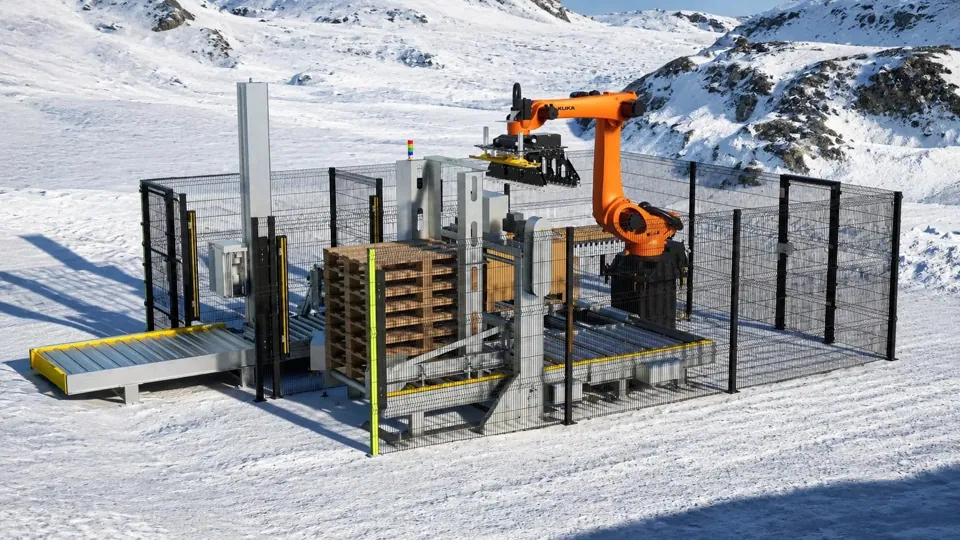
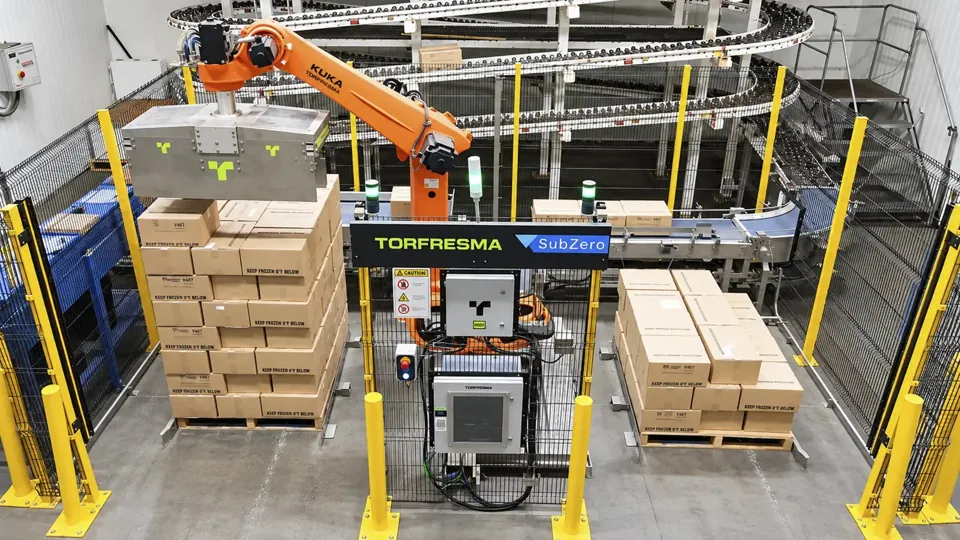
High volume, continuous or multi-line palletizing; TRFSubzero for areas below 32°F |
If your rate, case weight or growth plans go beyond the range of one platform, the next platform in the same family covers higher speeds and payloads. Compare all platforms on the robotic palletizing page. Each platform can also be the last station of a complete TRF end of line, with case packing and conveying supplied by the same partner.
The ranges overlap on purpose, so more than one platform can fit the same line. Start with TRFCobot when the problem is manual labor, low speed, high mix and a limited budget. Choose TRFCompact when the plant needs industrial robustness and more speed in restricted floor space, and TRFSpeed for high throughput, continuous operation, several lines or broad end-of-line integration.
When two platforms could work, choose the one that matches your required throughput, production intensity and growth plans, not simply the lowest initial investment. To test the investment level, run the palletizing ROI calculator with your shifts, your state and your labor data.