
Resources / Case Studies / Lodge Cast Iron
End-of-line automation case study: Ergonomic case packing and robotic palletizing at Lodge Cast Iron.
Ergonomic case packing and robotic palletizing delivered in a single project.
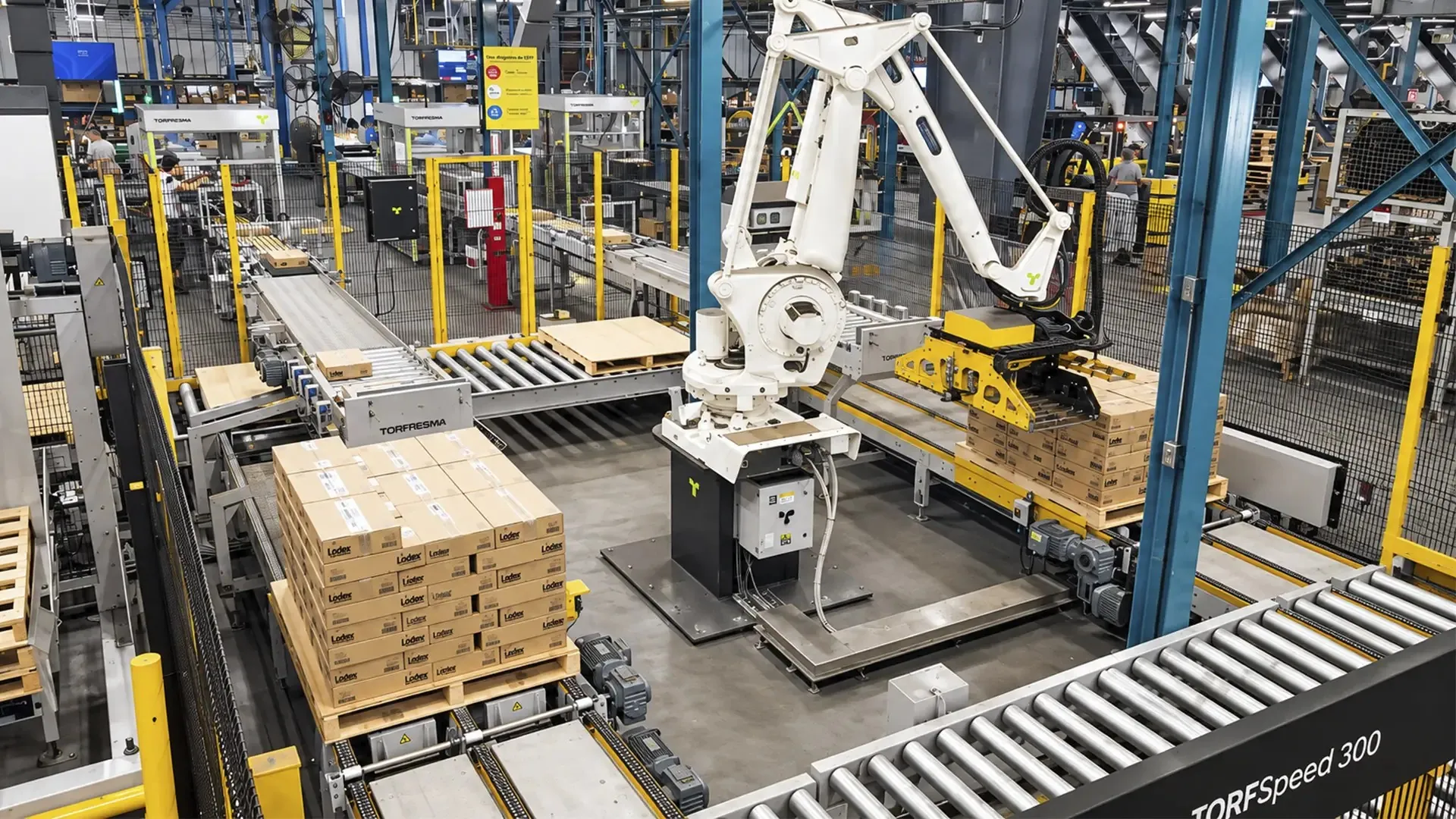
This end-of-line automation case study documents how TRF Industrial Automation combined a tailor-made ergonomic manual case packing system with a fully automatic robotic palletizing system at Lodge Cast Iron, the cookware maker founded in Tennessee in 1896.
Custom engineering
Solutions engineered for your production requirements.
Turnkey integration
From system design through installation and startup.
High reliability
Built for continuous operation.
U.S. support
Technical support for customers across the United States.
Lifecycle support
From startup to long-term performance.
Lodge Cast Iron has spent more than a century crafting cookware in Tennessee, and the customer describes a brand that blends American heritage with forward-thinking innovation. Its packing lines were labor intensive and backed up under the volume of product coming down them. The project that followed covered packing and palletizing together, with one design goal: operators touch the product as few times as possible.
Key facts
| Item | Details |
|---|---|
| Customer | Lodge Cast Iron |
| Founded | 1896, in Tennessee |
| Sector | Cast iron cookware manufacturing |
| Application | End of line: case packing and palletizing |
| System supplied | Tailor-made ergonomic manual case packing system and fully automatic robotic palletizing system |
| Focus | Productivity, safety, ergonomics and product quality |
| Outcomes reported | Less physical stress on operators, lines running with fewer people, fewer complaints of shoulder and lower back strain |
| Supplier | TRF Industrial Automation |
The challenge: Packing lines that backed up
Before automation, the packing lines were very labor intensive and easily backed up with the volume of product coming down the line, according to the customer. The company wanted a solution that made the job easier, put less stress on employees, worked more efficiently and reduced the workload of the people doing it.
Two problems sit inside that description, and they are common to any plant packing heavy product by hand:
- Rate is capped by people. A manual station has a sustainable pace, and when the process upstream runs faster, the line backs up.
- The physical load accumulates. Taping cases and lifting heavy boxes onto pallets by hand, shift after shift, is the work behind shoulder and lower back complaints.
The solution: Fewer touches, from packing station to pallet
The customer's design brief was clear: the employee should touch the product as few times as possible. That required automated palletizing along with automated packaging, and a partner able to provide a full end-of-line solution rather than one machine.
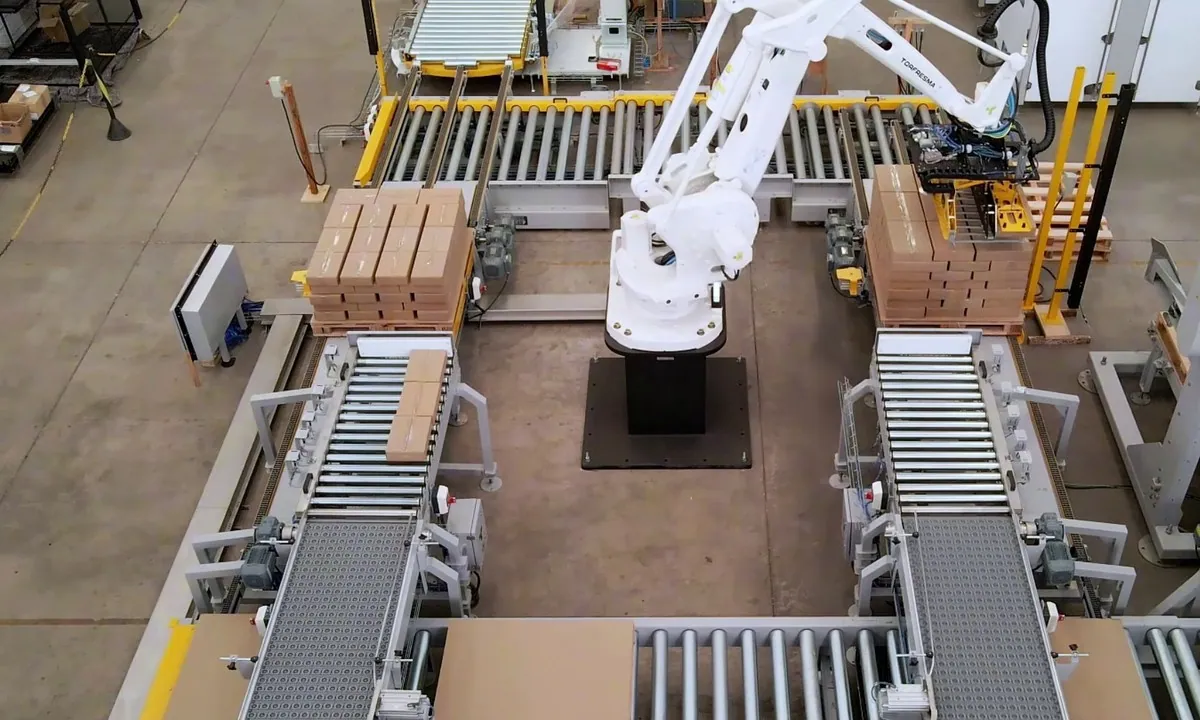
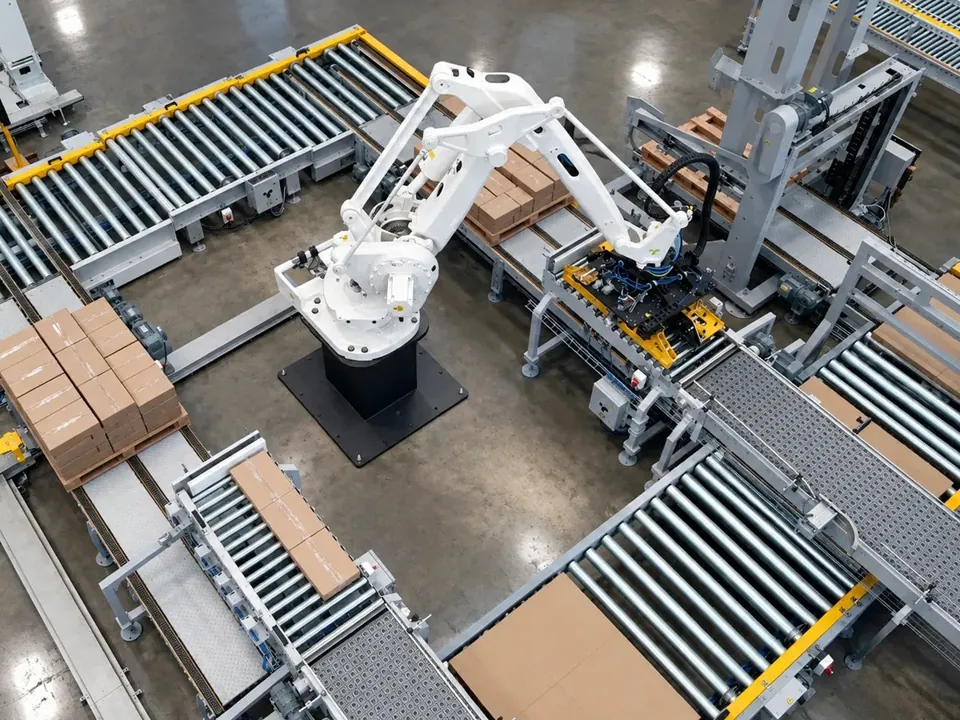
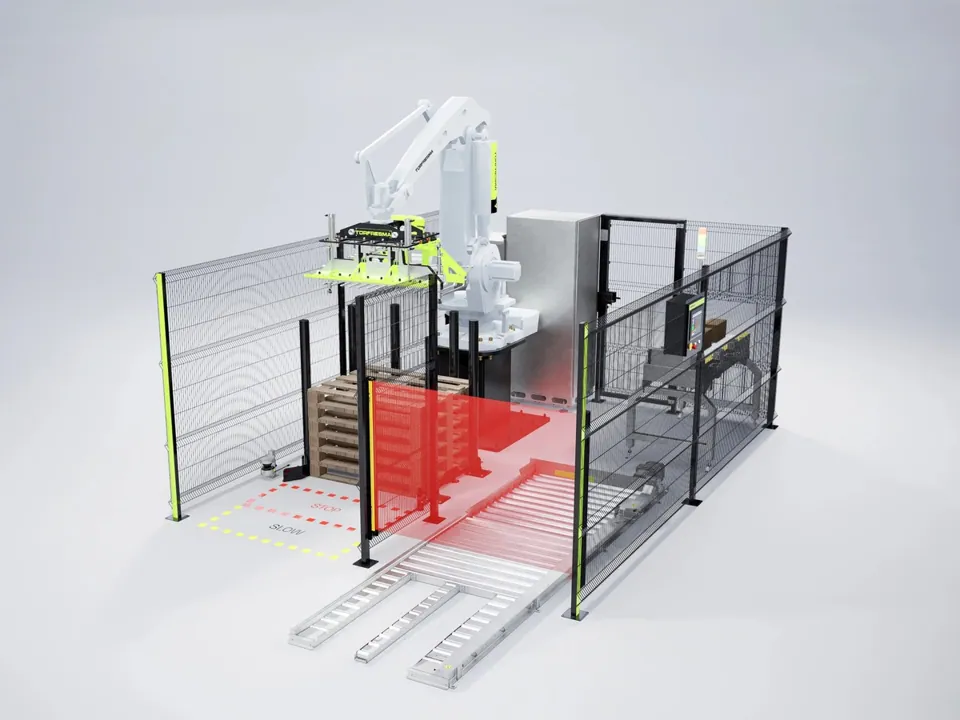
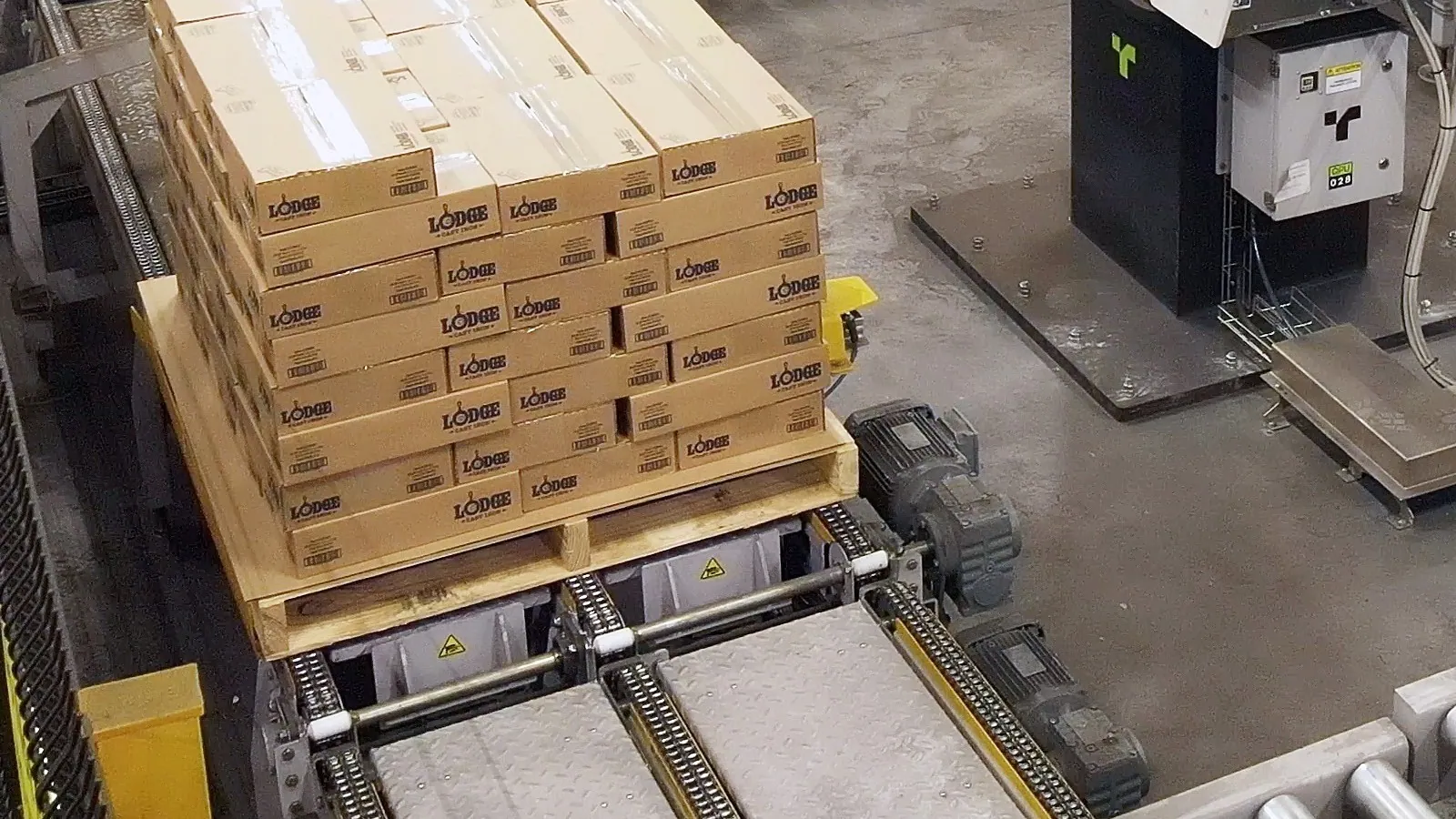
TRF delivered a tailor-made ergonomic manual case packing system together with a fully automatic robotic palletizing system. The operator places the product in the box at an ergonomic station, and from there the robot takes the case away. As the customer describes, the team no longer struggles with tape machines or lifts heavy boxes onto the pallet.
Which TRF systems fit a project like this?
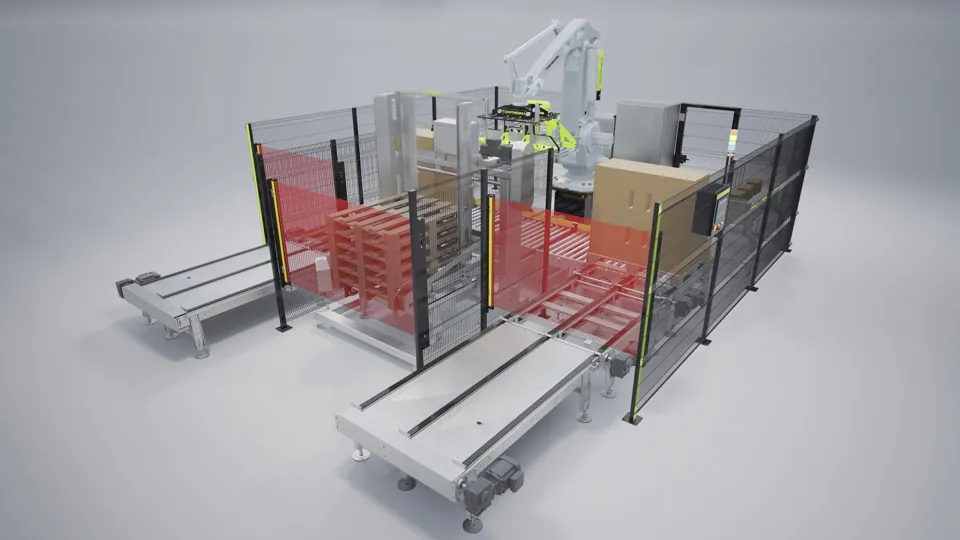
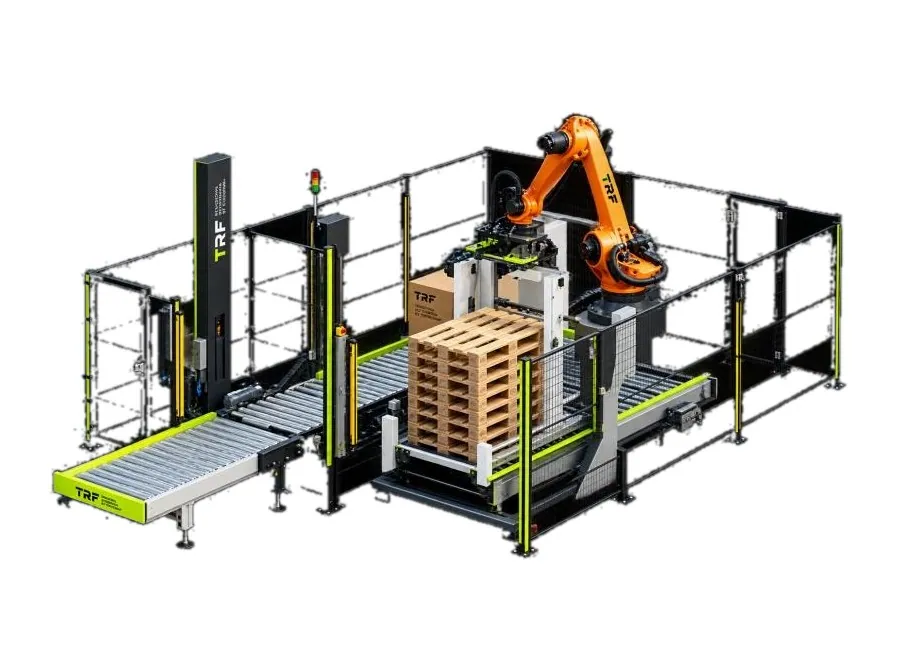
Payload decides first: the robot carries the case weight plus the end-of-arm tool, then rate and floor space narrow the choice. The robotic palletizing page compares the TRF platforms, and a custom palletizer covers products, patterns or layouts outside the standard ranges. On the packing side, automatic case packing fits when format and rate justify it: TRFRapidpack, TRFOnepack and TRFDroppack.
What changed on the floor
The results are about people first. The customer reports less stress on employees and lines that can be operated with fewer people. It also reports fewer complaints of shoulder and lower back strain: once the product is in the box, the robot takes it away, and operators hold the weight for less time.
The customer also describes people who are not as worn out at the end of the day.
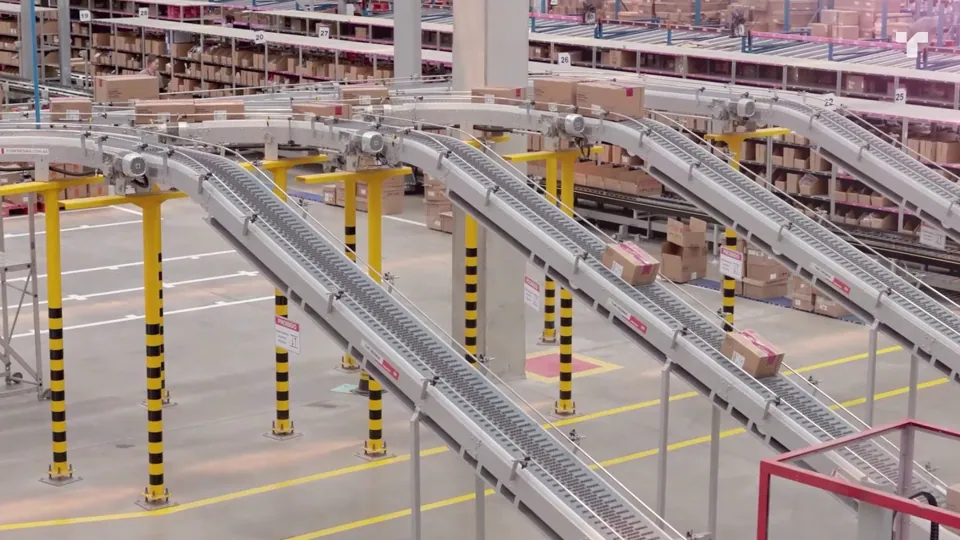
For a project like this, case conveying, accumulation and routing between packing and palletizing use TRFIntraflow modules, and when packing, conveying and palletizing are scoped as one project, the scope is end-of-line integration.
Questions
Frequently asked questions
Can a Plant Automate Palletizing and Keep Manual Case Packing?
Yes, and it can be the right scope. An ergonomic manual packing station keeps the flexibility of hand packing, while the automatic palletizing cell removes the heaviest, most repetitive lifting. That is the combination installed at Lodge Cast Iron, where the robot takes each case away once the product is in the box.
Can Case Packing Equipment Integrate With My Existing Palletizer and Conveyors?
Yes, when packing, conveying and palletizing are engineered together. Case conveying, accumulation and routing connect the packing area to the palletizing cell, and the controls coordinate the flow. When the whole path from packing to pallet is one scope, it falls under end-of-line integration, with one partner accountable for the agreed scope of how the machines work together.
Does End-of-Line Automation Reduce Headcount?
The customer says the lines can be operated with fewer people. The same case stresses the physical side: operators hold heavy cases for less time, and the most strenuous positions no longer depend on lifting. That makes automation a labor availability argument as much as a labor cost argument.
Who Makes Robotic Case Palletizers With Local Support in the US?
TRF Industrial Automation designs, builds, installs and supports robotic case palletizers for manufacturers across the United States, with three standard platforms plus custom engineering. Installations include this Lodge Cast Iron project and the Custom Foods cold storage system. How support and spare parts work for TRF equipment is explained on the Parts and Service page.
Next step: Scope your own end of line
If your packing lines back up when production runs well, and the people at the end of the line carry the weight of every case, this end-of-line automation case study describes a familiar situation. Send TRF your case dimensions and weights, your line rate, your shift pattern and a layout of the packing area, and a Sales Engineer will come back with a concept covering packing, conveying and palletizing together.
More installations are in the case studies section, including Avon.
Next step
Keep your production running.
Tell us about your products, rates and floor space. A TRF Sales Engineer answers with the platform, the layout and the next step for your line.