
Resources / Case Studies / Avon
Avon conveyor system case study: Conveying, case handling and vertical transport as one flow.
One material flow from conveying through case handling to vertical transport.
This conveyor system case study documents how TRF Industrial Automation designed and installed a completely new automatic material flow for Avon, with conveying, case handling and vertical transport engineered as one system.
Custom engineering
Solutions engineered for your production requirements.
Turnkey integration
From system design through installation and startup.
High reliability
Built for continuous operation.
U.S. support
Technical support for customers across the United States.
Lifecycle support
From startup to long-term performance.
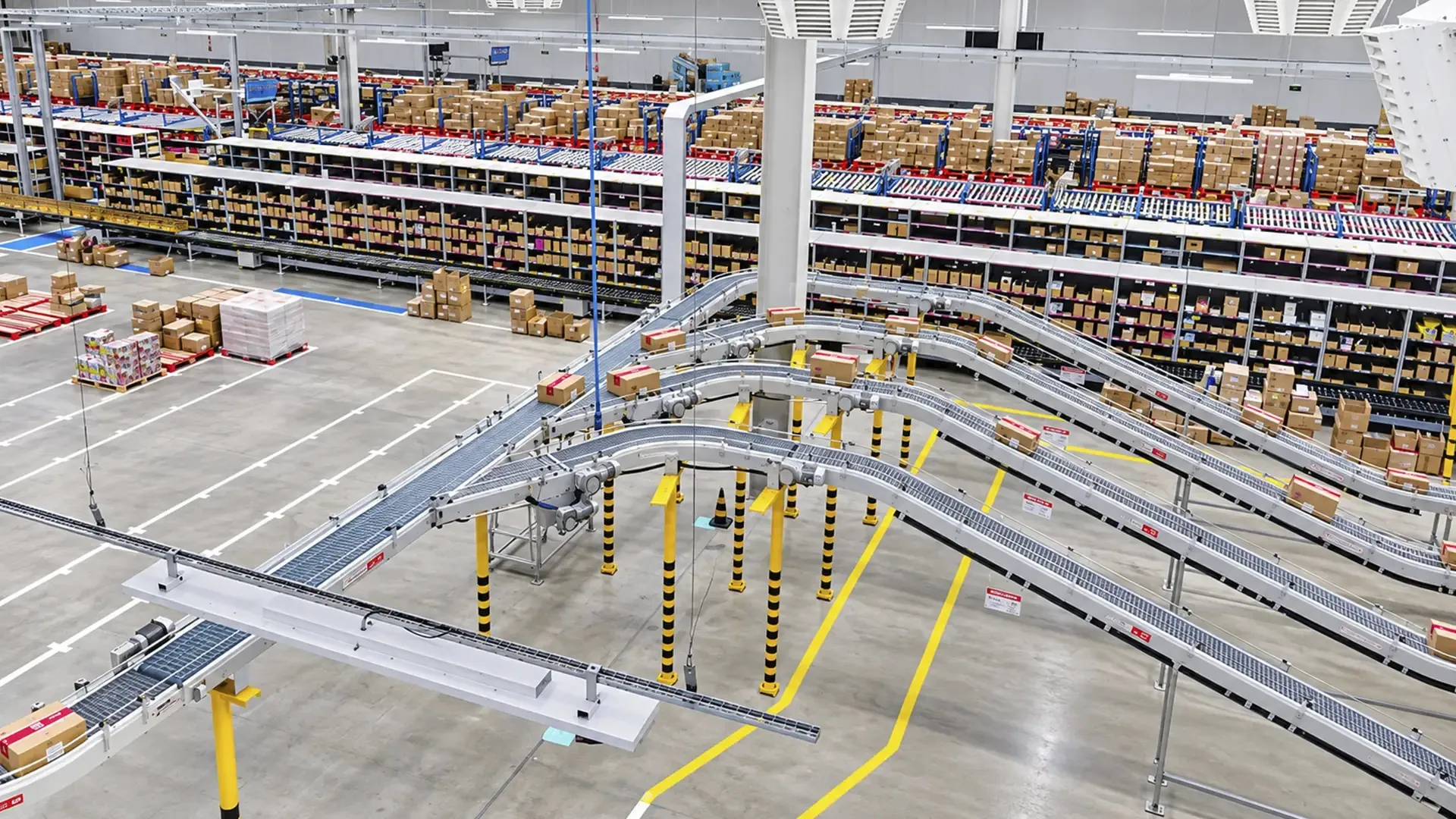
Avon has more than 130 years of operations and offers beauty and body care products through a model built on customer loyalty and trust. The case covers two of its facilities: a production center that is the company's second busiest in the world, and a distribution center that is one of its ten main global logistics centers. Both move products of many shapes, sizes and weights, from small to large packages, through the same infrastructure.
Key facts
| Item | Details |
|---|---|
| Customer | Avon |
| Sector | Beauty and body care products |
| Facilities | A production center and a distribution center of the customer |
| Application | Internal material flow: conveying, case handling and vertical transport |
| Supplied by | TRF, which designed and installed the solution |
| Scope | A completely new automatic solution, with a modular conveyor platform and roller systems for two facilities and 24 lifts from a vertical transport specialist in the production line |
| Figures reported by the customer | Distribution center capacity of 16,000 boxes per day, around 1,200 boxes per hour; around 9% productivity increase in the first three months |
The challenge: Accuracy in a high-mix material flow
The problem was accuracy in the internal flow of materials. In a fully harmonized production and logistics operation, the right product has to reach the right stage at the right moment, and that accuracy supports the performance of the whole operation.
The solution: A new automatic material flow
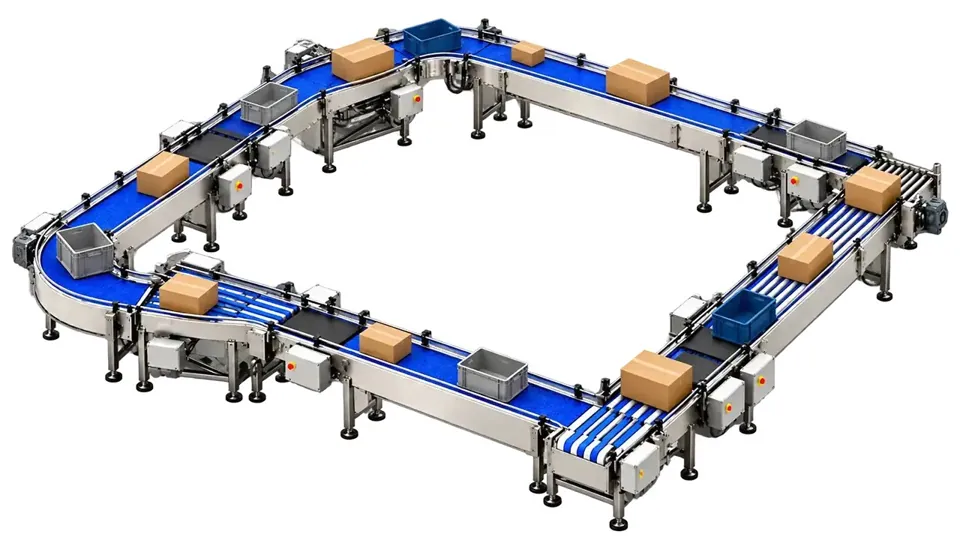
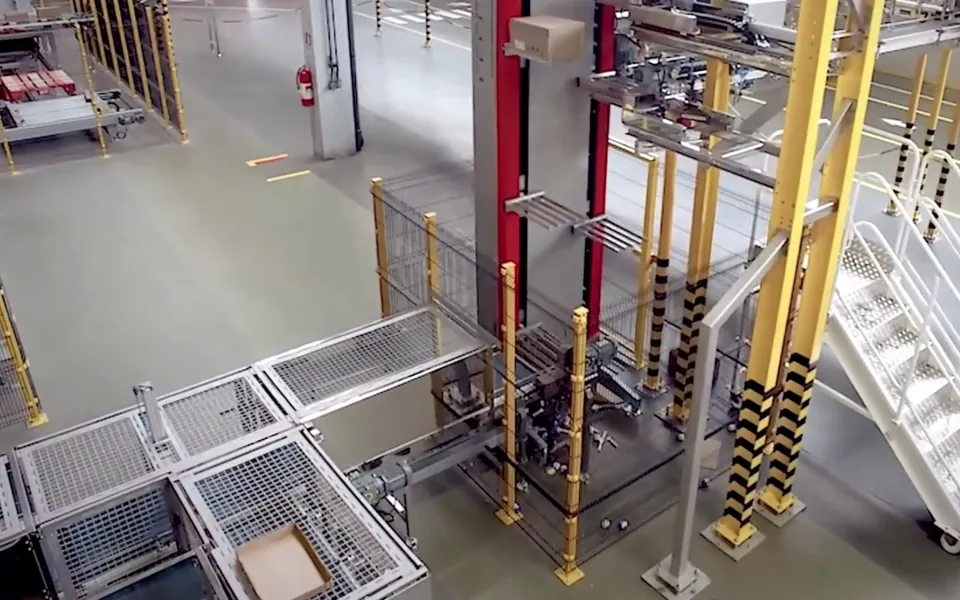
TRF was responsible for designing and installing a completely new automatic solution, and the customer credits it with a significant improvement in productivity. TRF worked in partnership with a specialist in vertical transport, whose lifts serve the production line, and used a modular conveyor platform and roller systems for both facilities.
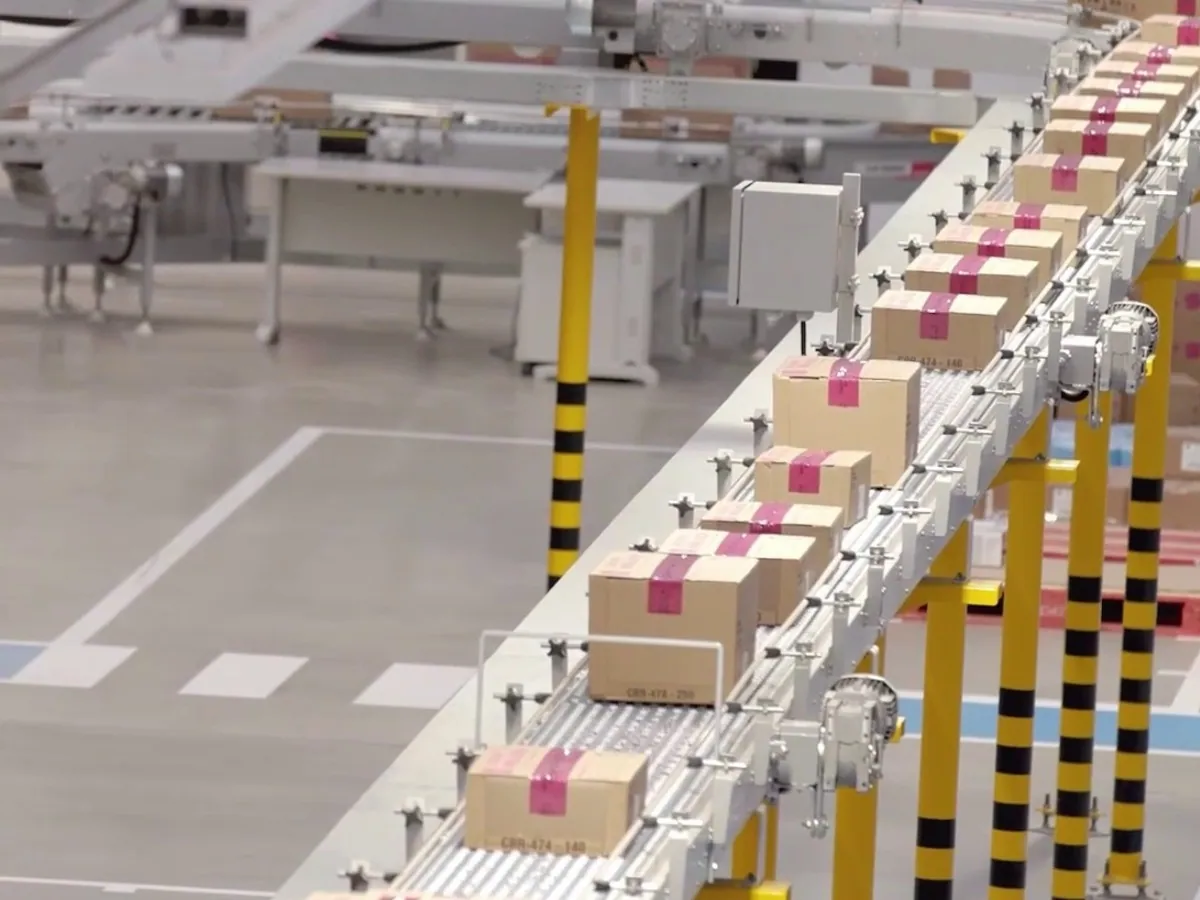
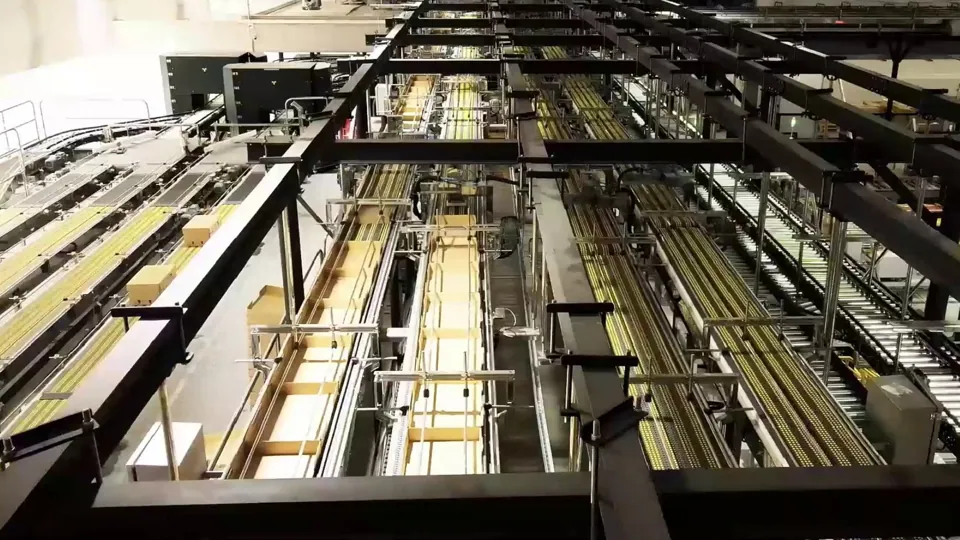
The modular platform let the customer create solutions for the needs of its products by shape, size and weight. The flow runs from the product separation and packaging area, through the production and assembly line, forward to shipping to the end consumer.
What the customer reports
The customer's distribution center management reports a capacity of 16,000 boxes per day, around 1,200 boxes per hour. With a focused project, the customer reported an increase of around 9% in productivity in the first three months, which allowed orders to be processed faster and reduced processing time for reseller orders inside the distribution center.
The same account explains the choice of supplier: a solution aimed mainly at the safety of employees, which the customer describes as a company value, and a partnership already established at another of its plants.
Which conveyor systems fit a flow like this?
TRFIntraflow fits packaged goods moving between machines and levels, the kind of flow described in this case. TRF supplies conveyors as engineered systems integrated into the line, not as loose components.
| Need | TRF system | Where to read more |
|---|---|---|
| Case conveying, accumulation, routing, diverting and elevation | TRFIntraflow | Case conveyor and intralogistics |
| Whole path from packaging discharge to shipping, as one scope | End-of-line integration | End-of-line integration |
TRFIntraflow has no single speed figure, because throughput depends on the system design, the product and the layout rather than on a single module. For personal care and cosmetics plants, the conveying decision often comes with a case packing decision: TRFRapidpack for high-mix, delicate or irregular products, TRFOnepack to erect, pack and seal the case in one machine, and TRFDroppack for controlled gravity loading of flexible packages. At the end of the line, robotic palletizing closes the flow.
Questions
Frequently asked questions
Can a Conveyor System Be Customized to My Exact Plant Layout?
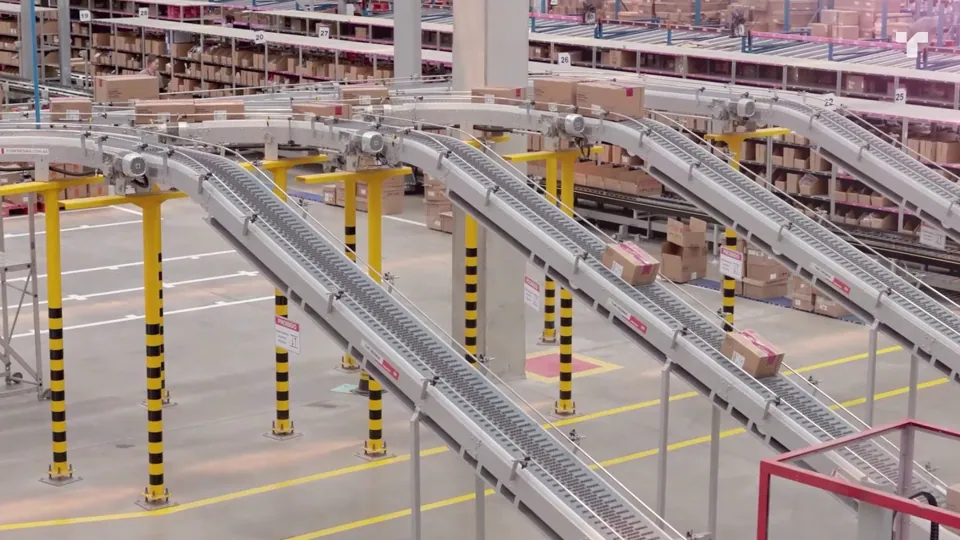
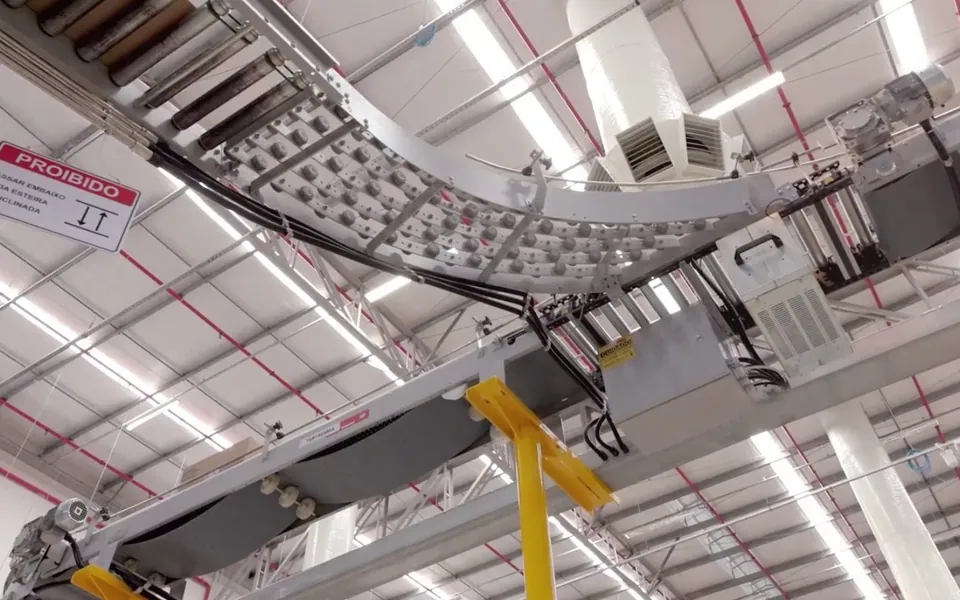
Yes. An engineered conveyor system is laid out around your building, your machines and your product mix, using standard modules for conveying, accumulation, diverting, routing, elevation and integration. In the Avon project, a modular conveyor platform let the customer create solutions for products of different shapes, sizes and weights across two facilities, with lifts between levels.
Can a Conveyor System Integrate With My Palletizer and Case Packer?
Yes. Integration is simplest when conveying, case packing and palletizing are engineered together, with accumulation placed to decouple the machines and controls that coordinate the flow. When the whole path from packaging discharge to shipping is one scope, it falls under end-of-line integration, with one partner accountable for the agreed scope of how the machines work together.
Can a Single Supplier Engineer, Build and Install My Entire Conveyor System?
Yes. TRF Industrial Automation engineers, builds and installs conveyor systems as part of the line, with one partner responsible for engineering, manufacturing, controls, installation and commissioning. The same scope can include case packing and palletizing. In this case, TRF designed and installed the complete automatic flow, working with a vertical transport specialist for the lifts.
How Is Vertical Transport Handled in an End-of-Line System?
Lifts and elevators move product between levels without manual handling, and they are specified by load, cycle rate and footprint. In an integrated system, they are controlled as part of the same flow as the conveyors, so accumulation and routing account for the time a load spends changing levels. In this case, lifts connect levels inside the production line.
Next step: Map your own material flow
If your plant handles a wide product mix, moves product between levels or loses output at transfers rather than inside machines, this conveyor system case study describes a familiar problem. A TRF Sales Engineer starts with your product families and your layout, then designs the flow around them, with case packing and palletizing in the same scope where it makes sense.
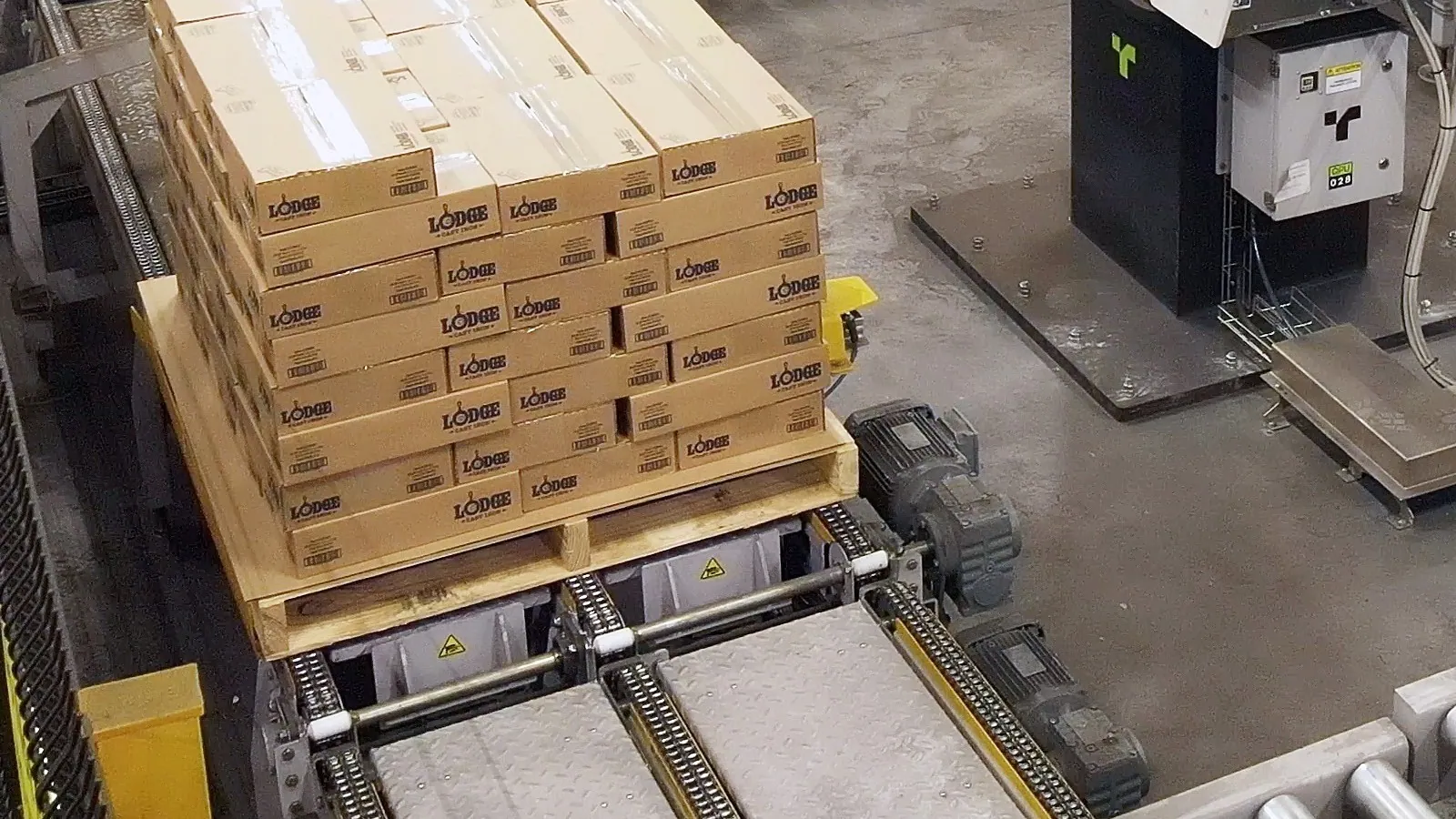
More installations are in the case studies section, including Custom Foods and Lodge Cast Iron.
Next step
Keep your production running.
Tell us about your products, rates and floor space. A TRF Sales Engineer answers with the platform, the layout and the next step for your line.