
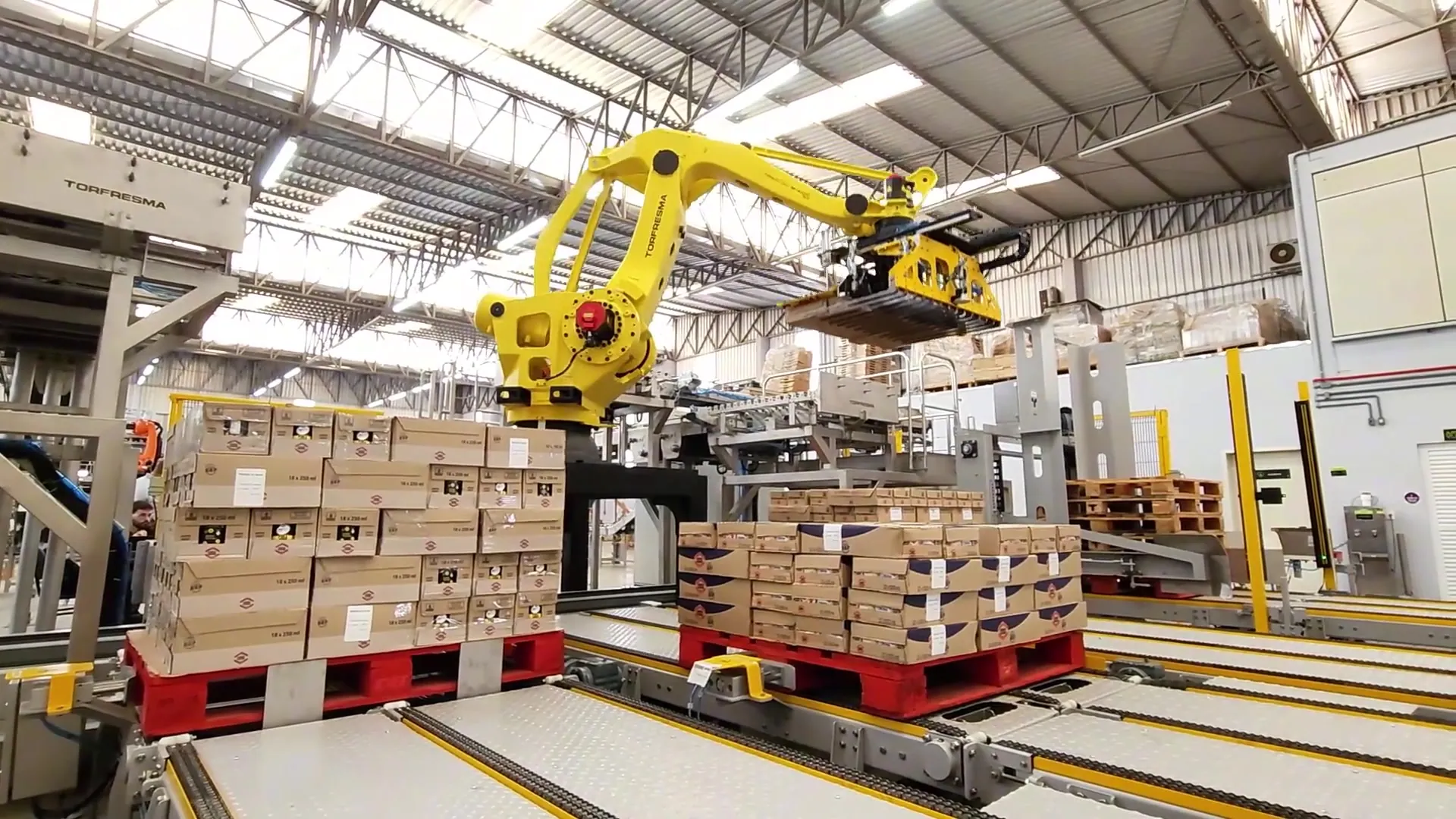
Robotic Palletizing / Custom Palletizer
Custom robotic palletizing systems engineered around your production.
Engineered around your line, your layout and your product when no standard platform fits.
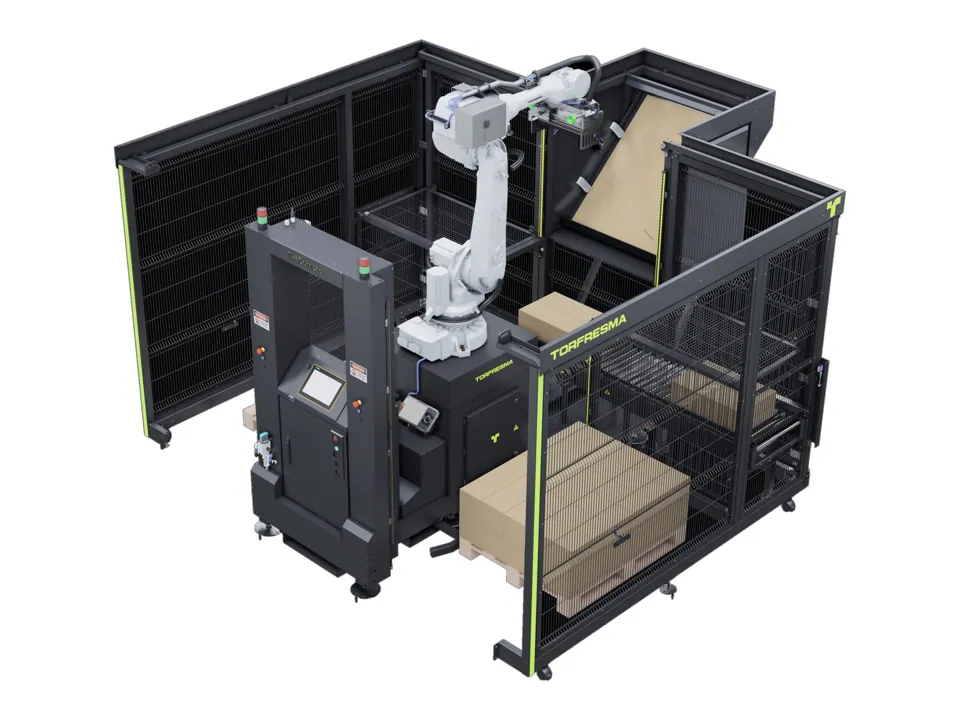
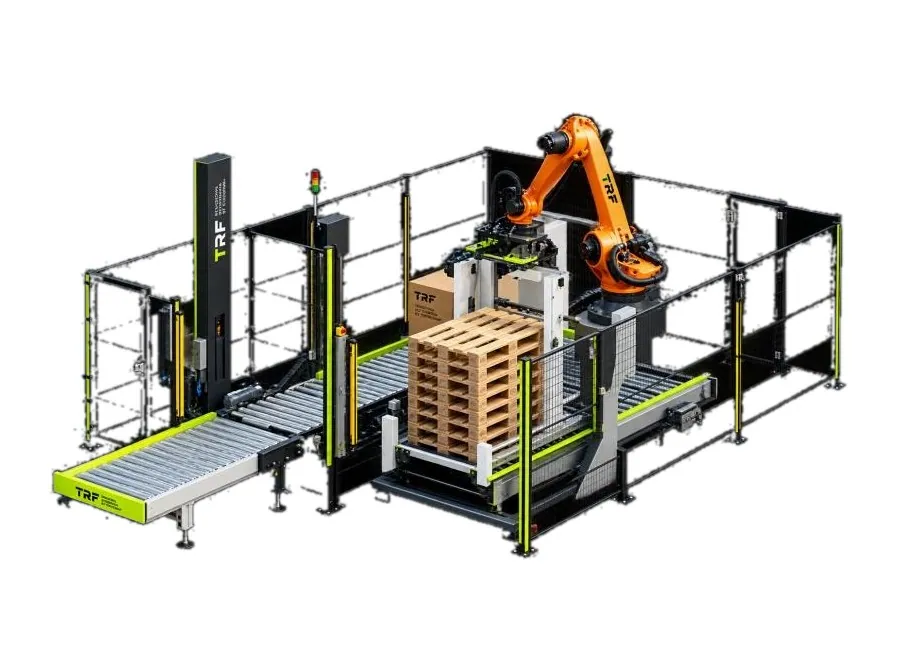
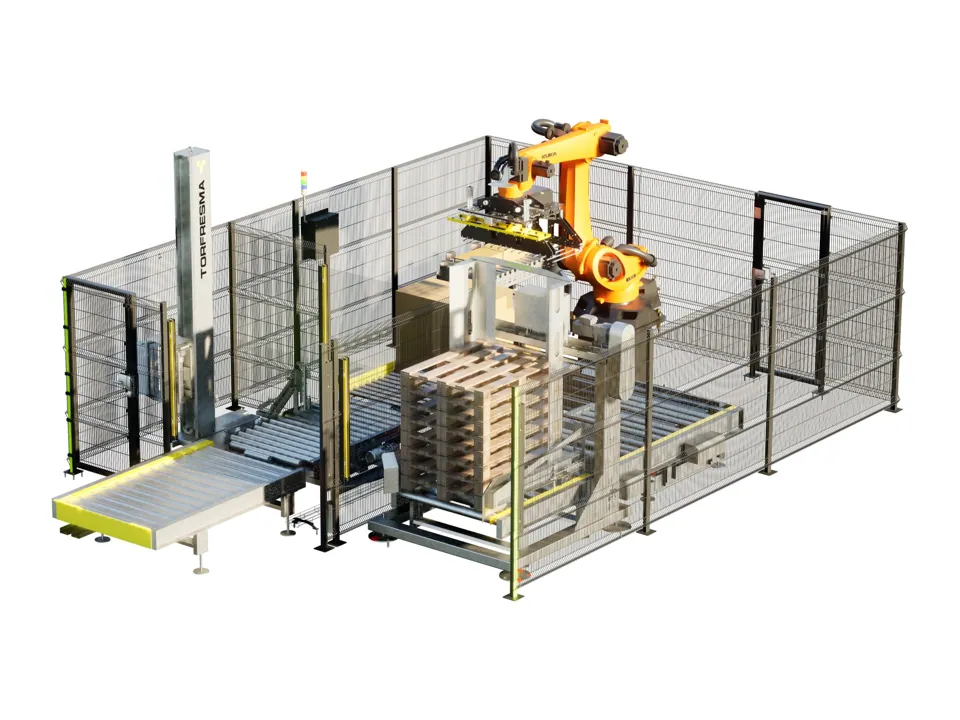
Palletizing systems from TRF Industrial Automation become custom robotic palletizing systems when a standardized platform does not cover the application: they are engineered around one plant's products, pallet patterns, layout and throughput. TRF designs and delivers them as complete projects for manufacturers in the United States, acting as the robotic palletizing integrator for the whole scope.
Custom engineering
Solutions engineered for your production requirements.
Turnkey integration
From system design through installation and startup.
High reliability
Built for continuous operation.
U.S. support
Technical support for customers across the United States.
Lifecycle support
From startup to long-term performance.
Custom palletizer key facts
| Item | Detail |
|---|---|
| What it is | A palletizing system engineered as a project around one application, when a standard platform does not cover it |
| When it applies | Product, load, speed, pallet handling or layout beyond the ranges of TRFCobot, TRFCompact, TRFSpeed and TRFSubzero |
| Standard ranges used for comparison | Up to 10, up to 15 and 15 or more cases per minute, with loads up to about 80 lb across the standard platforms |
| Project scope | Application study, engineering, fabrication, controls, installation, integration and startup |
| Line interfaces | Conveyors, case packing, pallet handling, slip sheets, stretch wrapping, labeling and warehouse systems |
| Loads | Cases, bags, trays, pails, bundles and drums, including loads above the standard weight ranges |
| Pricing | Quoted from each project's data |
| Service area | United States |
Typical ranges. TRF engineering confirms final capacity for each application (product, end-of-arm tool, pallet pattern, reach and process).
When do you need a Custom palletizer?
You need a custom palletizer when the application falls outside what a standard platform was designed to do. In practice, one of the four situations below is usually present, and often more than one at the same time.
The Product or Load Is Outside the Standard Range
The standard platforms are screened by cases per minute and by the weight of each unit. Many products that are not regular shipping cases still fit a standard platform once the end-of-arm tool and the pallet pattern are validated for them. When the unit weight, size, shape or fragility goes beyond what a standard platform and its tooling can handle, the project moves to a custom palletizer.
The pages by palletized product, such as the bag palletizer and pail palletizer pages, explain how the platform is selected for each load.
The Line Speed or the Number of Lines Goes Beyond One Configured Cell
TRFSpeed can scale from a dedicated palletizing cell to a centralized system that serves several production lines. When the combined flow, the number of infeed lines or the production logic goes beyond what a TRFSpeed configuration covers, the application is evaluated as a custom project, for example when each consolidated line must keep its own pallet pattern and product sequence.
Pallet Handling Has to Happen Inside the System
Multipick, automatic pallet handling, slip sheets between layers, pallet discharge and interfaces with stretch wrapping, labeling or warehouse systems all change the cell. TRFSpeed already covers many of these functions. When their combination or sequence is specific to one plant, the pallet handling is engineered into a custom palletizing system instead of added around a standard cell.
The Layout Does Not Fit a Standard Cell
Building columns, existing conveyors, forklift aisles, pallet staging areas and ceiling height all constrain where a palletizer can go. TRFCobot and TRFCompact were designed for tight footprints, and they solve many of these cases. When the only viable position requires a special frame, an unusual infeed direction or a split between picking and pallet building, the cell is laid out as a custom project.
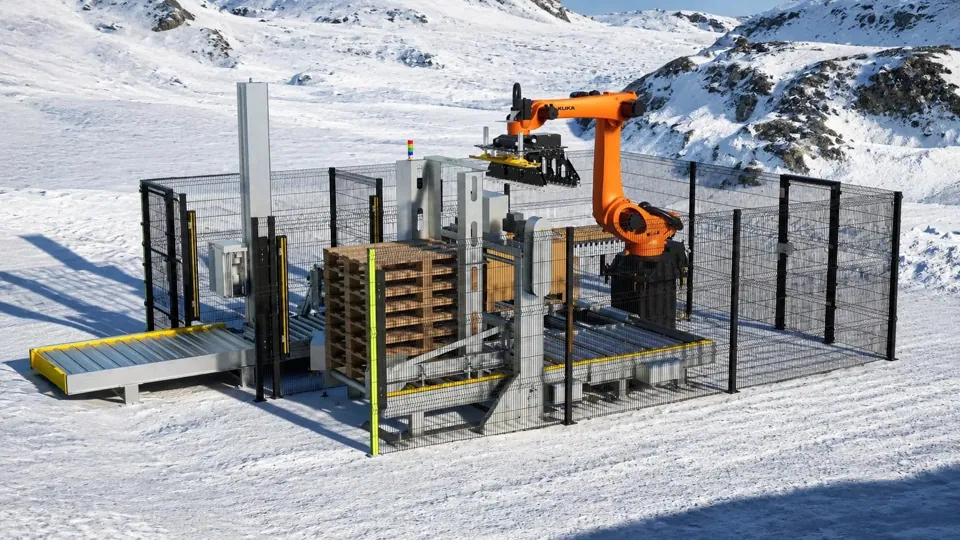
What are Custom robotic palletizing systems, and how are they different from a standard platform?
Custom robotic palletizing systems are engineered as projects around one application: layout, robot selection, tooling, controls and pallet handling are defined for one plant. A standard platform starts from a known architecture, so the project concentrates on what is specific to your line. Standardization reduces engineering complexity and commercial uncertainty compared with a fully custom cell.
That is why the standard options are checked first, even when a buyer asks for a custom palletizer. Several requirements that sound custom are already covered by a standard platform:
- Multiple recipes and pallet patterns. The standard platforms run several SKU recipes and pallet patterns, so frequent product changes do not require a special machine.
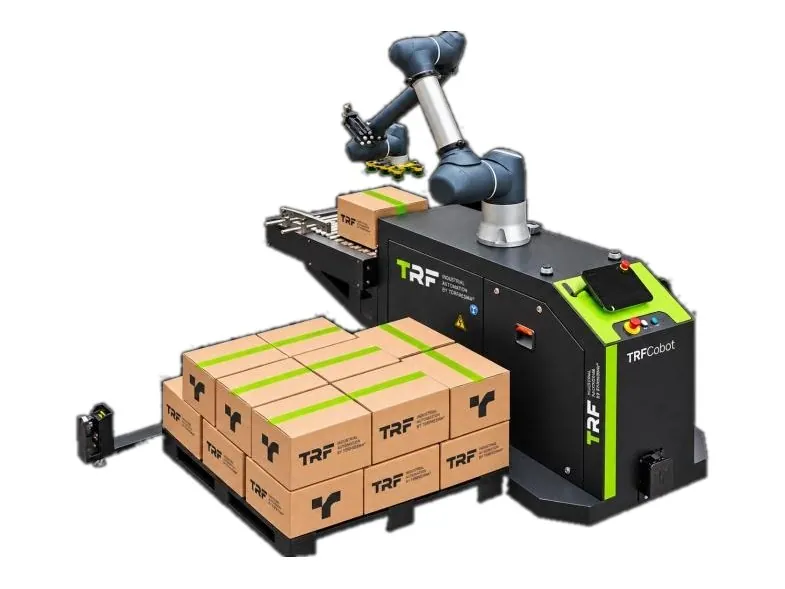
- Compact footprints. TRFCobot fits lines where a traditional robotic cell is difficult to install, and TRFCompact brings an industrial robot into a compact, standardized cell for brownfield plants.
- Customer-specific layouts at higher speed. TRFSpeed is a configurable platform that uses modular engineering to reduce project risk while keeping the customization each production flow requires.
A custom palletizer is the right answer when the application still does not fit after these options are considered. You pay for engineering where the application needs it, and you keep standard components where they already work.
End-of-Arm Tool and Pallet Pattern
In a custom project, the end-of-arm tool and the pallet pattern are engineered together with the layout, not added at the end. The tool has to pick the unit securely at the required rate, and the pattern has to produce a stable load for wrapping, forklift handling and shipping.
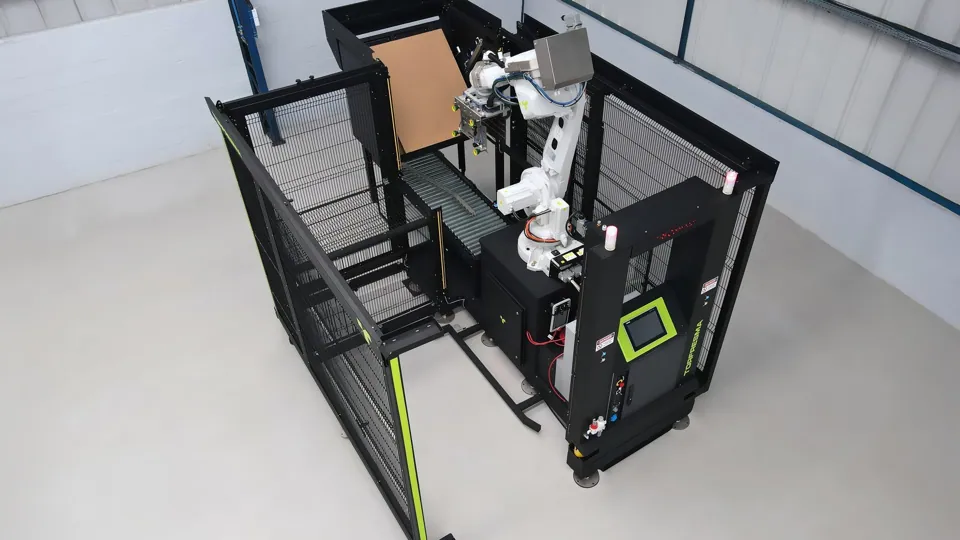
Which products can a Custom palletizer handle?
A custom palletizer handles the same product families as the standard platforms when a unit, rate or layout goes beyond their ranges. TRF palletizes bags and sacks, boxes, cases, trays and crates, buckets and pails, cartons, bundles and drums, covered in the next section.
Start from the product you ship. Each product page explains which platform fits it by rate and unit weight, and when the application moves to a custom palletizer. For the industries behind these products, the industries overview shows which TRF platforms fit each one, from chemicals to frozen food and ice cream.
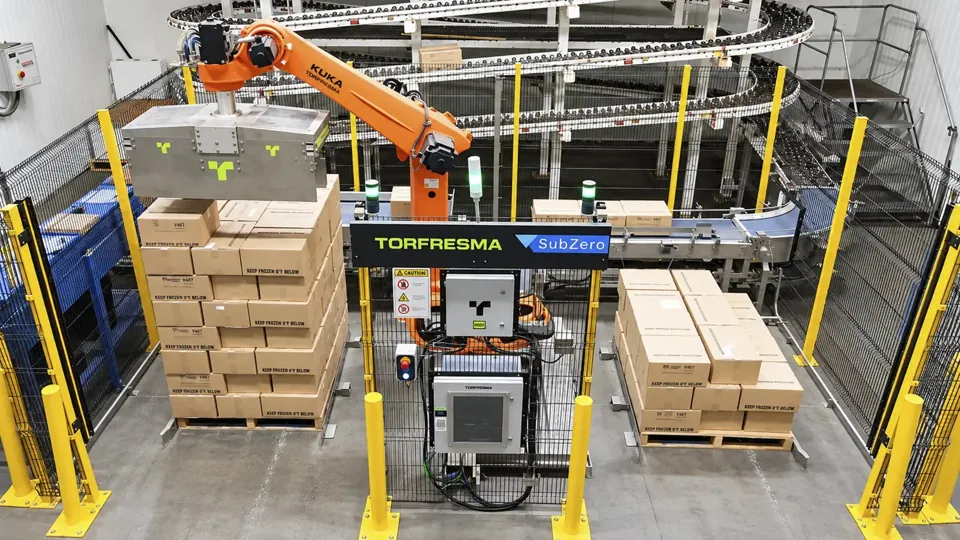
How does a Custom palletizer handle drums and barrels?
A filled drum is the load most likely to leave the standard platforms, because drums are heavy, round and carry closures that must face a defined way. TRF checks the weight of the filled drum against the published case weights first: up to 26 lb for TRFCobot, up to about 65 lb for TRFCompact and up to about 80 lb for TRFSpeed. Within those weights a drum can be validated on a standard platform. Above them, it becomes a custom palletizing project. For palletizing purposes, a barrel and a drum are the same cylindrical container.
The end-of-arm tool is selected for the drum's construction, rim profile, closures and handles, and it has to hold the drum securely at full weight. Orientation is part of the pallet recipe: closed-head drums are often placed with the bungs turned to a defined position, and labels and lot codes are turned outward so they can be read once the load is wrapped. TRF also reviews the real condition of drums at the pick point, since drums leaving a filling station can carry product residue, condensation or cleaning water.
The layer plan is declared at the start of the project. A single layer is the simpler load; double stacking uses a slip sheet or a stacking frame and raises the reach and payload the system needs. Wrapping a round load differs from wrapping a square case load, so the handoff from the palletizer to wrapping and labeling is defined during integration design. Drums are palletized in chemicals and food processing plants and in household and cleaning products and pharmaceutical operations.
What information do you need to evaluate Custom palletizing systems?
You need product, line, pallet and plant data, because payload, cycle rate and reach are validated against the real application. The more complete the first data package, the faster engineering can tell you whether a standard platform or a custom project fits.
| Data group | What to include |
|---|---|
| Product | Dimensions and weight of each unit, packaging type (case, bag, tray, pail, drum, bundle), surface and rigidity, number of SKUs |
| Line | Throughput per line in cases or units per minute, number of lines, peak and average rates, shifts per day |
| Pallet | Pallet type and size, pallet patterns, maximum load height, slip sheet use, mixed or single-SKU pallets |
| Plant | Available floor space, layout drawing, ceiling height, forklift and pallet flow, operating temperature |
| Interfaces | Conveyors, case packers, stretch wrapping, labeling and warehouse systems the palletizer must connect to |
| Goals | Labor to be reassigned, ergonomic issues to remove, capacity targets and planned expansion |
If you do not have every item, start with what you have. Product weight, rate per line and a photo or sketch of the available area are usually enough for a first screening conversation with a Sales Engineer.
How do you choose between a standard platform and a Custom palletizer?
Match the operational problem to the platform, and move to a custom palletizer only when no standard platform fits. The TRF palletizing family is the reference point for that decision.
| If the primary need is | Typical range | Start with |
|---|---|---|
| Replacing manual labor at low speed, with high product mix and a limited capital budget | Up to 10 cases per minute, up to 26 lb | TRFCobot collaborative palletizing |
| Industrial robustness and more speed in restricted floor space | Up to 15 cases per minute, up to about 65 lb | TRFCompact compact industrial palletizing |
| High throughput, continuous operation, multiple lines or significant end-of-line integration | 15 or more cases per minute, up to about 80 lb | TRFSpeed high-performance palletizing |
| Palletizing in areas below 32°F | Validated per application | TRFSubzero |
| Product, load, speed, pallet handling or layout beyond these ranges | Defined by the application | Custom palletizer |
When more than one option could technically work, TRF recommends the one that matches your required throughput, production intensity and growth path, not only the option with the lowest initial cost. The full range is on the robotic palletizing page.
A custom palletizer connects to the rest of the line like any TRF system. TRFIntraflow case conveying delivers products in the right orientation and sequence, case packing platforms can be supplied upstream, and pallet handling downstream is defined during engineering. When these are delivered together, TRF manages the scope as end-of-line integration, with one partner accountable for the agreed project scope, from layout to startup.
Questions
Frequently asked questions
Can a Custom Palletizer Serve More Than One Production Line?
Yes, a custom palletizer can serve more than one production line, and consolidating several lines into one palletizing area is a common reason to move beyond a single cell. TRF first checks whether a TRFSpeed configuration, which can grow from a dedicated cell to a centralized multi-line system, covers the flow. When it does not, the multi-line logic is engineered into a custom project.
How Long Does It Take to Install and Commission a Robotic Palletizer?
The time to install and commission a robotic palletizer depends on the scope: the cell itself, conveyor changes, the pallet flow and how much production time the plant can release for the tie-in. A TRF project runs a factory acceptance test at the TRF facility before shipping, then installation, startup and a site acceptance test at your plant. The schedule is confirmed in the quote, based on the validated scope.
Can a Custom Palletizer Handle Products Heavier Than a Standard Case?
Yes, a custom palletizer is the route for products heavier than a standard case. The standard platforms are screened for cases up to about 80 lb on TRFSpeed, so heavier drums, sacks or other loads are evaluated as a custom project, with the robot, the end-of-arm tool and the reach selected for the unit. TRF validates the application with your real product before quoting.
Can a Custom Palletizer Change Pallet Patterns and SKUs Like a Standard Cell?
Yes, a custom palletizer changes pallet patterns and SKUs the same way a standard cell does: operators select a stored recipe, and the system changes the pattern and the related settings. In a custom project, the end-of-arm tool and the patterns are engineered together with the layout, so every SKU in your list is covered from the start instead of being added later.
How Much Does a Custom Palletizer Cost?
A custom palletizer has no list price, because palletizing equipment of this kind is quoted from each project's data: robot and tooling, pallet handling, conveyors, controls, integration, installation and training. The robotic palletizer cost guide explains each cost factor, and the palletizing ROI calculator estimates payback with your location, your shifts and the people who palletize by hand today.
Who Builds Custom Palletizing Systems in the US?
Palletizer manufacturers differ in how much of the project they own. TRF Industrial Automation builds custom palletizing systems for manufacturers in the US and works as the palletizing system integrator for the project, engineered around one plant's products, layout and throughput and delivered as complete projects. TRF also supplies the case packing and conveyors around the palletizer, so the end of line can be one scope with one accountable partner, and supports TRF equipment after startup through Parts and Service.
Start your Custom palletizing project
If your product, rate, pallet handling or layout does not fit a standard cell, custom palletizing systems start with a screening conversation with a TRF Sales Engineer. Share your product weight, rate per line and a sketch or photo of the available area, and TRF will tell you whether TRFCobot, TRFCompact, TRFSpeed, TRFSubzero or a custom palletizer fits the application. From there, the project moves to a detailed study, a layout and a quote.
Next step
Keep your production running.
Tell us about your products, rates and floor space. A TRF Sales Engineer answers with the platform, the layout and the next step for your line.