
Robotic Palletizing / Box Palletizer
Box palletizer sized to your box mix and line rate.
A palletizer matched to your box mix, rate, weight and floor space, to free your crew from repeated lifting.
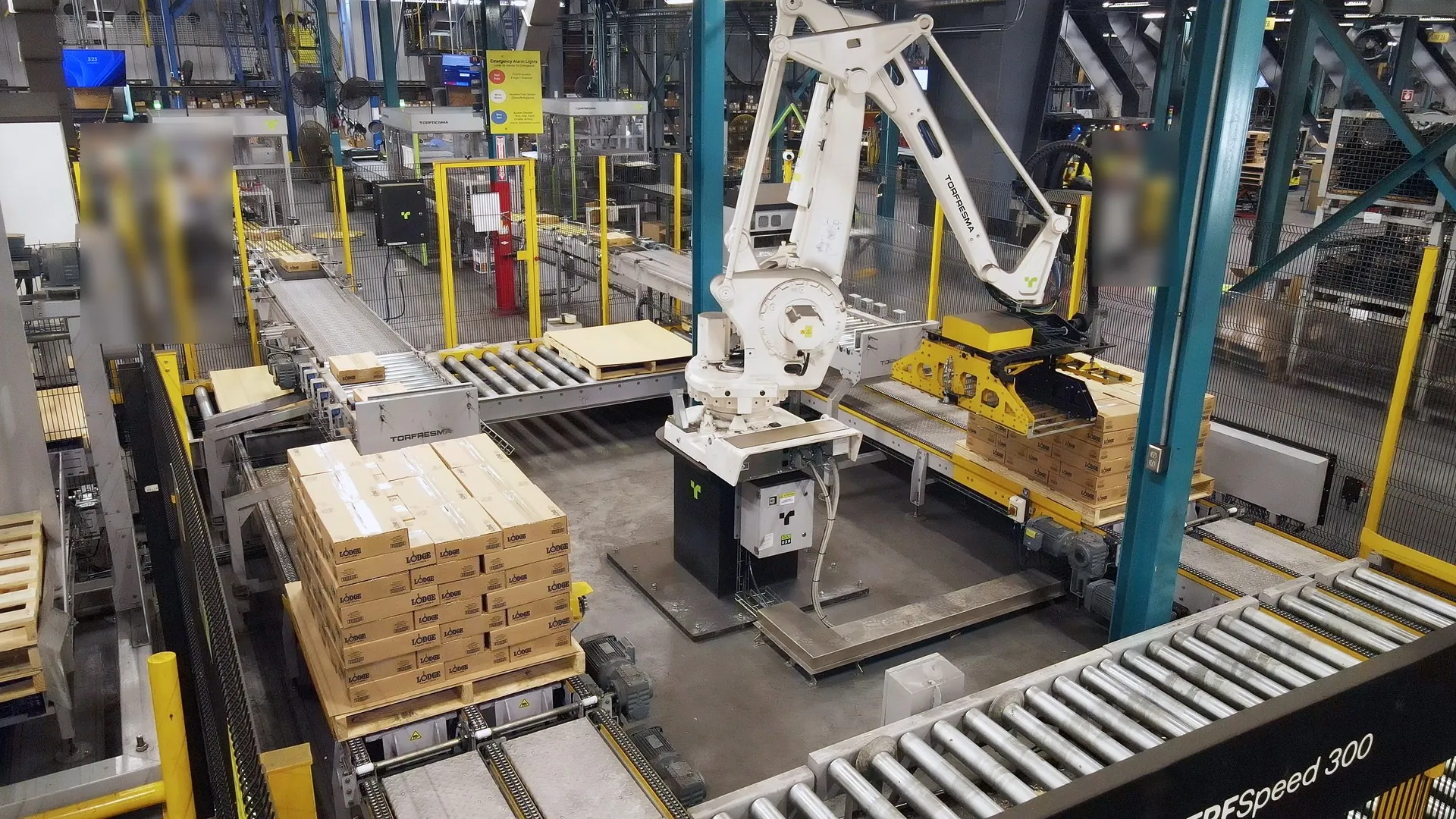
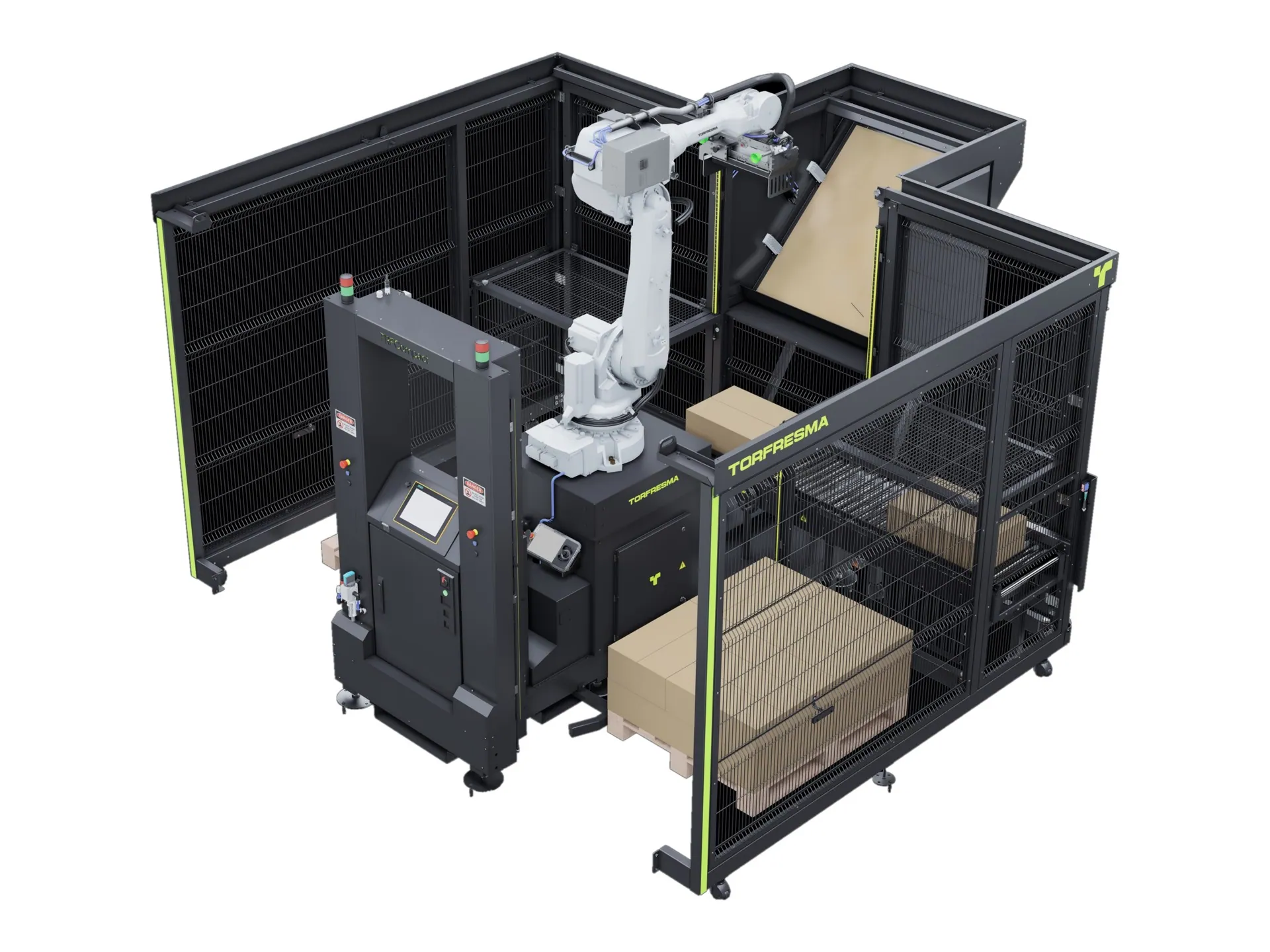
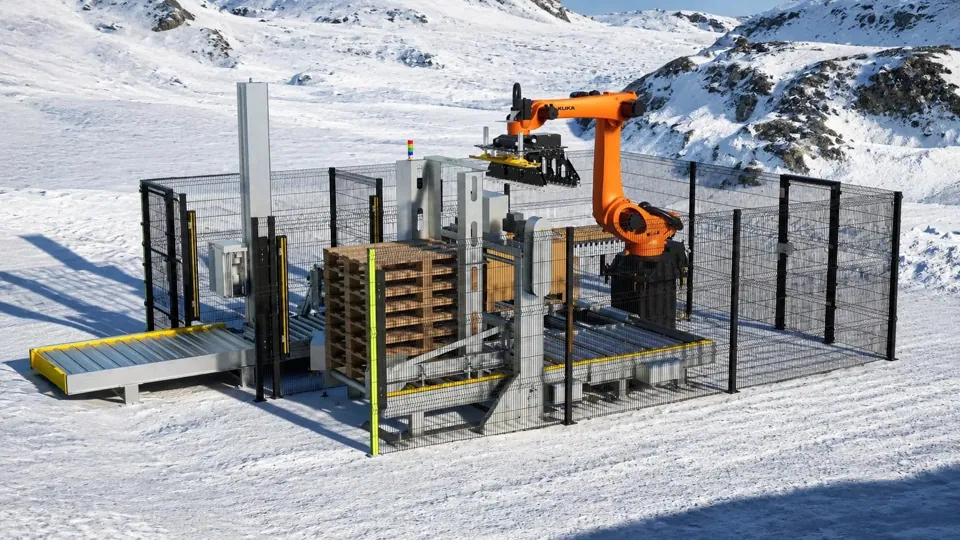
A box palletizer is a robotic system that picks corrugated boxes, sealed shipping cases and cartons from a conveyor and stacks them onto pallets in programmed layers, with patterns and grippers matched to each size. TRF Industrial Automation builds box palletizers on TRFCobot, TRFCompact and TRFSpeed, or as a custom palletizer, and the right model is defined by your line setup and speed.
Custom engineering
Solutions engineered for your production requirements.
Turnkey integration
From system design through installation and startup.
High reliability
Built for continuous operation.
U.S. support
Technical support for customers across the United States.
Lifecycle support
From startup to long-term performance.
Box palletizer key facts
| Item | What to know |
|---|---|
| What it does | Picks corrugated boxes, sealed cases and cartons from a conveyor and stacks them on pallets in recipe-based layers |
| TRF models | TRFCobot, TRFCompact and TRFSpeed, plus a custom palletizer for applications outside them |
| What decides the model | Boxes per minute at peak, number of lines and floor space first, then the heaviest box and the pallet handling |
| Box sizes | Multiple recipes and pallet patterns per palletizer, each validated with its end-of-arm tool |
| Integration scope | Conveyors, merges, diverts, sorting, barcode and vision interfaces, wrapping, labeling and warehouse interfaces where applicable |
What is a box palletizer?
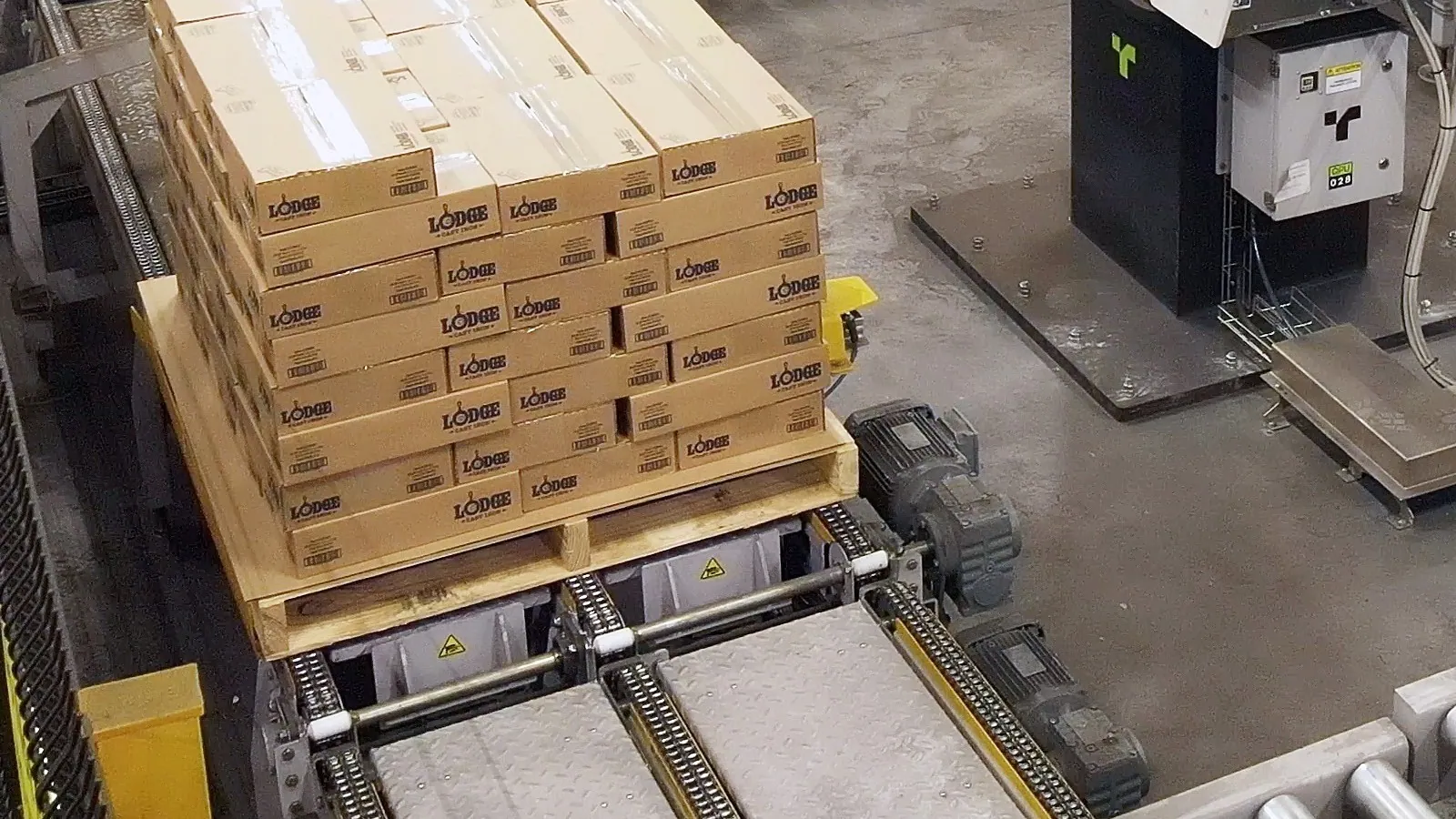
A box palletizer is the automated end of a packing or fulfillment line, and an automatic box palletizer is the cell that replaces manual pallet building there. Boxes arrive on a conveyor, a robot picks them one or several at a time, and the pallet grows layer by layer in a pattern stored as a recipe. When the pallet is complete, it leaves the cell for wrapping, labeling and the dock or the warehouse.
On a robotic palletizer the pattern is software, so adding a box size or changing how a customer wants a pallet built is a recipe change rather than new mechanical guides. That is why robotic palletizing fits operations with many box sizes and frequent changes, such as e-commerce and distribution, CPG and co-packers. The business case starts with labor: fewer people dedicated to repetitive stacking, and less repeated lifting, bending and twisting at the end of the line.
Box, Case or Carton: One Family of Loads
The three words overlap in everyday use, and for the palletizer they are one family of closed, rectangular loads. TRF covers all three here; the differences show up in the tool, the pattern and the rate, not in the platform.
| Term | What it usually means | Typical source on the line | What to watch |
|---|---|---|---|
| Box | A corrugated shipper, often in many sizes, used in distribution, fulfillment, co-packing and CPG | Pack stations, case sealers, fulfillment lines | Many sizes, frequent recipe changes |
| Case | The sealed shipping case that leaves a case packer, usually one size per SKU at a steady rate | A case packer at the end of a production line | Rate set by the case packer, case quality and SKU identification |
| Carton | A folding carton or light paperboard pack that ships as the palletized unit | Cartoning equipment | Compression strength, printed graphics and label orientation |
How does case palletizing work after the case packer?
Case palletizing starts where the case packer ends: the robotic case palletizer receives sealed cases at the rate the packing line sets and stacks them in the pattern stored for each SKU. A case palletizer machine is sized backward from the packing line, because the case packer decides how many cases reach the palletizer and how consistent they are.
- Rate. TRF case packing platforms are positioned by application range: TRFRapidpack for about 100 to 200 products per minute, TRFOnepack for about 20 to 50 and TRFDroppack for about 20 to 500.
- Peak, not average. Size the palletizer for the peak rate of the case packer, including the faster rate after a short upstream stop.
- Case quality and identification. A squarely erected, properly sealed case presents a flat top for the gripper, and when several SKUs run on one line, the palletizer needs to know which pattern applies, from line control or from a barcode or vision interface.
Zero-pressure accumulation between the case packer and the palletizer decides how often a palletizer stop becomes a line stop. TRFSpeed can also bring several case lines into one palletizing area, with merges and diverts routing each case to the right pallet.
How does carton palletizing protect printed packs?
Carton palletizing is engineered for gentle, precise placement as much as for rate. Cartons are often lighter than shipping cases, arrive in larger numbers per minute, carry retail graphics or lot codes, and lose strength quickly when corners are misaligned or the load overhangs the pallet edge. A carton stacking robot therefore sets cartons down rather than dropping them and keeps them inside the pallet edge.
Coatings, porous board and glossy print affect a vacuum grip, and side pressure can dent panels or scuff graphics, so the tool is tested with production cartons. Light cartons often arrive faster than one robot move per carton allows, so when the tool picks two or more cartons per cycle, the pick rate drops while the carton rate stays the same. Multipick is part of the TRFSpeed scope, and the pick count is set during validation because it also changes the tool weight and the pattern. A robotic carton palletizer follows the same platform choice as any box palletizer: line setup and speed first.
What gripper does a box palletizing robot use?
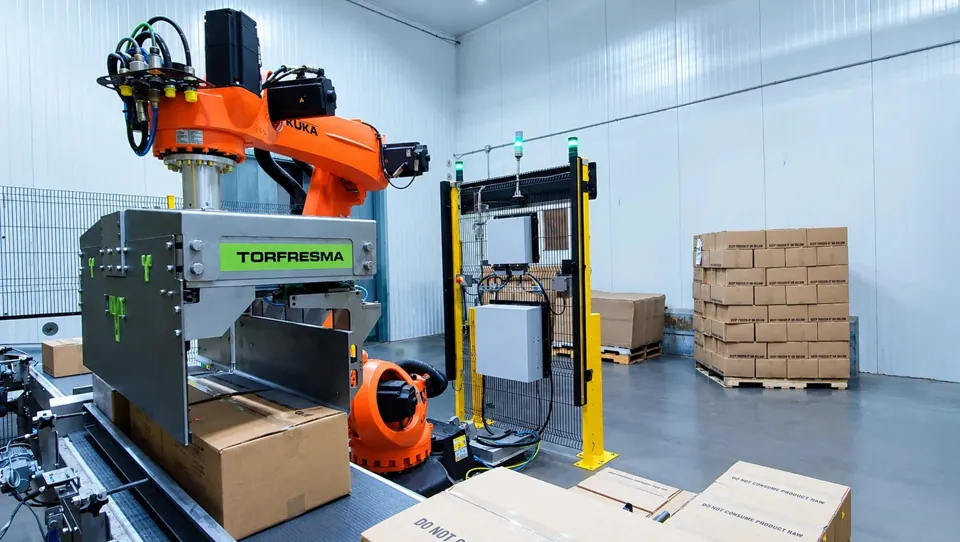
A box palletizing robot uses an end-of-arm tool selected for your box type, size, weight and surface. A sealed box with a flat, closed top is often picked from above with vacuum. Heavier boxes, or boxes whose tops cannot carry the load, may need clamping on the sides or support from below. TRF validates the tool with your real boxes before the design is fixed.
Box quality matters as much as the tool. Warped boxes, raised flaps, loose tape and boxes that bulge because they are overfilled or underfilled reduce the grip area and change how the next layer sits. Part of every robotic box palletizing project is agreeing on what a good box looks like when it reaches the robot.
Should boxes be column stacked or interlocked?
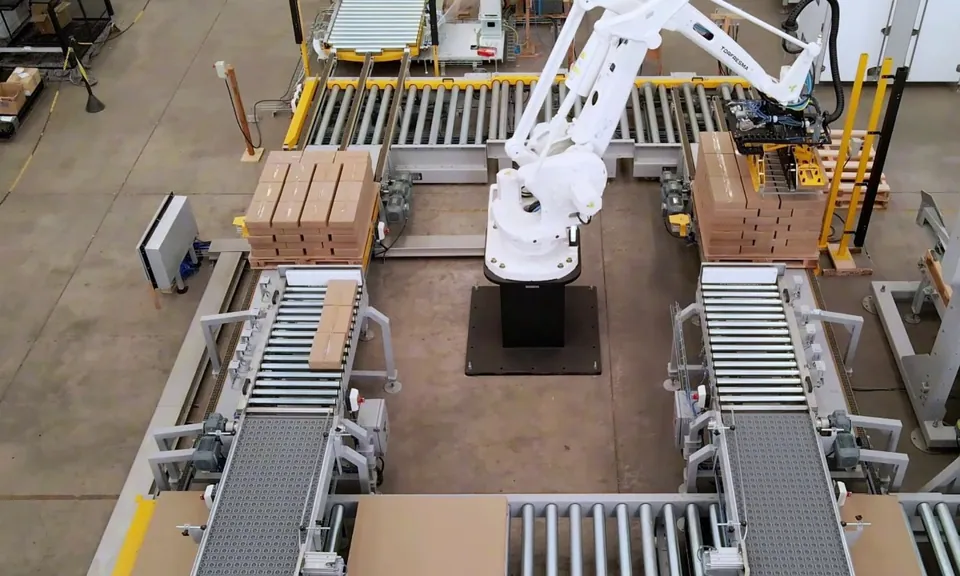
It depends on box strength, product weight, storage time and how the pallet travels. In corrugated box palletizing, boxes carry load mainly through their corners and vertical walls, so the way layers line up decides how much weight the bottom layer can support over days in a warehouse or a trailer.
- Column stacking places every layer exactly on the one below, so corners and walls line up all the way down. It keeps most of the box strength working, but the columns are tied together only by wrap and friction.
- Interlocked stacking rotates or shifts each layer, like bricks, so boxes bridge the joints below. The pallet is more stable in transport, but corners no longer sit on corners.
- Hybrid patterns column-stack the lower layers and interlock the top ones, or add a tier sheet every few layers to tie the columns together.
Whatever the pattern, boxes stay inside the pallet edge, since overhang crushes and tears boxes in handling, and the layer count respects racking, trailer height and your customer's receiving rules. On a robotic box palletizer, each approach is simply a different recipe.
Can a box palletizer connect to your conveyors, sorter and warehouse system?
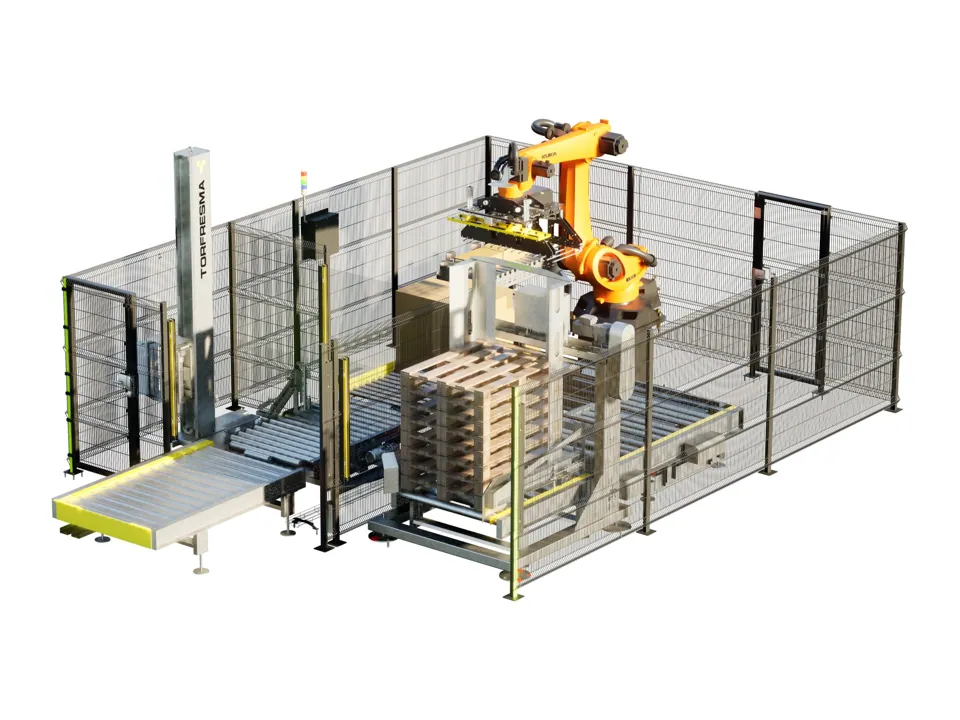
Yes. A box palletizer is only as fast as the flow of boxes it receives, so TRF engineers the conveying and the palletizer together. TRFIntraflow, the TRF platform for moving cases, cartons, trays and totes between packing, palletizing and warehouse operations, provides the modules a box operation needs:
| Function | TRFIntraflow modules | Why it matters for box palletizing |
|---|---|---|
| Transport | Powered roller, belt and modular belt conveyors, curves, transfers, turntables | Brings boxes from pack stations or case sealers to the palletizer |
| Flow management | Zero-pressure accumulation, metering, gapping | Absorbs waves from fulfillment and spaces boxes for the robot |
| Routing | Merges, diverts, sorting, reject stations | Combines several lines, sends each box to the right pallet, removes damaged boxes |
| Integration | Sensors, PLC, HMI, barcode and vision interfaces, palletizer interfaces, WMS and warehouse interfaces where applicable | Tells the palletizer which box is coming and where it belongs |
Upstream, boxes may come from pack stations, a case sealer or a case packer; TRF case packing covers robotic, integrated and gravity top-load packing. When the whole end of the line is in scope, end-of-line integration puts case packing, conveying and palletizing under one partner accountable for the agreed project scope, from layout to startup.
How do you choose a box palletizer?
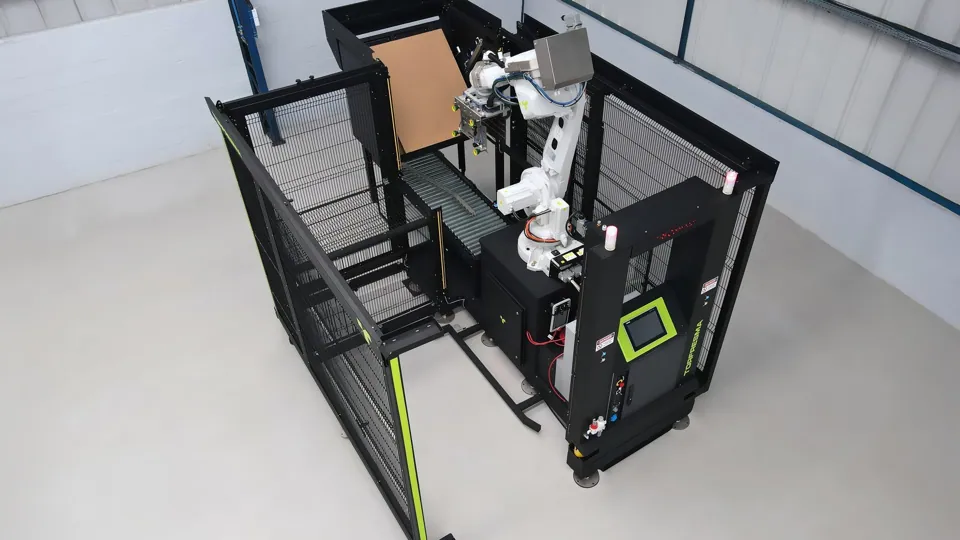
Choose by line setup and speed first: boxes per minute at peak, how many lines feed the palletizer and how much floor you can give it. Then size for your real mix: the heaviest box rather than the average, the peak rate rather than the daily average, and the number of box sizes per shift.
| Platform | Typical speed | Case weight | Best fit |
|---|---|---|---|
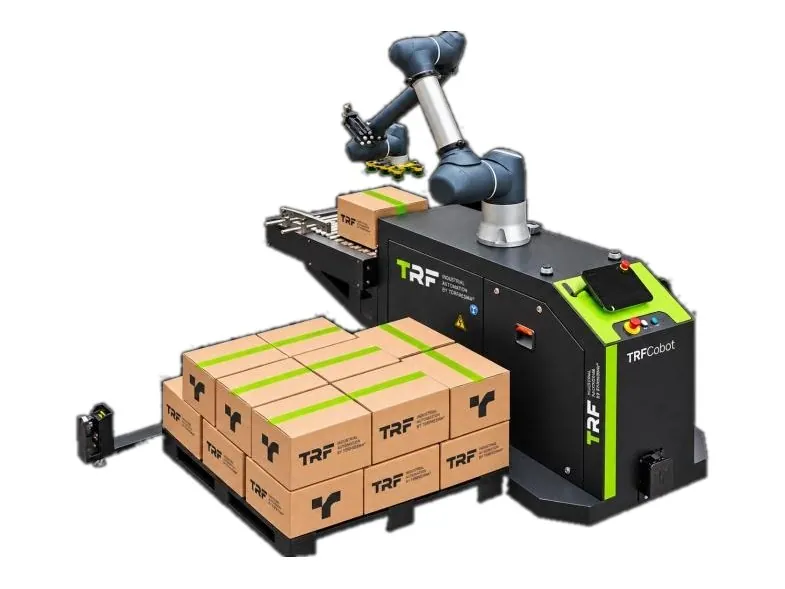
| TRFCobot | Up to 10 cases per minute | Up to 26 lb | Lower-speed, high-mix lines, short runs and limited floor space; first automation project |
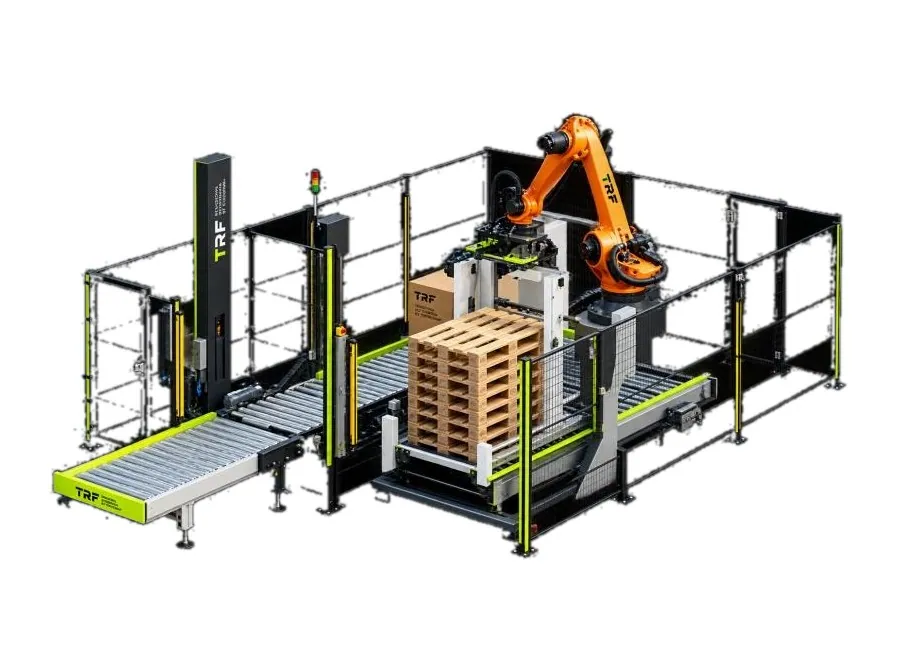
| TRFCompact | Up to 15 cases per minute | Up to about 65 lb | Industrial duty cycle in a compact, standardized cell for brownfield buildings, secondary lines and distribution |
| TRFSpeed | 15 or more cases per minute | Up to about 80 lb | High-volume or continuous production, several lines into one palletizing area, multipick and automatic pallet handling |
| Custom palletizer | Defined by the project | Defined by the project | Box sizes, loads, routing or layouts that the three platforms do not cover |
Typical ranges for commercial screening. TRF engineering confirms the final capacity for your boxes (product, end-of-arm tool, pallet pattern, reach and process).
When two platforms could both work, TRF recommends the one that matches your throughput, production intensity and growth plans, not simply the lowest initial investment. Box lines in below-freezing areas (below 32°F) can use TRFSubzero. Compare every model on the robotic palletizing page.
Questions
Frequently asked questions
Can a Box Palletizer Keep Pace With My Case Packer?
Yes, when it is sized for the case packer's peak rate rather than the shift average, with recovery capacity after a short upstream stop and accumulation to cover pallet changes. TRF confirms the final rate with your cases, tool, pattern and reach.
Can One Box Palletizer Handle Different Box Sizes and Pallet Patterns?
Yes, one box palletizer can handle different box sizes and pallet patterns within the validated application. TRF palletizing platforms run multiple recipes, and the operator selects the recipe at changeover. The practical limits are physical: the tool must hold the smallest and the largest box, the robot must reach the farthest corner of the top layer, and the layout sets the number of pallet positions.
How Many Boxes per Minute Can a Robotic Palletizer Handle?
A robotic palletizer handles boxes at the published case rates: up to 10 cases per minute on TRFCobot, up to 15 on TRFCompact and 15 or more on TRFSpeed, as typical ranges for commercial screening. For a box operation, size the palletizer for the peak rate, add accumulation to absorb waves from fulfillment, and let TRF confirm the final rate with your boxes, tool, pattern and reach.
Can a Box Palletizer Fit a Distribution Center With Limited Floor Space?
A box palletizer can often fit a distribution center with limited floor space. TRFCobot has a small footprint for areas where a traditional robotic cell is hard to install, and TRFCompact brings an industrial robot into a compact, standardized cell for existing buildings. The final layout depends on the number of pallet positions, forklift access to full pallets and the conveyor routing, all confirmed for your building.
Can a Box Palletizer Keep Labels Facing Out?
Yes, a box palletizer can keep labels facing out when the recipe defines box orientation and boxes reach the robot in a known orientation. Labels and barcodes facing out let pallets be scanned without breaking them down. The robot can rotate a box during the move, and barcode or vision interfaces on TRFIntraflow conveyors can identify each box before the pick.
How Much Does a Box Palletizer Cost?
A box palletizer costs according to its platform, peak rate, heaviest box, end-of-arm tool, number of pallet positions, pallet handling and conveyor integration. As a reference, list prices are US$ 120,000 for the TRFCobot, US$ 180,000 for the TRFCompact Dual and US$ 350,000 for the TRFSpeed 100, EX Works Lenexa, Kansas, installation not included. The robotic palletizer cost page explains each factor.
What Information Should I Prepare to Size a Box Palletizer?
To size a box palletizer, list every box size it must handle, with dimensions and weight range, the box top and label positions, boxes per minute at peak per line, shifts per day, box changes per shift, required pallet patterns and maximum height, and a drawing of the floor space. Add the systems the palletizer must talk to, such as the case sealer, sorter, wrapper and warehouse system.
Start your box palletizer evaluation
The right box palletizer is sized to your heaviest box, your peak rate, your box mix and the floor you can give it. Send TRF your box list and line data, and a Sales Engineer will validate the grippers, patterns and reach with your boxes and design the palletizer together with the conveying around it.
Want to see TRF installations first? Browse the TRF case studies.
Next step
Keep your production running.
Tell us about your products, rates and floor space. A TRF Sales Engineer answers with the platform, the layout and the next step for your line.