
Resources / Blog
The packaging automation blog for teams automating the end of the line.
Practical guidance for the teams that specify, buy and run palletizing, case packing and conveyor systems.
The packaging automation blog from TRF Industrial Automation publishes practical guidance for the teams that specify, buy and run palletizing, case packing and conveyor systems at the end of the production line.
Custom engineering
Solutions engineered for your production requirements.
Turnkey integration
From system design through installation and startup.
High reliability
Built for continuous operation.
U.S. support
Technical support for customers across the United States.
Lifecycle support
From startup to long-term performance.
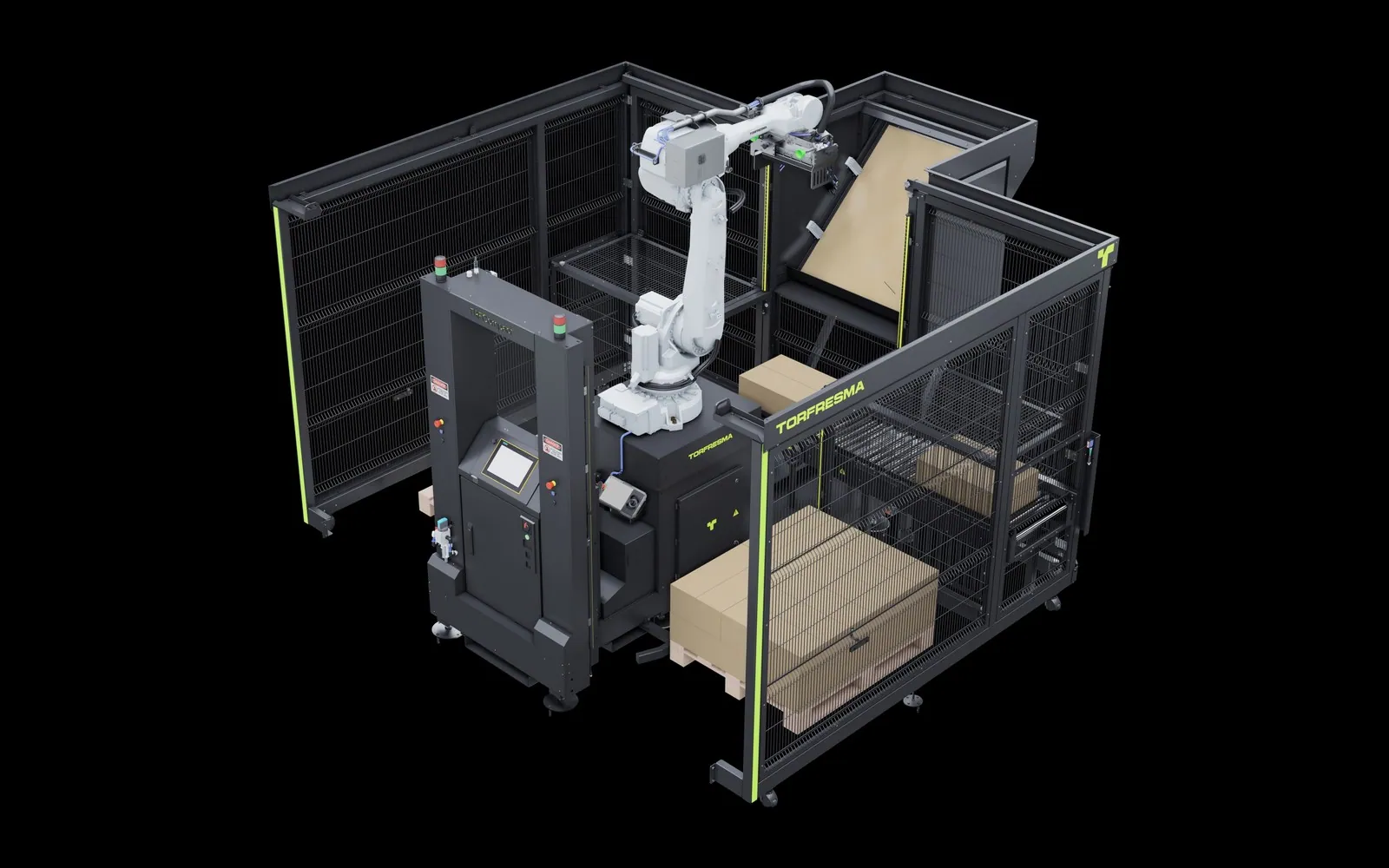
Featured article: How much does a robotic palletizer cost?
How Much Does a Robotic Palletizer Cost? explains why there is no single price and turns "it depends" into a method your team can apply to its own line. It covers:
- What you are buying: robot and cell structure, end-of-arm tool, infeed and conveying, pallet handling, controls, pattern programming, installation, startup and training.
- What moves the investment: line speed, product and case weight, pallet pattern, integration scope and the layout of your end-of-line area.
- Reference list prices: the prices TRF publishes for its standard palletizing platforms, TRFCobot, TRFCompact and TRFSpeed, as a starting point for a budget.
- Payback: how the estimate is built from labor hours, shifts, local labor cost and installed cost.
- Comparable proposals: the questions that keep supplier quotes on the same scope.
To apply the method right away, open the palletizing ROI calculator or the robotic palletizer cost page, which explains the cost drivers next to the calculator.
Questions buyers ask, and where to start today
| Question buyers ask | Where to start |
|---|---|
| What is the difference between a cobot palletizer and a traditional robotic palletizer? | TRFCobot cobot palletizer |
| How many cases per minute can a robotic palletizer handle? | Robotic palletizing |
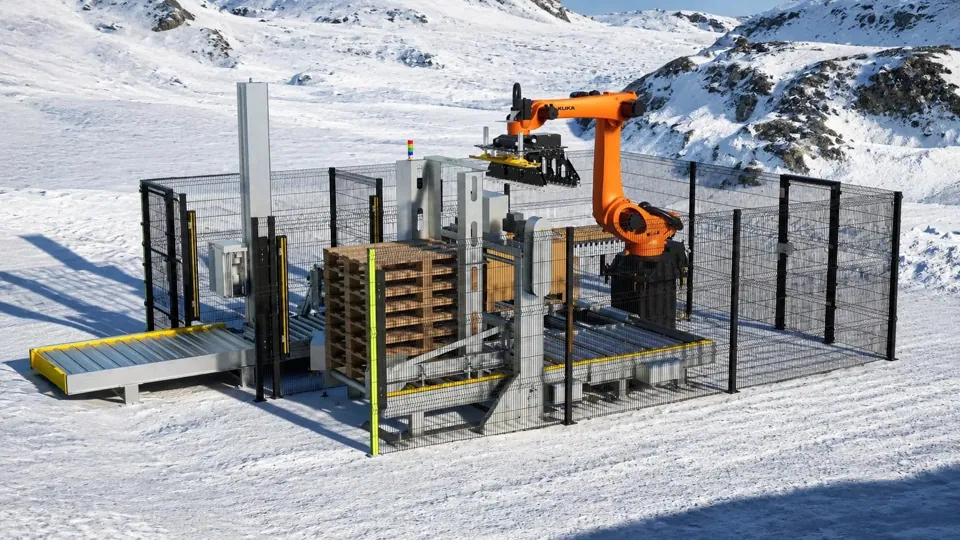
| Can a robotic palletizer operate below freezing? | TRFSubzero |
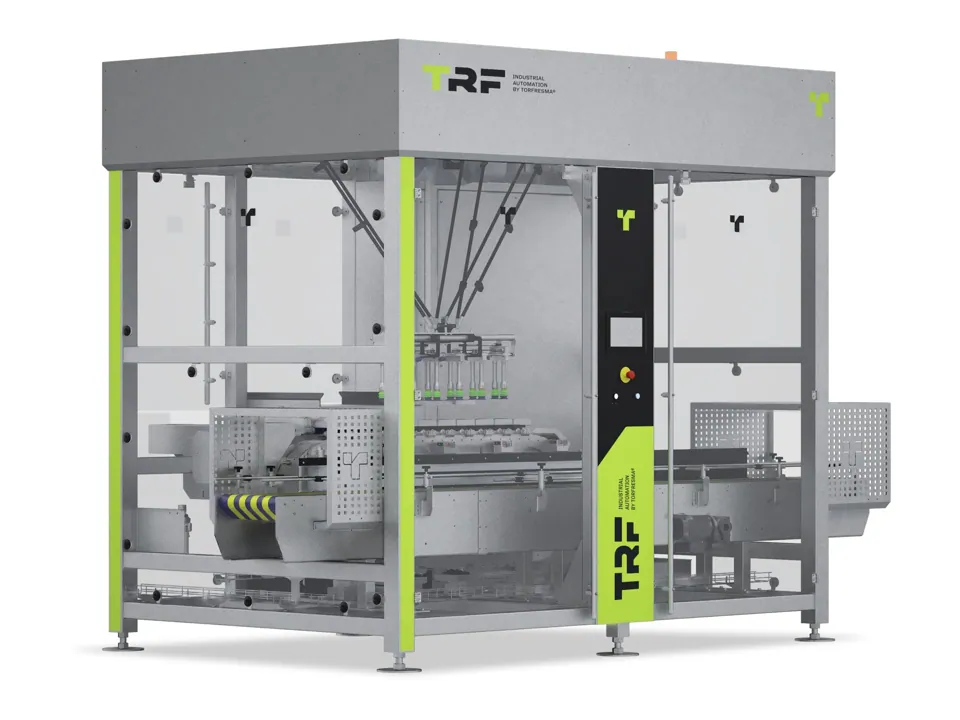
| What is a drop packer, and how does gravity packing work? | TRFDroppack drop packer |
| Can a conveyor system integrate with my palletizer and case packer? | End-of-line integration |
| Has a problem like ours been solved in another plant? | Case studies |
How to read the figures
Speeds and case weights are typical ranges taken from TRF platform data, and TRF engineering confirms final capacity for each application (product, end-of-arm tool, pallet pattern, reach and process). Units are US customary: pounds, °F, inches and feet.
Questions
Frequently asked questions
What Is a Palletizer?
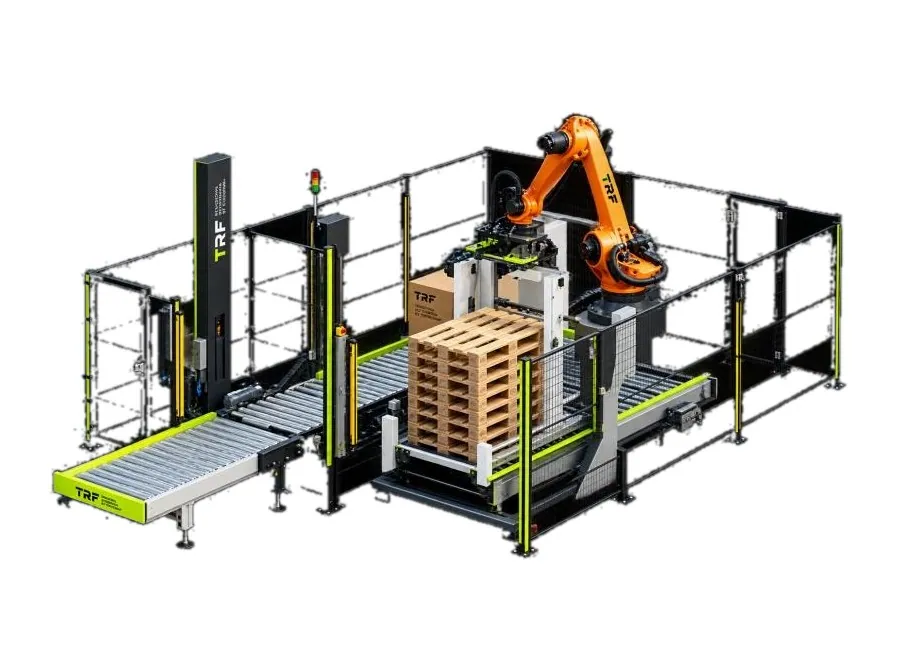
A palletizer is a machine that stacks packed units, such as cases, bags or trays, onto a pallet in a defined pattern at the end of a production line. A robotic palletizer does it with a robot arm and an end-of-arm tool, building each layer automatically so operators no longer lift every case by hand. The robotic palletizing page compares the TRF platforms.
What Is Palletization?
Palletization is the process of building a stable pallet load from cases, bags or other packed units. It covers the pallet pattern, the number of layers, slip sheets between layers when the load needs them, and the discharge of the finished pallet to wrapping and shipping. A palletizer automates that process at the end of the line, layer by layer.
What Is the Typical Payback Period for a Robotic Palletizer?
It depends on your line. Payback is driven by the labor hours the palletizer replaces, shifts per day, local labor cost and the installed cost of the system. The palletizing ROI calculator applies this method to your own line data.
Start with the question your project needs answered
When a question needs your own numbers, a TRF Sales Engineer answers it with your product, rate and layout.
Next step
Keep your production running.
Tell us about your products, rates and floor space. A TRF Sales Engineer answers with the platform, the layout and the next step for your line.