
Speed
High-speed robotic case packing serves medium- to high-speed lines, and more robots can be added as the rate grows.
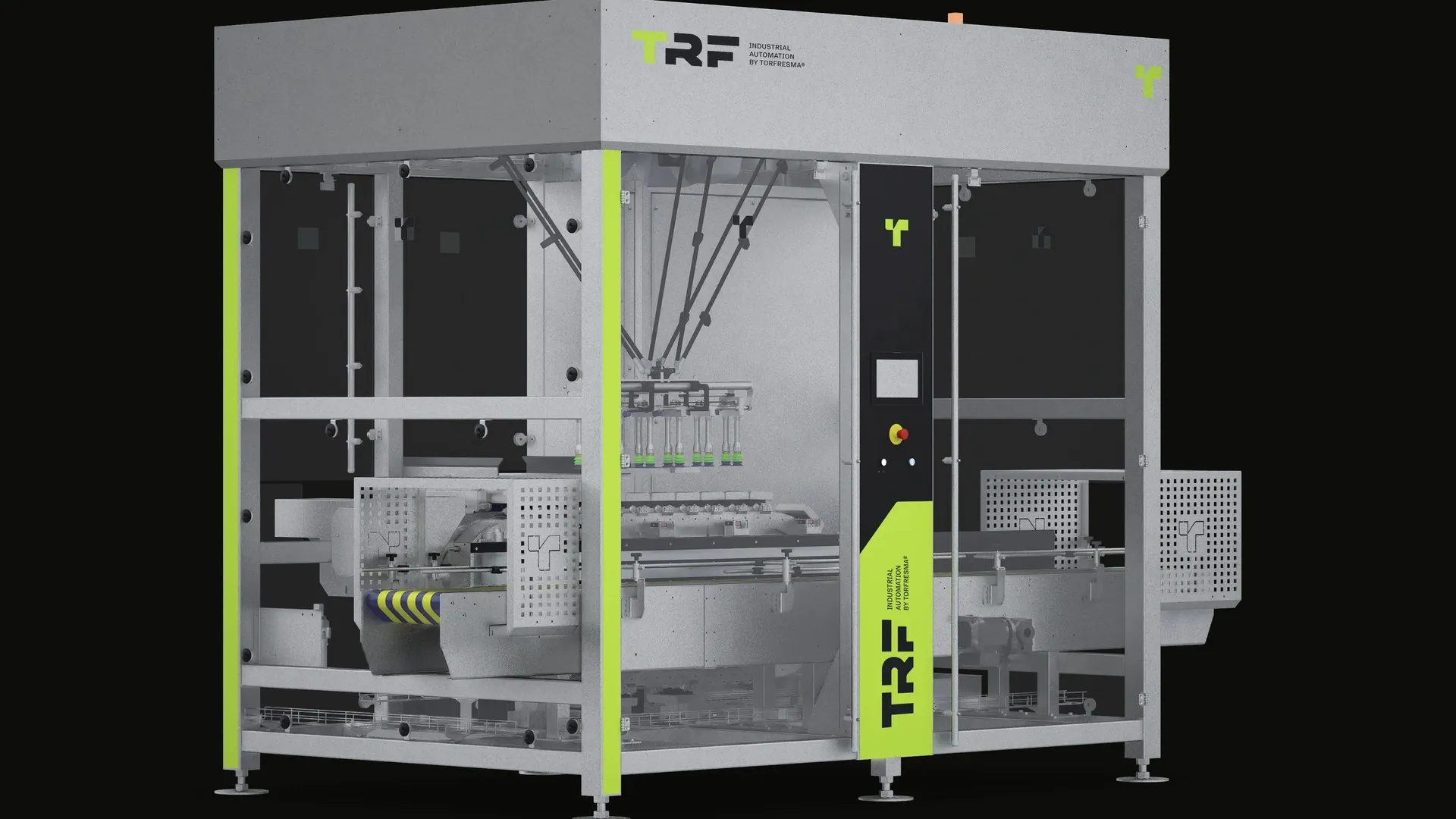
Case Packing / TRFRapidpack
Vision-guided robotic packing for high-mix lines that change products often.
A robotic case packer picks packaged products and places them into shipping cases without manual loading, and TRFRapidpack is the robotic case packer from TRF Industrial Automation: it top-loads pouches, trays, cartons and other packages with vision-guided or indexed delta robots, for high-mix lines of about 100 to 200 products per minute.
Flexible packing, reliable performance
Multiple products, SKUs, pack patterns and formats on one platform.
Pack more, change faster
Recipe-based changeover with reduced mechanical adjustments.
Built around your product
Controlled handling for delicate, flexible and irregular packages.
Scales as you grow
Expand from a single robotic module to multiple robots.
| Item | TRFRapidpack |
|---|---|
| Robotic principle | Delta robots with vision-guided or indexed picking |
| Application range | For applications of about 100 to 200 products per minute |
| Throughput class | Medium- to high-speed packaging lines |
| Loading method | Top-load case packing, with repetitive picking of packaged products placed into an open case from above |
| Product formats | Pouches, pillow bags, flow packs, thermoformed packages, trays, cartons, cups, tubs and small packaged products |
| Changeover | Recipe-based product and pattern changes with reduced mechanical adjustments |
| Configuration | One robotic module, expandable to multiple robots as production grows |
| Integration | Standalone, or with case forming, case closing, conveyors and palletizing in a TRF end-of-line system |
Application range, not a machine speed rating. TRF engineering confirms final capacity for each application (product, pack pattern, case format, end-of-arm tool and robot count).
Food and CPG plants choose a robotic case packer such as TRFRapidpack when SKU complexity, product orientation and labor decide the case packing project. These are the six reasons.
High-speed robotic case packing serves medium- to high-speed lines, and more robots can be added as the rate grows.
One platform handles multiple products, SKUs, pack patterns and packaging formats, from pouches and pillow bags to trays, cartons and cups.
Product and pattern changes are recipe-based, with reduced mechanical adjustments.
Controlled handling is designed to protect delicate, flexible and irregularly shaped products on their way into the case.
Robots take over repetitive manual picking, grouping and case loading, so operators move to supervision and quality tasks.
Start with one robotic module and expand to multiple robots as your production and your SKU count grow.
A robotic case packer uses robots to pick packaged products from a conveyor, arrange them in a pack pattern and place them into shipping cases, replacing repetitive manual picking, grouping and case loading. It sits between primary packaging, where the product is bagged, wrapped, sealed in a tray or filled into a cup, and the end of the line, where cases are closed, conveyed and palletized.
A case packing robot changes what it picks and how it places it through recipes, so a line that runs several SKUs, formats or patterns in the same week does not need a machine rebuilt around each one. TRFRapidpack is a delta robot case packer: delta robots are parallel-arm robots built for fast, light pick-and-place work from above, which suits top-load case packing. Robotic case packers like it take the packages from the infeed in the order and position the pack pattern calls for.
A gravity drop packer works differently: it collates products above the case and releases them in a controlled drop, with no robot placing each item. Gravity suits repetitive flexible packages in standard patterns. Robotic case packing suits lines where products, orientations and patterns vary, which is the job TRFRapidpack was designed for.
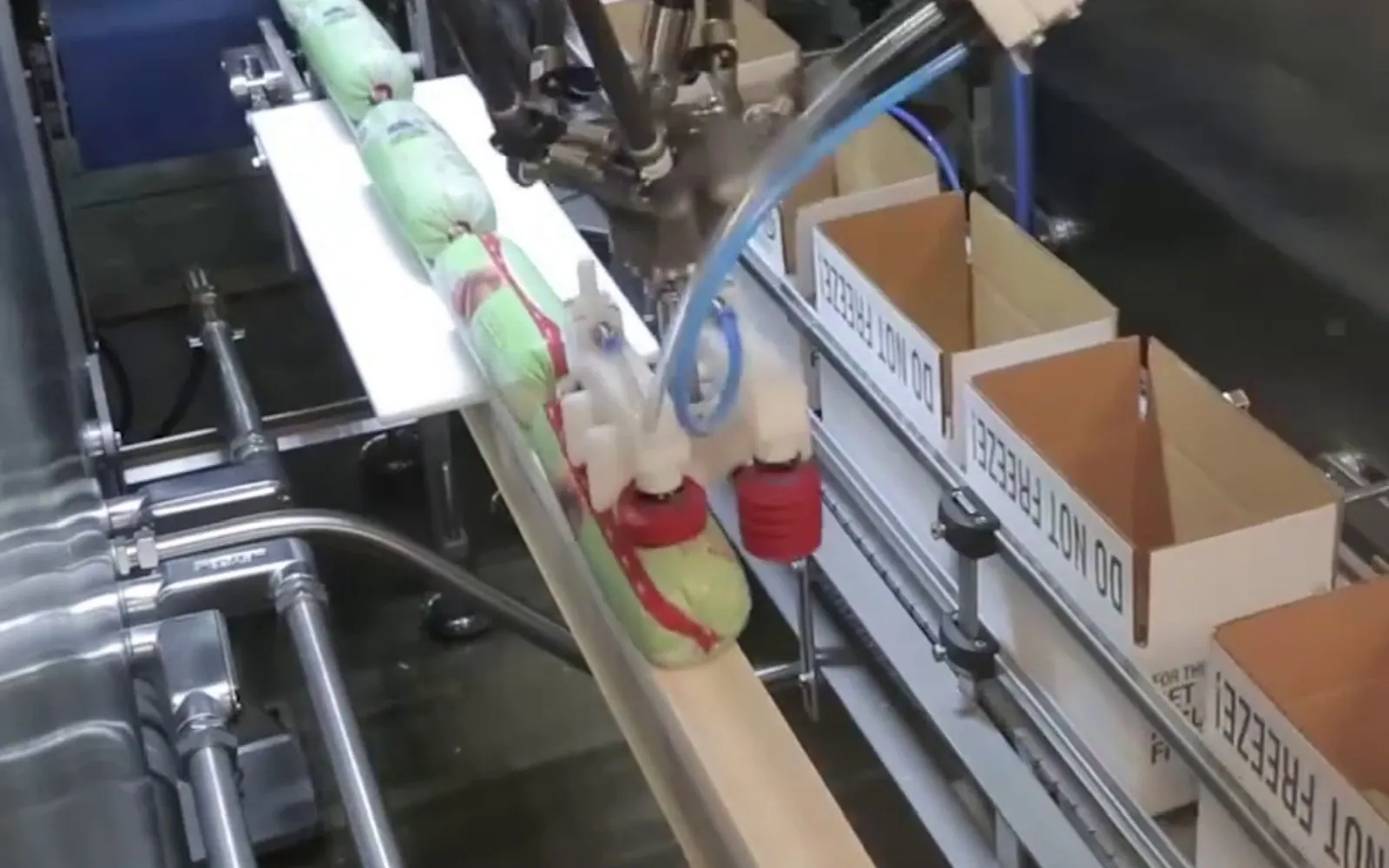
Top-load case packing means the case stands open and the products enter it from above, so the robot can set them down in rows, in layers, flat or on edge. A typical sequence is simple: an empty case is formed and presented open, packages arrive from primary packaging and are spaced or oriented, the robots place the group into the case, and the case moves on to closing, sealing, conveying and palletizing.
The pack pattern is the arrangement inside the case: how many units, in how many rows and layers, and in which orientation. It sets the number of picks per case, so multi-layer patterns add placement steps and affect cycle time. The pattern also has to fill the case enough to protect the product without overfilling it, and some customers specify both the pattern and the case. On TRFRapidpack each pattern is stored in a recipe, which is what makes an automated case packing system practical for lines with many SKUs.
Robotic case packing fits medium- to high-speed lines with repetitive picking, where labor dependency, SKU complexity, product orientation or throughput limit production. TRFRapidpack packs these formats:
The platform is built for mid-sized and large food and CPG manufacturers in food processing and prepared foods, frozen food, protein processing, bakery and snacks, confectionery, dairy and consumer packaged goods.
When one line runs several of these formats, each product gets its own recipe for pick logic and pack pattern, and operators switch recipes when the SKU changes instead of rebuilding the process.
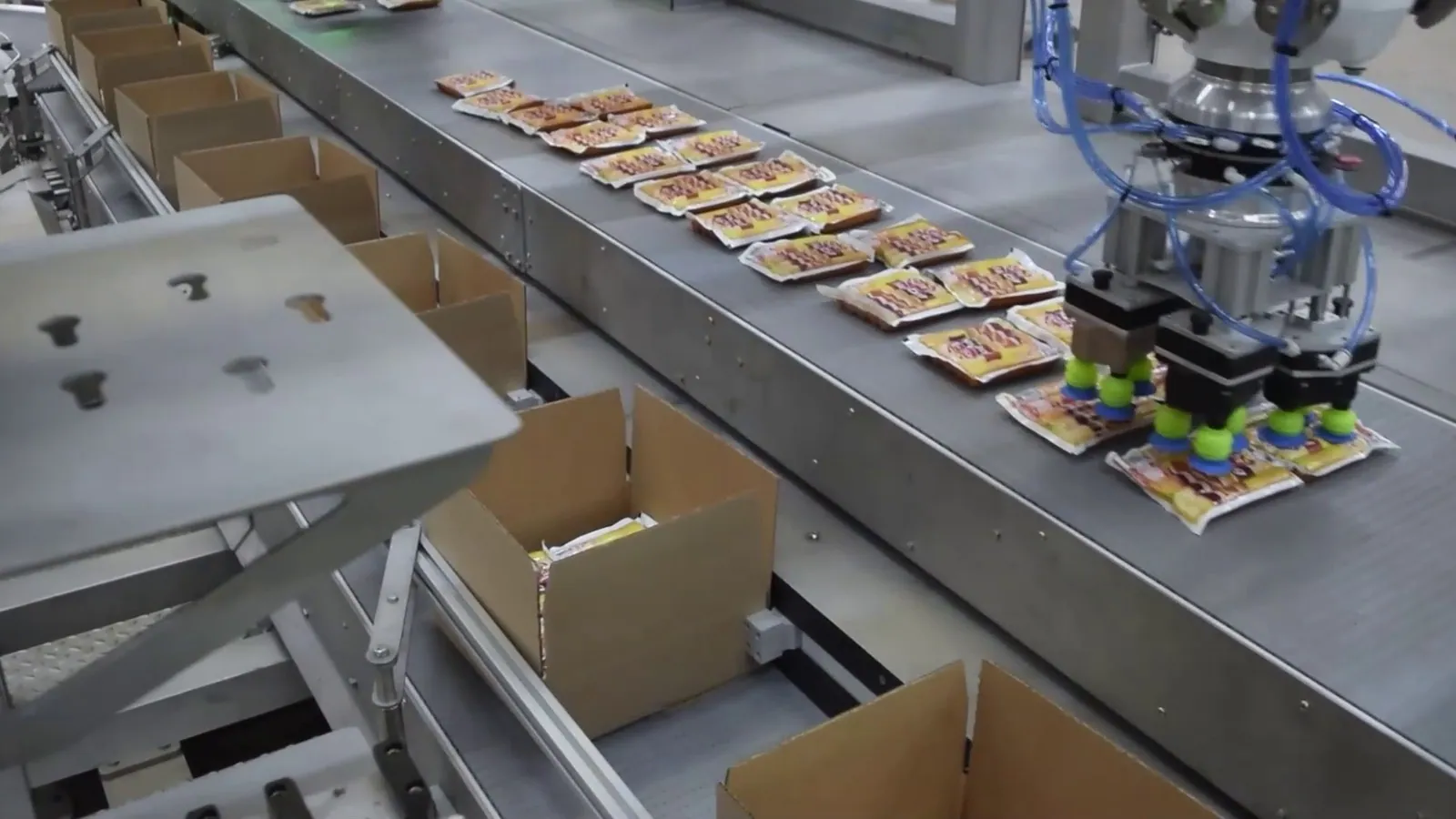
Your line is a strong candidate for TRFRapidpack when most of these statements are true:
Before quoting, TRF validates five factors with your line data: the product (format, weight and how it behaves when picked), the end-of-arm tool, the pack pattern and case format, the picking strategy (a vision guided robot or indexed picking) and robot count, and the changeover plan for each SKU. When case forming, case closing, conveying or palletizing are part of the project, they are scoped at the same time.
Choose by product behavior, SKU mix, rate and how much of the case process belongs in one machine. The three TRF case packing platforms form one family, and line setup and speed define the model.
| Platform | Application range | Packing principle | Typical fit |
|---|---|---|---|
| TRFRapidpack | About 100 to 200 products per minute | Delta robots, vision-guided or indexed picking | High-mix lines, multiple SKUs, variable product flow |
| TRFOnepack | About 20 to 50 products per minute | Case erecting, robotic packing and case sealing in one machine | Small and mid-sized plants consolidating secondary packaging |
| TRFDroppack | About 20 to 500 products per minute | Controlled gravity loading | Repetitive flexible packages and standardized patterns |
Application ranges, not nominal machine speeds. TRF engineering confirms final capacity for each application (product, pack pattern, tooling, case format and process).
The ranges overlap, so speed alone rarely decides. If the pattern changes often or the product must be oriented, robotic packing fits. If the package is flexible and the pattern repeats, gravity is the simpler answer. The case packing page compares the family in more detail.
Every platform runs standalone or as part of a complete TRF end of line: TRFIntraflow conveys and routes the cases, and TRFCobot, TRFCompact or TRFSpeed build the pallet. Projects that span several lines are scoped together as one end of line.
Applications
Each product has its own page with the pattern, gripper and line details that matter for that load.
Catalog
Tell us where to send it and a TRF Sales Engineer will email you the TRFRapidpack catalog with specifications and configurations.
Thank you.
A TRF Sales Engineer will email you the TRFRapidpack catalog.
Questions
A robotic case packer from TRF runs applications of about 100 to 200 products per minute: that is the application range of TRFRapidpack, not a nominal machine speed. The rate a specific line reaches depends on product weight and shape, pack pattern, case size and robot count. TRF engineering confirms the rate for each application before the design is final.
A robotic case packer can handle pouches, trays and thermoformed packages on the same line, within the validated application envelope. TRFRapidpack runs multiple products, SKUs, pack patterns and formats with recipe-based changes. Some formats need a different end-of-arm tool, so TRF validates every product in your mix first. See the pouch case packer and tray packer pages.
A case packer needs vision-guided picking for high-mix production only when products arrive in random positions or orientations, because a vision guided robot reads each position before it picks. When products arrive spaced and oriented, indexed picking is simpler and runs on a fixed cycle. TRFRapidpack uses delta robots with either strategy, and high SKU variability or variable product positioning are the usual triggers for vision. TRF reviews your product flow before recommending one.
A case packer changes over between SKUs as fast as the difference between them allows. On TRFRapidpack, product and pattern changes are recipe-based with reduced mechanical adjustments, so a change within the same format starts with selecting a stored recipe. A change that needs another end-of-arm tool or case size takes longer, so TRF maps the changeover plan before the design is confirmed.
A case packer helps protect delicate or irregularly shaped products through controlled handling: each package is picked with an end-of-arm tool selected for it and placed into the case from above, instead of being pushed or dropped. Controlled handling is one of the design drivers of TRFRapidpack, and it helps keep the pack pattern consistent case after case.
A robotic case packer costs what its products, robot count, pack patterns and integration scope require, so TRF quotes TRFRapidpack from your line data instead of a list price. The payback estimate weighs the labor hours replaced, shifts per day, local labor cost and throughput gained against the installed cost. A TRF Sales Engineer builds both numbers in a scoped proposal.
A robotic case packer can erect and seal the case when those steps are built into the machine, as in TRFOnepack. With TRFRapidpack, case forming and closing are engineered into the end-of-line project around it. TRF does not sell stand-alone case erectors.
A robotic case packer can feed an existing palletizer when the conveyor and controls interfaces are engineered with the project. TRFIntraflow carries the sealed cases to the palletizer you own, or to a TRFCobot, TRFCompact, TRFSpeed or custom palletizer. TRF reviews your existing equipment and controls before defining the scope.
A robotic case packer can grow with production when its architecture is modular. TRFRapidpack starts with one robotic module and expands to multiple robots as volumes or SKU count increase, so the first investment is planned to leave room for future additions. TRF plans the layout and the conveyor interfaces with that growth in mind during the application review.
If SKU complexity, product orientation or labor limit your case packing, TRFRapidpack is the robotic case packer TRF built for that line. Start with your line data: product list, target rates, pack patterns and case specifications. A TRF Sales Engineer validates the fit and confirms whether TRFRapidpack, TRFOnepack or TRFDroppack is right for your plant.
Want to see TRF installations first? Browse the TRF case studies.