
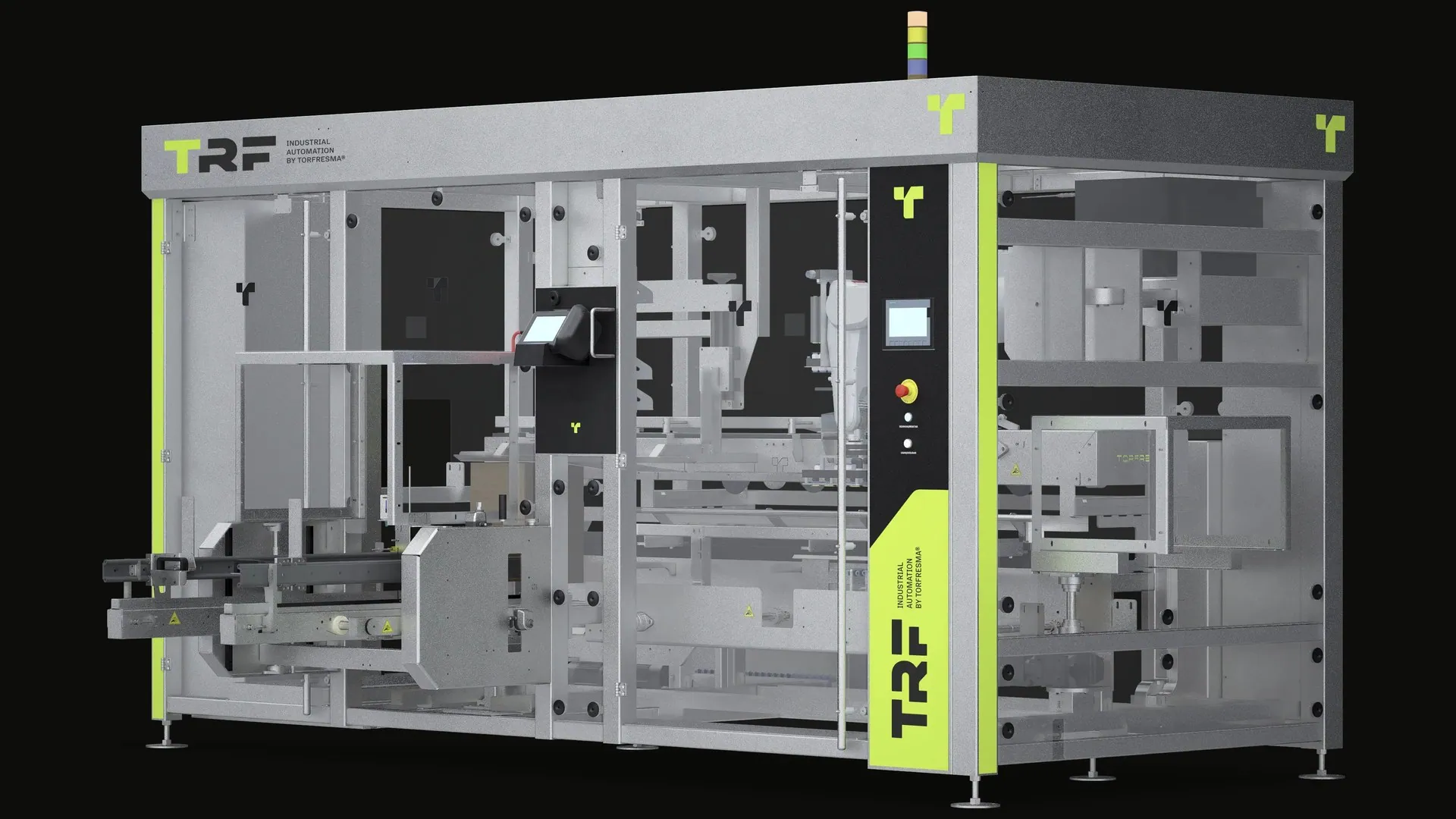
Case Packing / Carton Case Packer
Carton packing machine sized to your line.
Load finished cartons into shipping cases with the architecture that fits your line speed and setup.
A carton packing machine, in secondary packaging, is a top-load case packer that collects finished folding cartons and places them into shipping cases in a counted, oriented pattern. TRF Industrial Automation packs cartons with TRFRapidpack and TRFOnepack. Which carton case packer fits your plant is defined mainly by your line setup and speed.
Custom engineering
Solutions engineered for your production requirements.
Turnkey integration
From system design through installation and startup.
High reliability
Built for continuous operation.
U.S. support
Technical support for customers across the United States.
Lifecycle support
From startup to long-term performance.
What is a carton packing machine?
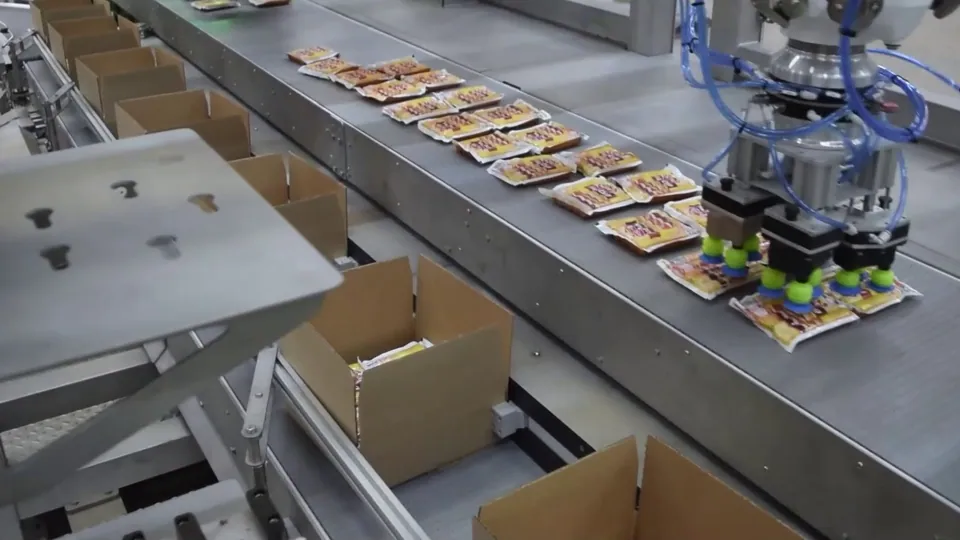
A carton packing machine is the equipment that turns a stream of individual retail cartons into shipping cases ready for the pallet. It collects cartons as they leave the cartoner and the checks after it, groups them into the count and arrangement each customer requires, and lowers that group into an open case so it can be sealed, coded and palletized.
Folding cartons carry the brand at retail: frozen entrees, cereal and snack cartons, candy boxes and household products. They share useful properties for automation. They are rigid and rectangular, they present flat faces a tool can hold, and they stack predictably into layers. What varies from plant to plant is the mix of sizes, the orientation retailers expect and how fast the cartoner discharges.
Because TRFRapidpack and TRFOnepack load through the open top of the case, cartons are placed rather than pushed, which helps keep control of orientation and protect the printed faces. The top load case packer page explains the format across the family. Carton lines are common in frozen food and ice cream, confectionery, CPG and household and cleaning products plants.
What is the difference between a carton packing machine and a cartoner?
A cartoner forms the folding carton and puts product into it. A carton packing machine takes cartons that are already formed, filled and closed and packs them into shipping cases for distribution. The two machines sit one after the other: the cartoner serves retail presentation, the case packer serves secondary packaging.
TRF supplies the second step. The case packer has to keep pace with whatever the cartoner discharges, so the interface between them, including line signals, SKU changes and an accumulation buffer that keeps the cartoner running through a case change, is defined during project engineering. Rejects from the checkweigher or code verification should leave the line before the packing area.
How are cartons packed into cases?
Cartons are packed in a pattern that sets the count, orientation and layers in each case, defined per SKU and stored as a recipe. The details that decide a carton project are orientation, collation and surface protection.
- Orientation. Cartons can enter the case flat, on edge or standing. Retailers may ask for a specific face toward the opening of a shelf-ready case, and some cartons go on edge so the case holds more units.
- Collation and counts. Cartons usually reach the case in groups, built by the robot picking several cartons per cycle, by an infeed that gathers a row or both. A plant often ships the same carton in more than one count.
- Graphics and squareness. Tooling and motion are set to avoid marking the print. Cartons that are slightly out of square or bowed after filling behave differently in a tight pattern, so TRF asks for samples from normal production.
One carton packing machine can run several sizes and patterns within the validated application. TRFRapidpack changes products and patterns by recipe, with reduced mechanical adjustments, and TRFOnepack runs multiple products, recipes and packing patterns through robotic loading. Sharing planned carton formats early keeps a new SKU from becoming a mechanical rebuild after startup.
Which carton case packer fits your line setup and speed?
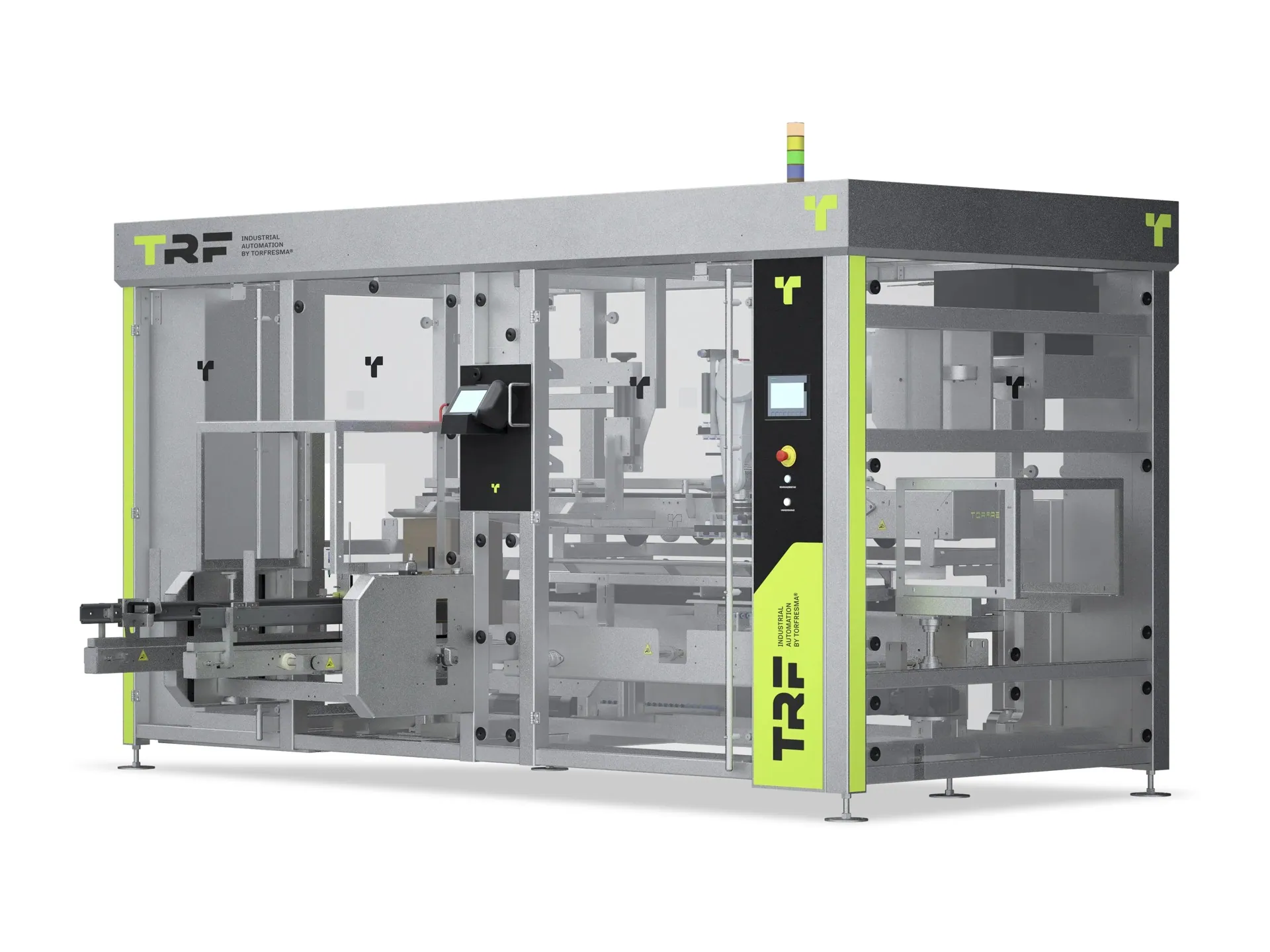
Choose by line setup and speed. The three TRF case packing platforms form one family, and the right model is defined mainly by your SKU mix, how cartons leave the cartoner, whether the case must be erected and sealed in the same machine and the products per minute you run.
| Line setup and speed | TRFRapidpack | TRFOnepack | TRFDroppack |
|---|---|---|---|
| Application range | For applications of about 100 to 200 products per minute | For applications of about 20 to 50 products per minute | For applications of about 20 to 500 products per minute |
| Packing principle | Delta robots, vision-guided or indexed | Erects, packs and seals the case in one machine | Controlled gravity loading |
| Cartons | Yes | Yes | Not for cartons |
| Line setup it fits | Medium to high speed, multiple SKUs, variable carton position | Low to medium throughput, replacing manual or semi-automatic packing | Repetitive flexible packages, such as bags and pouches |
| Primary driver | Flexibility | Integration | Efficiency |
Application ranges for commercial screening, not machine speeds. TRF engineering validates final capacity for each application (carton, end-of-arm tool, collation, pack pattern and case).
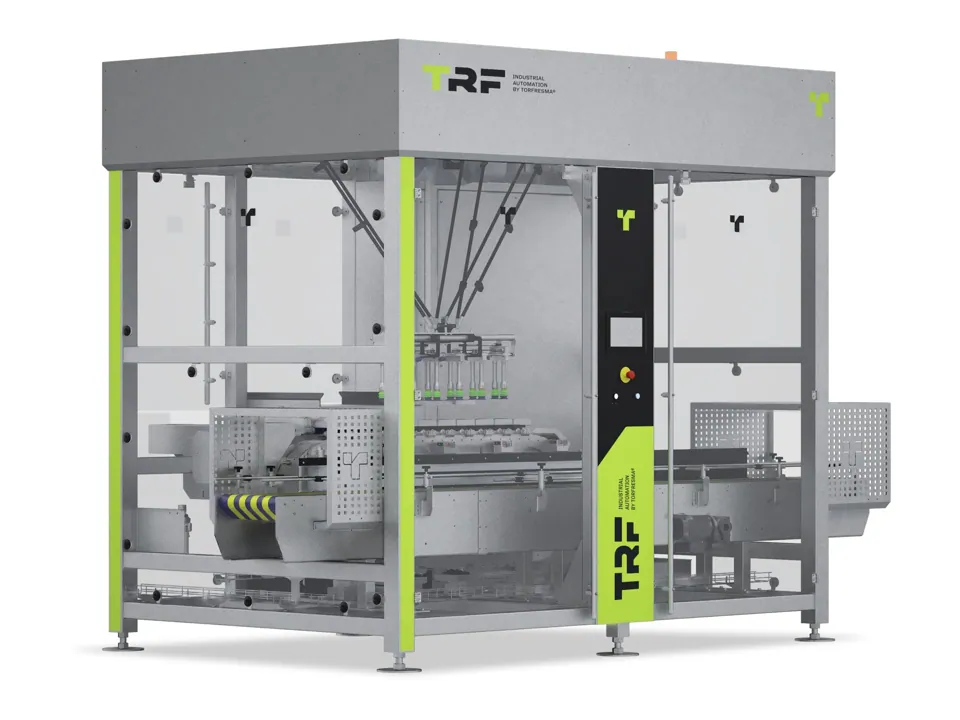
TRFRapidpack fits medium- to high-speed carton lines that run several carton sizes and patterns. Multiple products, SKUs and packaging formats run on the same platform, and it scales from a single robotic module to several, so capacity grows with cartoner output.
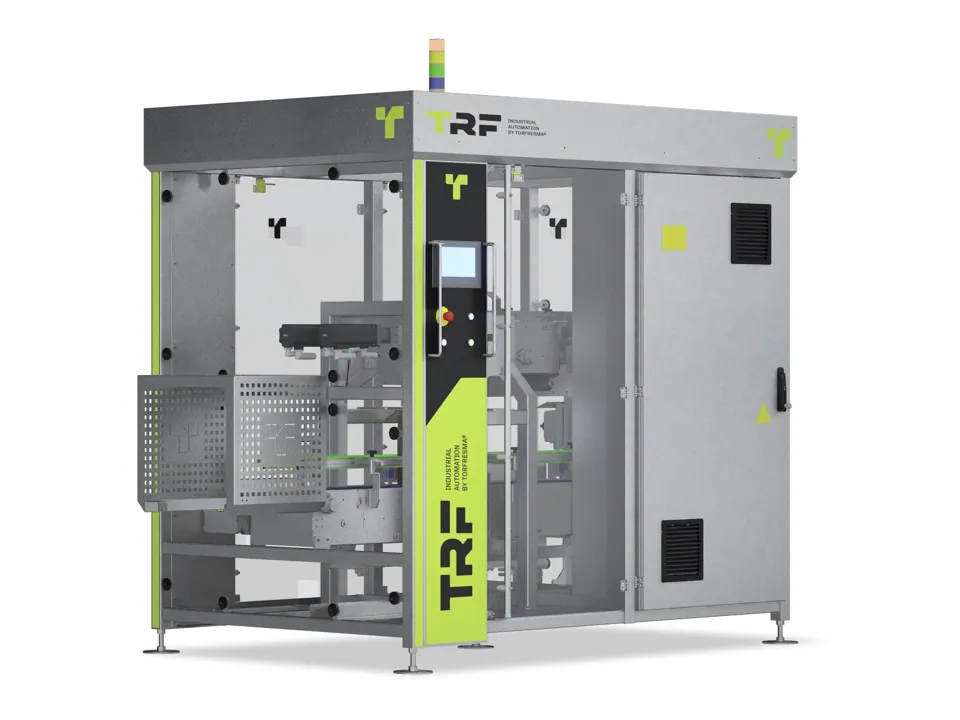
TRFOnepack fits small and mid-sized food and CPG manufacturers replacing manual or semi-automatic packing. It reduces the interfaces between three separate machines, which helps when floor space at the end of the carton line is limited.
TRFDroppack packs flexible packages such as bags and pouches, not cartons.
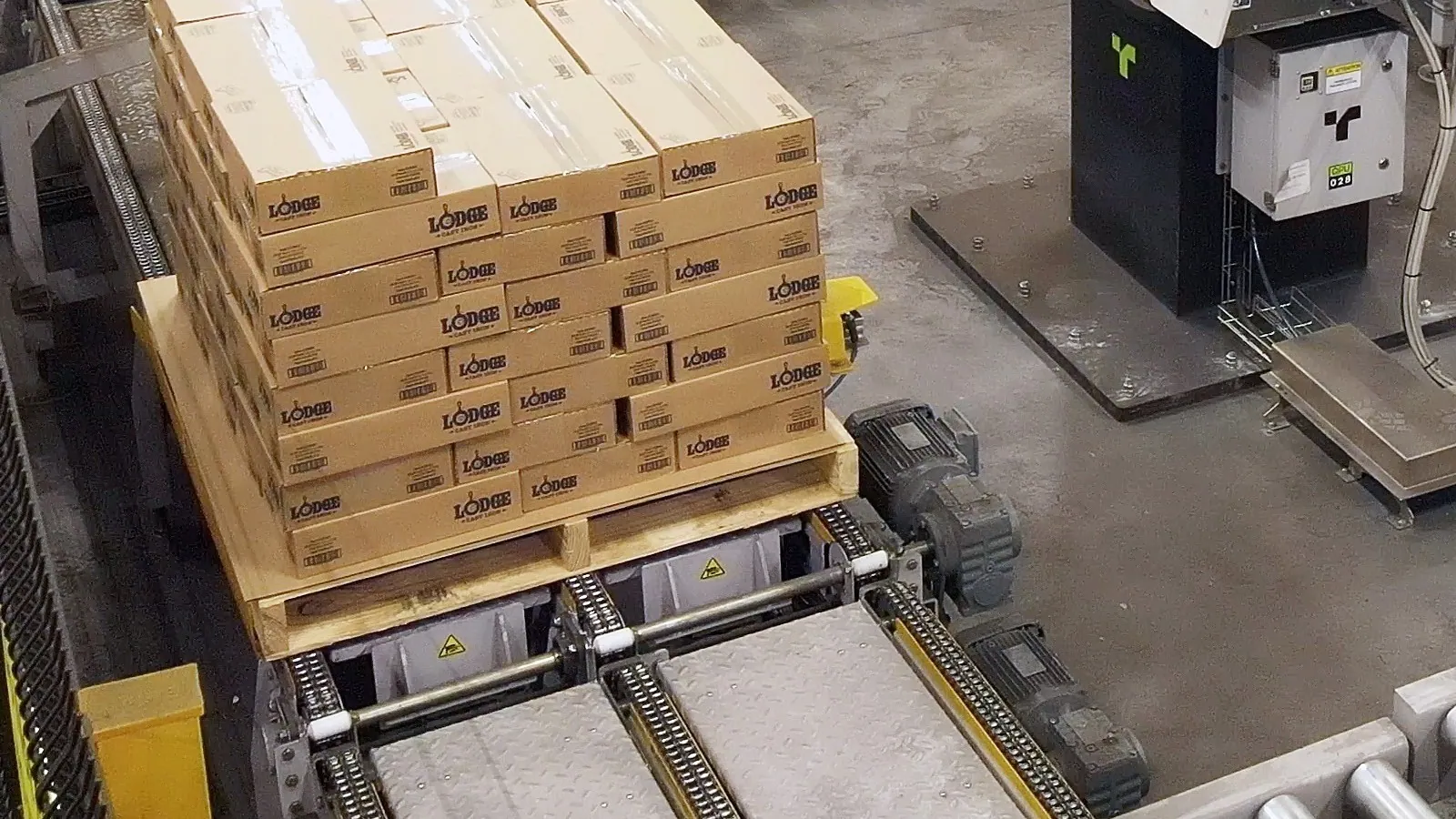
Each platform can run standalone or as part of a complete TRF end-of-line system, with TRFIntraflow moving sealed cases to a TRF case palletizer. The case packing page compares the three platforms side by side.
Questions
Frequently asked questions
How Many Cartons per Minute Can a Carton Packing Machine Pack?
A carton packing machine from TRF packs cartons in applications of about 100 to 200 products per minute with TRFRapidpack, or about 20 to 50 with TRFOnepack when the machine also erects and seals the case. These are application ranges, not machine speeds. Actual capacity depends on the carton, collation, pick tool, pack pattern and cartoner discharge, validated per line.
Does a Carton Packing Machine Need a Vision System?
A carton packing machine needs a vision system only when carton position varies on the infeed. TRFRapidpack packs with vision-guided delta robots when cartons arrive in a variable flow, or with indexed picking when they arrive in a controlled position, which is common when the cartoner discharges in a fixed index. The infeed design and the number of SKUs decide which approach fits.
Can One Machine Erect, Pack and Seal Cases of Cartons?
One machine can erect, pack and seal cases of cartons: TRFOnepack forms the case from a flat blank, loads the cartons robotically and seals the case on one controls platform, for applications of about 20 to 50 products per minute. Separate erecting, packing and sealing machines each add interfaces, controls and floor space, which matters at the end of a crowded carton line.
Should Cartons Go Into a Shipping Case or Straight Onto the Pallet?
Cartons go into a shipping case or straight onto the pallet depending on the sales channel. Cartons that ship in cases need a carton packing machine, while display-ready cartons that go directly onto the pallet need a carton palletizer. The two paths use different tooling, patterns and conveying, and plants that do both can have them engineered by TRF as one project.
Can a Carton Case Packer Feed My Existing Palletizer?
A carton case packer can feed an existing palletizer when the conveying and controls interfaces are engineered with the project. TRFIntraflow routes cases from one or several carton lines to the palletizer you own or to a TRFCobot, TRFCompact or TRFSpeed. Existing equipment is reviewed with your team before the scope is defined. See end-of-line integration.
What Is the ROI of a Carton Packing Machine?
The ROI of a carton packing machine comes from comparing its installed cost with annual savings: operators packing cases per shift, shifts per day, local labor cost, output the cartoner gains when packing stops limiting it, and cartons no longer scuffed or crushed by manual handling. There is no typical figure, so a TRF Sales Engineer builds the estimate with your line data.
Start your carton packing machine evaluation
The right carton packing machine follows your cartons, your counts and your line rate. High-speed lines with many carton sizes point to TRFRapidpack and its recipe-based changeovers; lower-volume lines that also need the case formed and sealed point to TRFOnepack. Send TRF your carton samples, SKU list, counts, case data and layout, and a TRF Sales Engineer validates the collation, the pattern and the platform.
Want to see TRF installations first? Browse the TRF case studies.
Next step
Keep your production running.
Tell us about your products, rates and floor space. A TRF Sales Engineer answers with the platform, the layout and the next step for your line.